

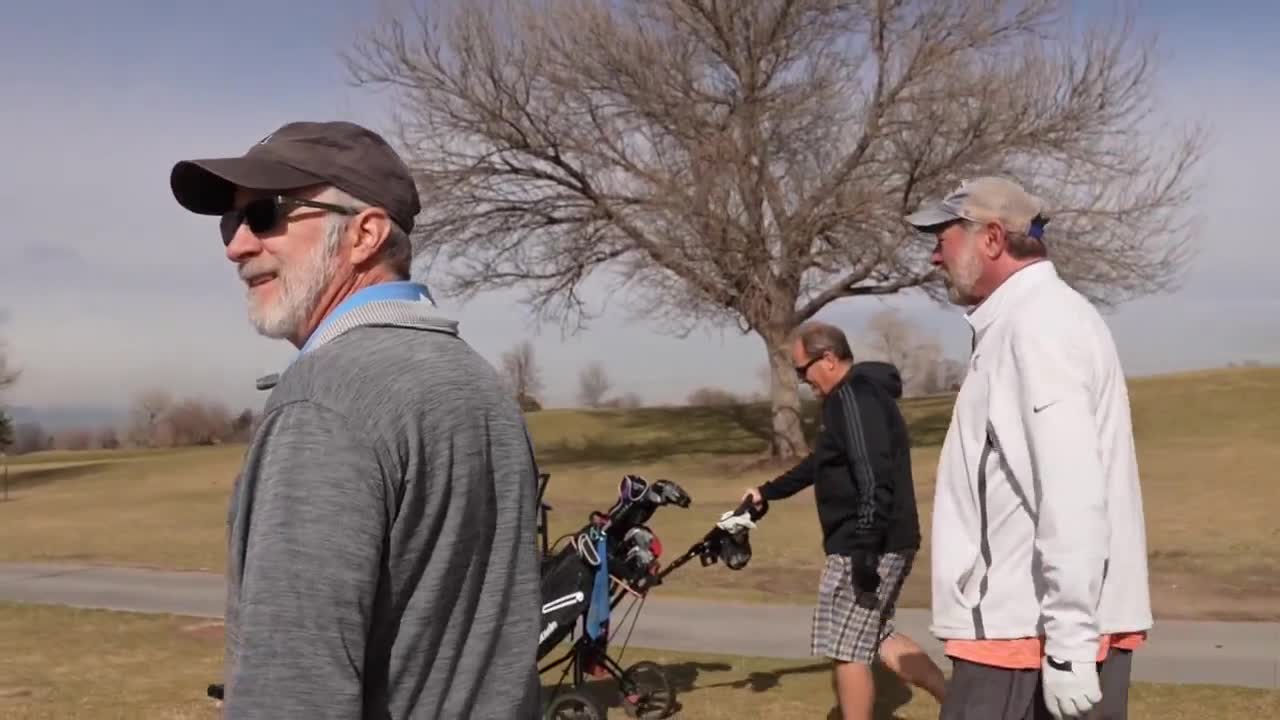


If you’ve tried to grab a tee time this winter, it’s been hard as Coloradans have been taking advantage of the warm winter.
Revenue nearly doubled in November at Denver municipal golf courses, says director of golf Scott Rethlake. He told Denver7 those were the most recent numbers, but he expects numbers for December and January to be similar.
Green fees, the charge to golfers for upkeep at municipal golf courses, were up 70% in November, and cart fees, the charge to rent a golf cart, were up 90%.
"It is very helpful from a cash flow standpoint," Rethlake said. "[Denver Golf] is an enterprise fund. So, we keep the revenue we generate and reinvest it in the golf courses. That's allowing us to put a lot more projects on the plate that we wouldn't be able to do otherwise, things like new irrigation systems that are 25-30 years old, or new clubhouses, such as maybe at Kennedy [golf course]."
The increase has come at a cost, though, as Colorado is experiencing its worst snowpack on record. That runoff is used to irrigate the golf course, and without the natural water, the grass suffers.
"It can't heal because it's not actively growing," Rethlake said. "So, when you have carts running over it, or people taking divots, it's not going to grow and regenerate. That piles up month after month. When you've got such a long period of nice weather like this, in a dormant situation, we're really worried about the spring."
To reduce wear and tear, most courses around the metro have restricted golf carts to cart path-only or walking-only.
Denver7 checked in with Fox Hollow Golf Course in Lakewood, and its head pro told Denver7 that if the dry spells continue, they might have to restrict tee times or cancel play altogether to keep the courses from getting more banged up. He said the idea is on the table, but has not been seriously considered just yet.
Rethlake agrees.
"I think the play restrictions would probably be no carts [which is currently in effect]. We might consider looking at closing a day of the week, something like that," he said.
The drought conditions have affected everything from Colorado farmers to municipalities. Just last week, Aurora Water told Denver7 water restrictions were "likely."
Denver7 also reached out to Denver Water to see if restrictions were being considered, but did not hear back. If they were to happen in Denver, Denver Golf would be one of the first affected, as the stipulations reduce outdoor water use.
"We do use less water than, say, a park or something like that, because we're a little more efficient with it," Rethlake said. "Because we're revenue generating, we're cost efficient and conscious, but [our courses] do require quite a bit of water."
According to Denver Golf's website, the city's courses use 20% less water than bluegrass lawns. It does this by creating water-conservation areas with native grasses, as well as "POGO Soil Monitoring," which shows the percentage of moisture in the greens so crews can hand-water dry spots instead of blanket irrigation like sprinklers.
The Colorado Golf Coalition's most recent environmental sustainability study also states that total water use for golf in Colorado decreased by 18% between 2018 and 2022.
