

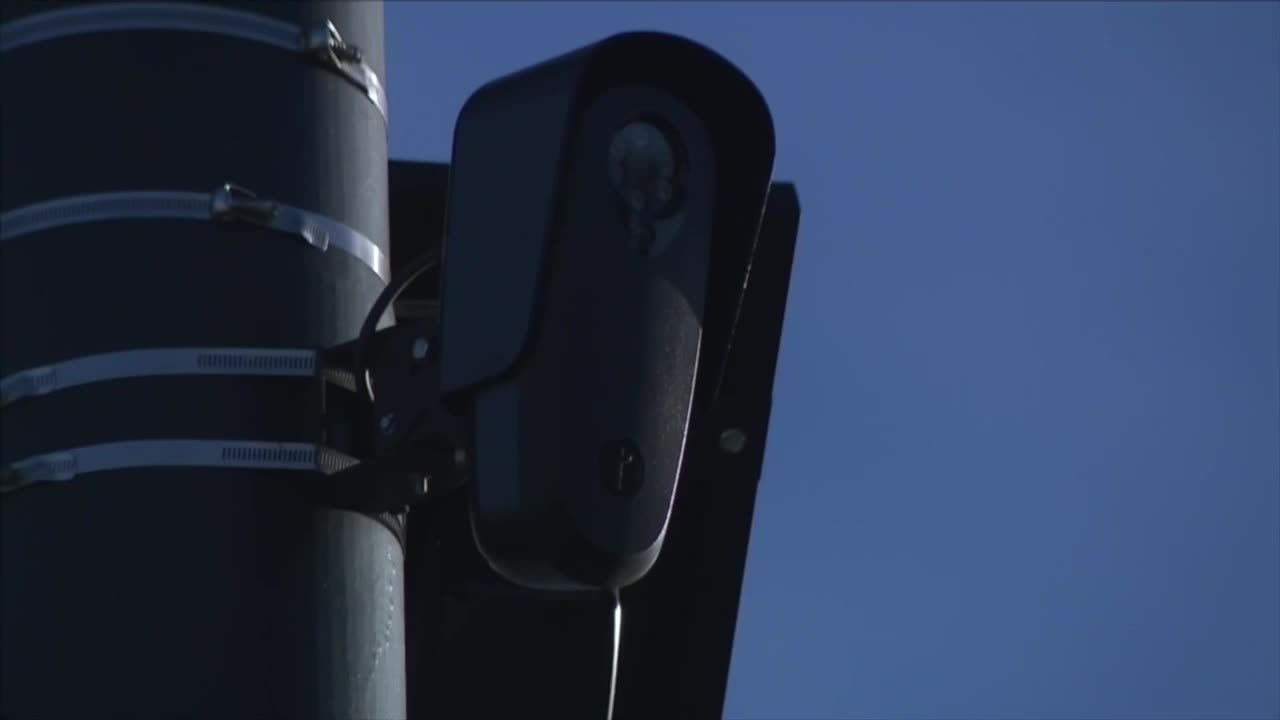


DENVER — Denver City Council approved a new contract Tuesday for Axon to supply license plate recognition cameras citywide, replacing the controversial Flock cameras in a narrow 7-6 vote.
Under a one-year contract costing $150,000, Axon will install 50 license plate recognition cameras around the city, fewer than half the number previously installed by Flock. Denver Police say the cameras help officers track stolen cars and solve crimes.
Flock reportedly shared Denver data with other cities and with immigration enforcement, raising concerns among some residents. These concerns led Mayor Mike Johnston to end the Flock contract and move to Axon, which already provides Denver Police with other equipment.
► Denver7's Maggie Bryan talks with both sides of the issue in the video below:
Tuesday night, after extensive discussion over privacy and data-sharing in the new Axon contract, council member Kevin Flynn said city leaders learned from the previous Flock contract and believe those concerns are now addressed.

"As far as data sharing under this contract, Axon does not have a national network. There's no way that we can share it nationally. No law enforcement officer in Texas, Ohio, New York, or California can log into our system. It's only Denver Police officers and only when they're investigating an actual criminal incident," said Flynn. "Any misuse is punishable by the Denver police discipline matrix."
Other city leaders, including council member Sarah Parady, remain unconvinced that the new provider will protect citizens in the long run. She said she wants legislation on surveillance technology in place before approving a new license plate recognition contract.

"I do not think that the benefits outweigh the risks," said Parady. "The provisions of this contract make the police department and the executive branch the only decision makers about future expansions. These algorithms are sort of becoming smarter every day, right? And so they can already recognize individual vehicles, but they're moving in a direction where we might start to worry about them being able to recognize individual people."
Denver7 reached out to Axon about its data-sharing policies and to learn more about what is captured in photos from license plate-reading cameras. The company said Denver police will retain full ownership and control of their data.
Denver7 question: Does Axon store full-frame images of faces and car occupants or only plate data/photos?
Axon spokesperson: The vehicle intelligence system records vehicle information only. It identifies license plate images and contextual vehicle images. It does not run searches against DMV records, or do facial matching or any similar analysis of people appearing incidentally in ALPR images.
Denver7 question: Does Axon share or sell any ALPR data to private companies, vendors, or commercial third parties?
Axon spokesperson: No. An Agency’s Customer Content remains under their own control and ownership. Axon uses customer content — which includes information like ALPR data — to provide our services. Axon does not sell customer content and sharing, if any, is directly initiated by the customer.
According to the contract, Axon will store data for 21 days, instead of the previous 30-day agreement with Flock. Denver Police Chief Ron Thomas said he believes the new contract addresses privacy concerns while still giving his officers the tools to do their jobs.
"We're not going to give another jurisdiction access to our system. You know, we want to be very protective of the system. We understand that that's one of the community's concerns. Not only do we bar access from federal agencies, but also from other law enforcement agencies that may not share our same values," said Thomas.

Tim Hoffman, the mayor's director of policy, said that since the summer of 2024, Flock cameras have aided Denver Police in recovering 446 stolen vehicles, making 528 arrests, and removing 63 firearms from the streets. He also said that in the year 2025, information obtained from license plate reader cameras contributed to more than 40% of homicide investigations and 23% of investigations into non-fatal shootings in Denver.
Dozens of community groups, including the Denver Party for Socialism and Liberation, believe the city should remove the cameras altogether.
"We're going to fast-track ourselves into, really, what would turn out to be an AI-powered police state facilitated by multi-billion-dollar private corporations," said Katie Leonard, a spokesperson for the group.
Flynn said council members will continue to work together to draft an ordinance addressing surveillance and privacy related to the technology. He said the city can cancel its contract with Axon at any time if officials believe it's no longer serving the public.

