

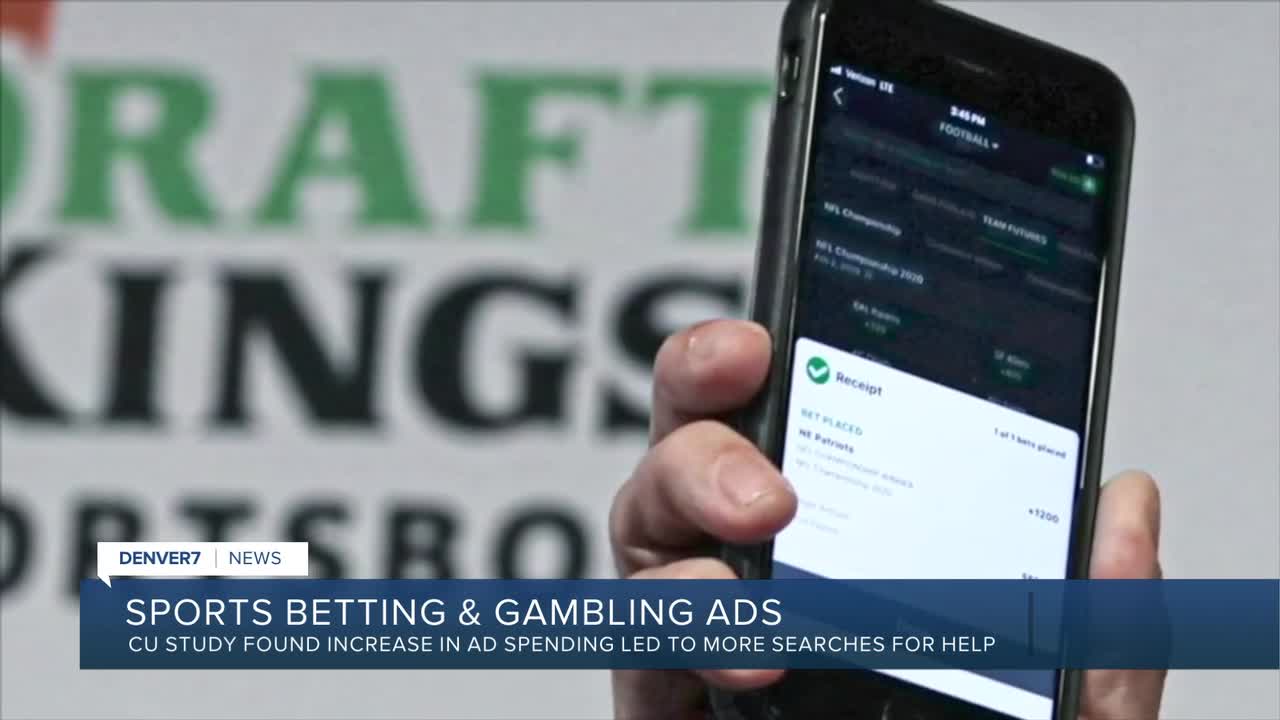


DENVER — The Denver Nuggets start their first regular season game Thursday night, marking a moment in the year when three of Colorado’s top-level professional team are in play at the same time.
Viewers may see an increase in sports betting ads during those games. A University of Colorado research team found that likely also means a rise in searches for gambling addiction help.
Watch the breakdown of the study from Denver7's Alex Dowd in the video below
CU Boulder Professor of Advertising and Analytics Chris Vargo teamed up with Associate Professor Toby Hopp and Harsha Gangadharbatla of the University of North Carolina at Chapel Hill to analyze Google search trends and monitor the internet activity of over 400 people.
“We actually collected all of the stuff they did online, on their mobile phone and on their desktop for a month,” Vargo said. “We looked at whether they visited gambling apps or just any kind of website.”
The team also compared quarterly gambling advertising spending from 2014 to 2023 to search trends for 116 different gambling addiction help searches across 41 states.
“They're all up, and it's all continuing to rise,” Vargo said about advertising funding. “There's no signs of it slowing right now. I have hope that like all products that are new, eventually we reach a saturation point, and it starts to become less of an investment for advertisers.”
The group found that the correlation between advertising spending and searches for help were stronger than those between gambling legality and some of those same searches.
The biggest spikes in both spending and searches happened during traditionally large sporting events, like the NCAA Division I basketball tournament and the Super Bowl, and during the end of a season or year when Vargo says people are trying to earn back their losses.
The team also looked at what happened after 24 hours of no observed gambling, which researchers called “clean days.” In about 8.3% of those cases, a gambling ad pulled the person back into a sports betting site or app.
“If you go look at toasters, and you put one in a cart but don't buy it, the toaster follows you around,” Vargo explained. “No surprise that people that self-reported as being gamblers were the ones that were seeing most of the gambling ads, but what was most problematic was that those that self-reported to us that they had a problem with gambling were actually the ones that were seeing the most ads.”
The study is correlational, so the findings identify associations, not causations of the behavior.
Colorado lawmakers have tried to tackle rising calls for gambling help. New regulations went into effect in August limiting advertisement and deposit rules.
Vargo told Denver7 he’s hopeful these regulations could make a difference, especially those push notifications which he says could have a stronger pull effect than advertisements.
“There are no ad protections right now for consumers when it comes to saying like, ‘I don't want to see any gambling ads,’” he said. “For vice advertisements like alcohol and other sensitive topics, we typically have settings in platforms like Instagram and Facebook to be able to turn off those advertisements. I think that's something that the industry needs to start to seriously consider.”
He’s also hoping people understand that the more ads someone sees, the more money the advertiser is likely making.
“As humans, we're motivated to only share stories where we look good,” Vargo said. “Try to keep in mind that or every gambling story that you hear from a friend that's crazy where they won money, there are many more that you're not hearing about where people have lost a lot of money.”
Anyone struggling with gambling is encouraged to call or text 1-800-GAMBLER. They can also visit COGamblerhelp.org.


Denver7 is committed to making a difference in our community by standing up for what's right, listening, lending a helping hand and following through on promises. See that work in action, in the videos above.