

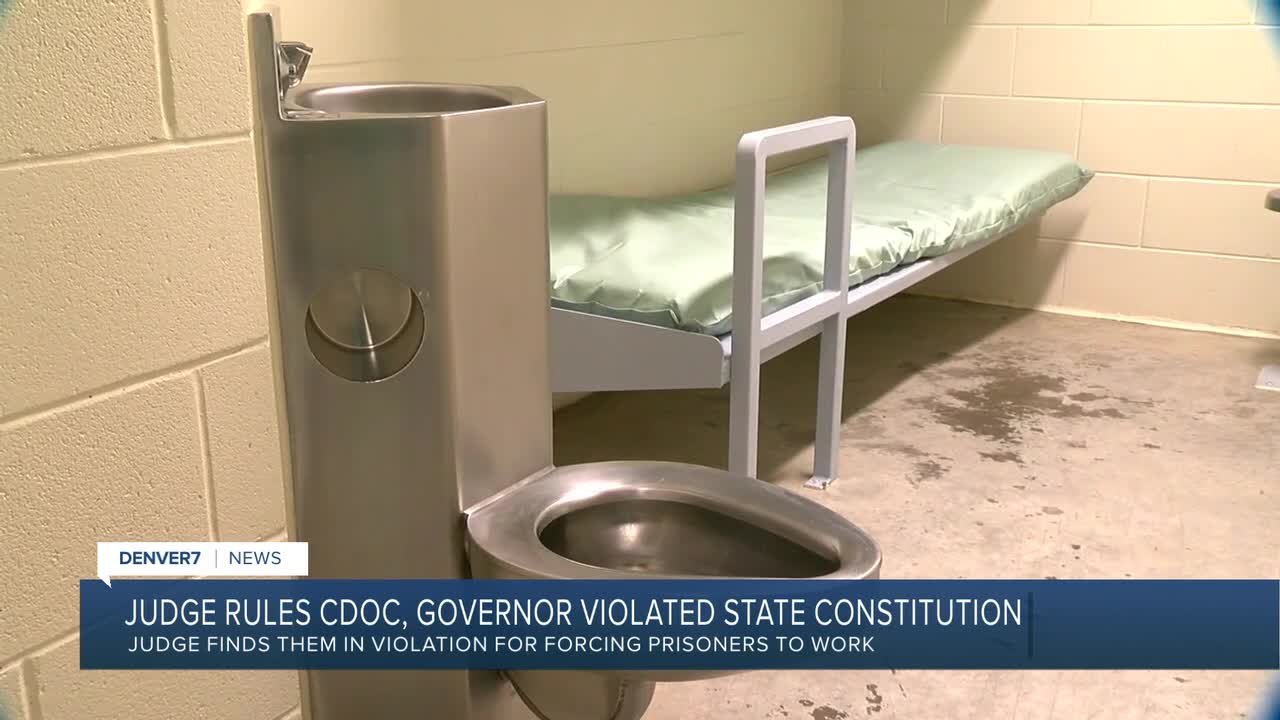


DENVER – After a judge ruled against the Colorado Department of Corrections (CDOC) and Gov. Jared Polis, finding prisons violated the state’s constitution by using coercive tactics that amounted to forcing incarcerated Coloradans to work, community advocates are sharing their thoughts on the ruling.
MiDian Shofner, CEO of the Epitome of Black Excellence & Partnership, pointed to the Colorado Constituiton's Amendment A, which bans slavery and involuntary servitude in all cases, including as punishment for a crime. The 13th Amendment to the U.S. Constitution outlaws slavery and involuntary servitude except as punishment for a crime, but Coloradans voted in 2018 to remove that exception.
"That vote was binding, and Judge (Sarah) Wallace's ruling simply says what should have been obvious, that when the Constitution removes an exception, government agencies cannot quietly recreate that exception through policy,” Shofner said. “We can't divorce this ruling from history or what was happening from history. The 13th Amendment to the U.S. Constitution left an exception for slavery as punishment for a crime. So that loophole became the engine for convict leasing chain gangs and rebuilding forced labor.”
The judge’s ruling found CDOC used "unconstitutional coercive policies," including "isolation in a cell for more than twenty-two hours a day for more than two days (three if over a weekend) for failure to work.”
Shofner said it’s important for the CDOC to immediately revise its policies, eliminate sanctions for refusal to work and provide transparency.
“The public deserves to know how labor programs operate, how people are compensated and what disciplinary measures exist around that,” Shofner said. “This should really prompt a national conversation. If Colorado voters remove the slavery exception, and it still required litigation to enforce it, like, what does that really say about how deeply embedded these problems in our system really are? So, we need to have a national conversation that really does, in fact, spark change that'll be sustainable.”
A spokesperson for the governor's office said in a statement that the governor's office was "reviewing the judge's order to determine next steps."
"Governor Polis strongly agrees that slavery and forced servitude are wrong and illegal," the spokesperson said in the statement. "The Department of Corrections does not engage in either and is always interested in how prison reforms can better ensure that this never occurs in Colorado."
A spokesperson for CDOC also provided Denver7 with the following statement:
The Colorado Department of Corrections (CDOC) is currently reviewing the Denver District Court's ruling on the state’s prison labor practices. We respect the judicial process and continue to evaluate the full legal and operational implications of the court’s decision to determine next steps. The Department of Corrections agrees that slavery and forced labor are wrong and illegal and do not believe we have engaged in either. CDOC programs are designed to provide essential skills, vocational training, and rehabilitative opportunities that support successful reentry into the community. The Department remains committed to upholding the Colorado Constitution, and believes we have been despite the ruling. We are also committed to ensuring the safety and security of our facilities, staff, and the incarcerated population.
Jason McBride, founder and executive director of McBride Impact, agreed with Shofner.
“I get, you know, when we talk about rehabilitation and punishment and making people who commit crimes do things that they don't like to do. And I get all that, but you cannot force people to work. That's slavery. I mean, that came from reconstruction and Jim Crow. We know why these laws were instituted, and the fact that Colorado still has been forcing inmates to work is beyond my comprehension,” McBride said. “Jared Polis, do the right thing and make sure that inmates are not being forced into forced labor.”
The order to stop these practices takes effect 28 days after the Feb. 13 ruling to give state officials a chance to appeal the decision.
Editor's note: This story has been updated with comment from the governor's office as well as CDOC.

