



DENVER — Aimee Ward had no symptoms until 2022.
“Lots of symptoms, and feeling icky, but mainly my fingers were swollen, all my joints hurt, and I went to several doctors. Couldn’t figure out what was going on,” Ward said.
Hear more about Aimee Ward's journey toward a diagnosis, and the possible solution, in the video below.
She was eventually diagnosed with systemic sclerosis, a rare and progressive autoimmune disease.
"You can imagine like you’re turning into basically a statue, and it’s very frightening,” Ward said.
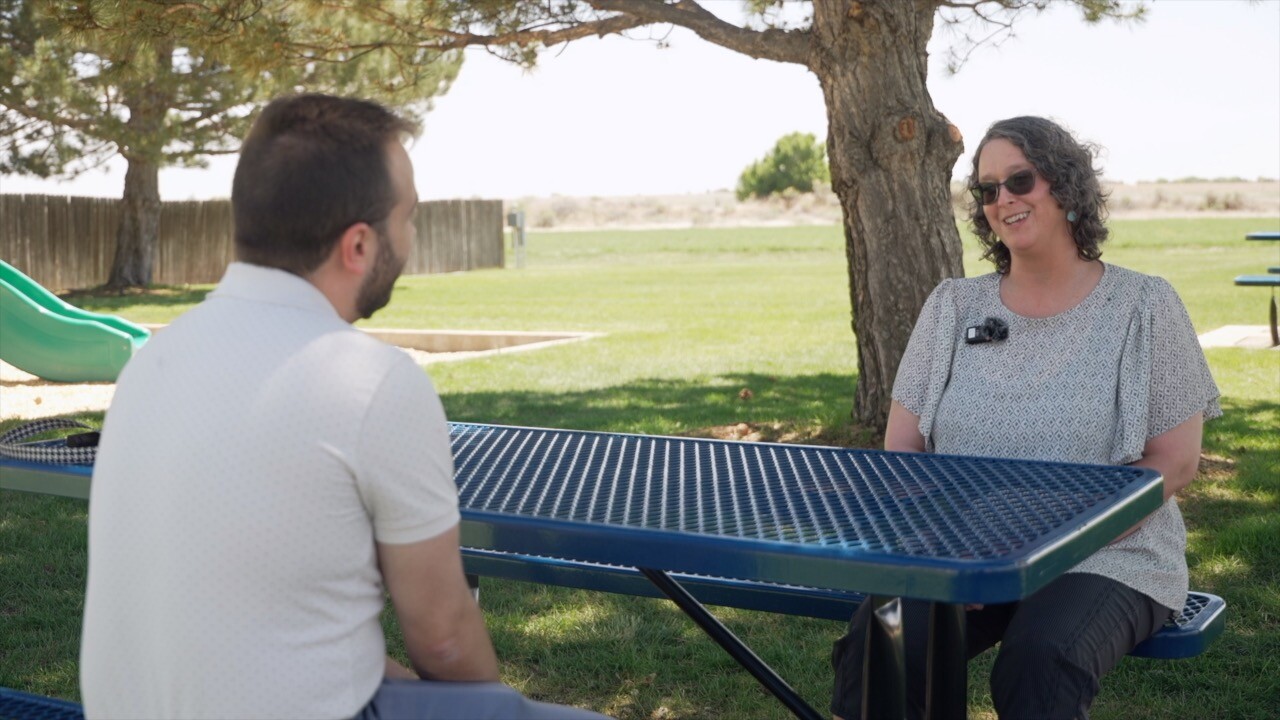
Dr. Richard Nash, transplant physician at HCA HealthONE Presbyterian St. Luke’s Colorado Blood Cancer Institute, met with Ward to discuss treatment options.
“This is a condition where the skin starts to get tight and, at its worst, patients can be basically trapped within their skin,” Nash said. “There's a significant mortality risk as well, and many of these patients have significant pain in their extremities.”
A study out of Germany suggested that CAR-T cells, which are taken from a patient’s body and genetically modified to fight their own malfunctioning immune system, could be effective not only for treating blood cancers, but also for treating patients with autoimmune disorders.
The treatment, however, was still part of a clinical trial, which carries inherent uncertainty.
“There are risks,” Dr. Nash said. “There’s always the possibility that as we do the clinical trial, we may see safety issues, and clinical trials can be shut down. Or, we can complete the clinical trial, and no safety issues are seen, but we don't see… any significant improvement in patients.”

Ward weighed those risks carefully before deciding to participate.
“I wanted to contribute, but also there was this part of desperation,” Ward said. “Things were rapidly progressing. I felt like this might be kind of a gift for me.”
She endured weeks of treatment. Two years later, the results speak for themselves.
“My symptoms have improved. They’re not completely gone, but I am incredibly lucky to have been part of this trial,” Ward said.
Nash said the medical community is grateful for patients like Ward who are willing to take that step.
“We can't do these clinical trials without patients actually agreeing to participate. The scientists, the investigators, the clinicians, we always have to be very thankful for patients’ participation in clinical trials,” Nash said.
For Ward, the decision ultimately came down to the people around her.
“The support of my family and the encouragement of all those people that I hold dear in my heart… helped me make that decision and move forward,” Ward said.
Ward was one of the first patients to participate in this clinical trial, which is now advancing to Phase 3. If that is successful, it could eventually be approved by the FDA as a standard treatment method for autoimmune disorders.
Ward is currently fundraising in support of the Stepping Out to Cure Scleroderma event. You can click here if you would like to learn more about scleroderma and systemic sclerosis.
This story was reported on-air by a journalist and has been converted to this platform with the assistance of AI. Our editorial team verifies all reporting on all platforms for fairness and accuracy.
