

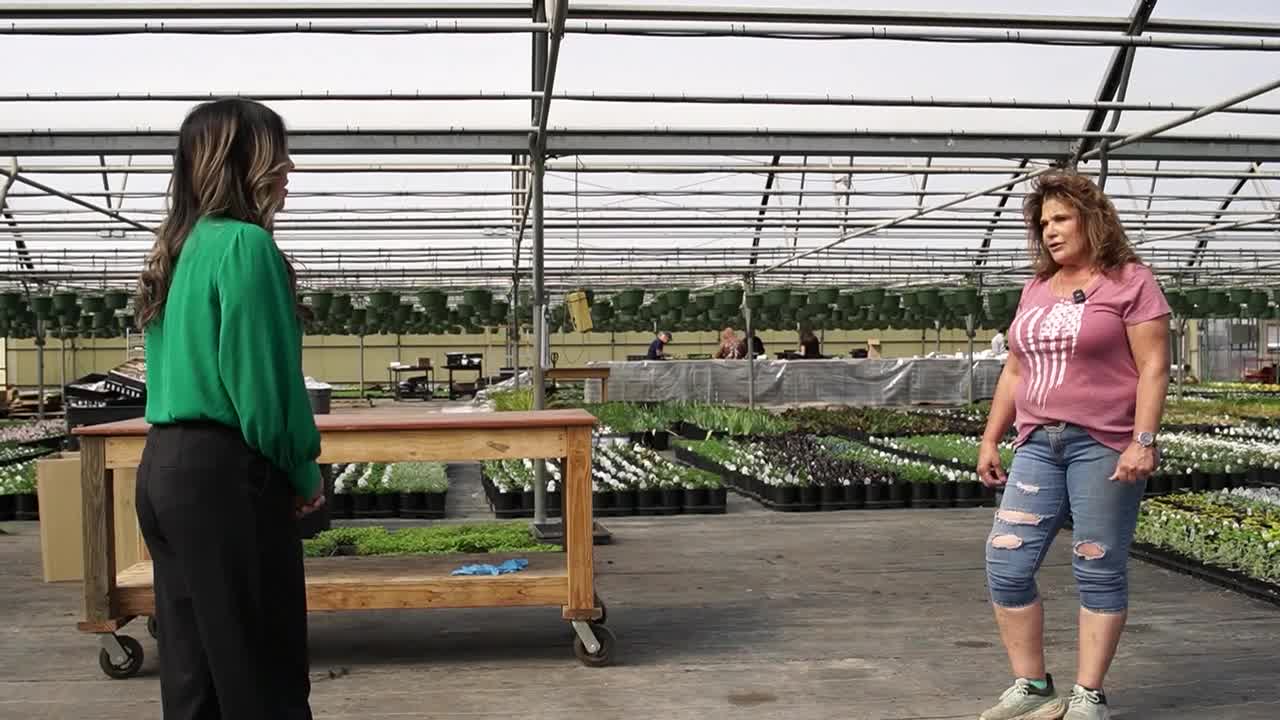


ADAMS COUNTY, Colo. — Colorado's unseasonably warm and dry winter is prompting farmers and horticulturalists across the state to shift their traditional growing patterns — planting earlier than usual while bracing for potential water shortages ahead.
At Spano Greenhouse and Farm in North Denver, the work is already well underway.
"Everything starts blooming a little earlier," owner Marie Elliott Spano said.
While annual and perennial plants and flowers grow in the greenhouse, the Spanos are also getting a head start on their summer produce.
With several 80-degree days in the forecast, they are preparing to plant seeds this weekend, with rows already pulled and ready to go.
“Beets, carrots, cucumbers, corn, dill — all the early stuff we'll probably start seeding this weekend,” said Marie’s son, Enzo.
For Marie, the earlier start is a welcome development.
"It helps us, because it's a longer season," she said.
Cassey Anderson, a horticulture specialist with CSU Adams County Extension, said the mild winter has created favorable early planting conditions.
"This year, we haven't had to wait for the soil to thaw out. So early season crops could be going in," Anderson said.
Anderson added that not all crops face the same risks from the unusual weather pattern.
"Annual crops aren't going to be as impacted by this weird weather as perennial crops will be, because as long as you have supplemental irrigation, you can kind of control the conditions that are available for your crops," Anderson said.
While early planting is a good thing for local growers like Spano, it’s not all sunshine and roses.
"The concern is the need for irrigation water early," said Tom Cech of the One World One Water Center at MSU.
With Colorado’s snowpack at critically low levels, experts warn that early and increased demand for irrigation water could create serious problems — particularly for agricultural producers along the South Platte Basin.
"The concern is you're sort of borrowing from your savings account," Cech said. "When you borrow from that reservoir water this fall, you have to probably tap back into that account, and you may have withdrawn a bit too much early on just to get your crop going."
The prospect of potential water restrictions is not lost on Spano.
"You have to have the water, yeah, scary. It's scary. We’ll just have to see what happens," Spano said.
But just like the plants and produce they’ve been growing for decades, the Spanos said they, too, will grow through whatever lies ahead.
"There's always been dry seasons and wetter seasons." Spano said, "We just keep going.”
Impacts on your lawn
Denver Water is asking customers to keep automatic irrigation systems off until at least mid-to-late May to help conserve water.
While the Board of Water Commissioners hasn’t announced additional watering restrictions just yet, the utility said chances are high this year.
“The watering restrictions are helpful because it'll help conserve some water for the fall and for next year,” added Cech.
Anderson emphasized the hardiness of certain grasses during seasons like these.
“Bluegrass lawns will go dormant with low water, and they will come back once you can start watering again,” she said. “It might not be everybody's favorite option, and if it's not, then you can definitely keep watering, just less often.”
And if you’re thinking of starting a new garden (yes, even one with drought-tolerant plants), experts advise against it.
“No plant is water-wise in its first year or two years,” said Anderson. “If homeowners are considering putting a new landscape in to save water, you will be putting in a substantial amount more water in the first one to two years.”
What about the trees?
The record-breaking winter temperatures have caused many trees and shrubs to start blooming early.
Last weekend’s hard freeze killed some of those early blooms, according to Anderson.
While some trees and shrubs will push a second set of buds, that added effort could take a toll this season, especially if we see another hard freeze along the Front Range this spring.
“That's when our trees and shrubs are more likely to really be stressed out this season,” said Anderson. “It will definitely look like fewer leaves, less growth over the season.”
If your early blooms have been affected by the cold weather, Anderson advises against using fertilizer to bring it back to life.
“We want to encourage the plant to kind of do more of the internal growth recovery, so making sure that we stay on top of water and general care, mulching things really thoroughly is going to be a better practice,” she said.


Denver7 is committed to making a difference in our community by standing up for what's right, listening, lending a helping hand and following through on promises. See that work in action, in the videos above.
