

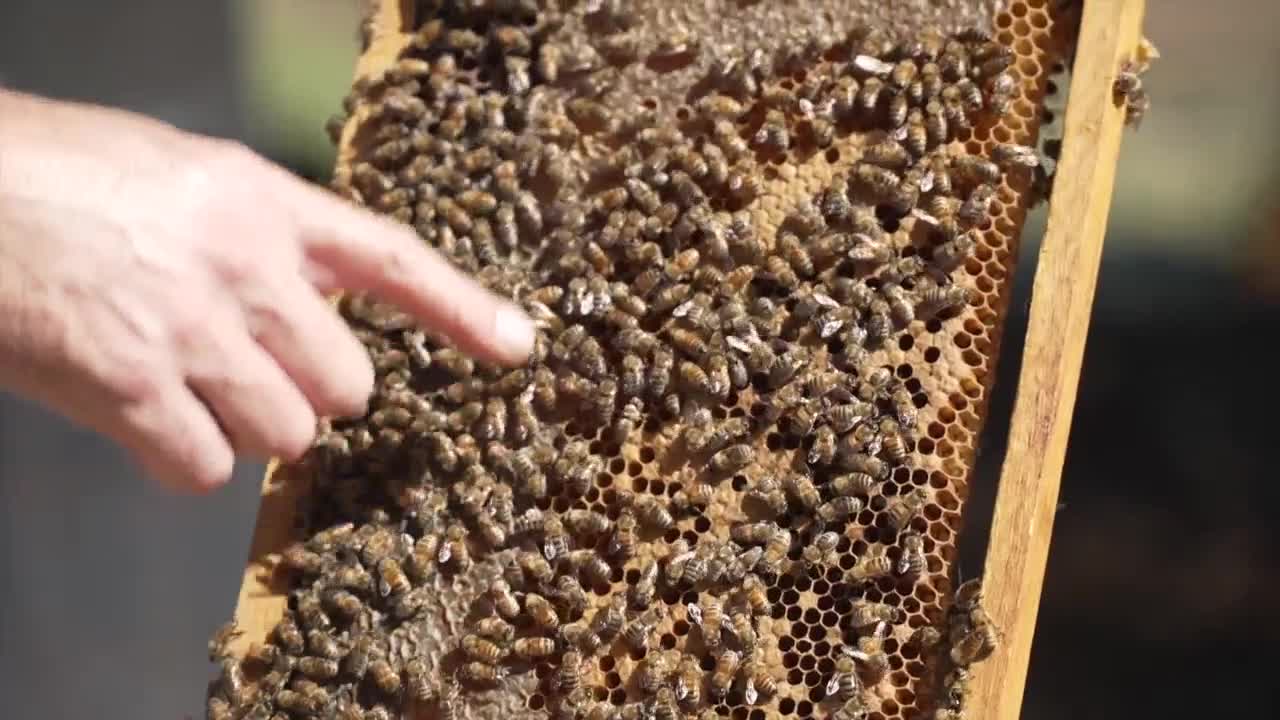


Boulder is turning to an unlikely source to learn more about the health of its environment: bees.
The city launched the Boulder Bee-Bio Monitoring Initiative at the Jewish Community Center, using honeybees and native bee habitats to gather data on local biodiversity and chemical exposure.
"This is working with bees as basically environmental sentinels and data gatherers to give us really vital information about what the state of our local environment is," said Brett Kincairn, senior division manager for City of Boulder Climate Initiatives.
Watch Ethan Carlson's full report in the video player below:
According to Kincairn, a typical honeybee colony contains around 50,000 bees, with about 10,000 foraging every day. Each time a bee visits a plant, it returns with pollen that can be genetically sequenced to identify which plant species are present in the area.
"When we look at that pollen, we can actually genetically sequence it, and we can tell what plants they're visiting, and what species," Kincairn said.
That data can also reveal whether bees — and by extension, the surrounding community — are being exposed to toxic chemicals.
"There's something like 350,000 different approved chemicals for use, and a lot of us have no sense of whether we're encountering those or not," Kincairn said.
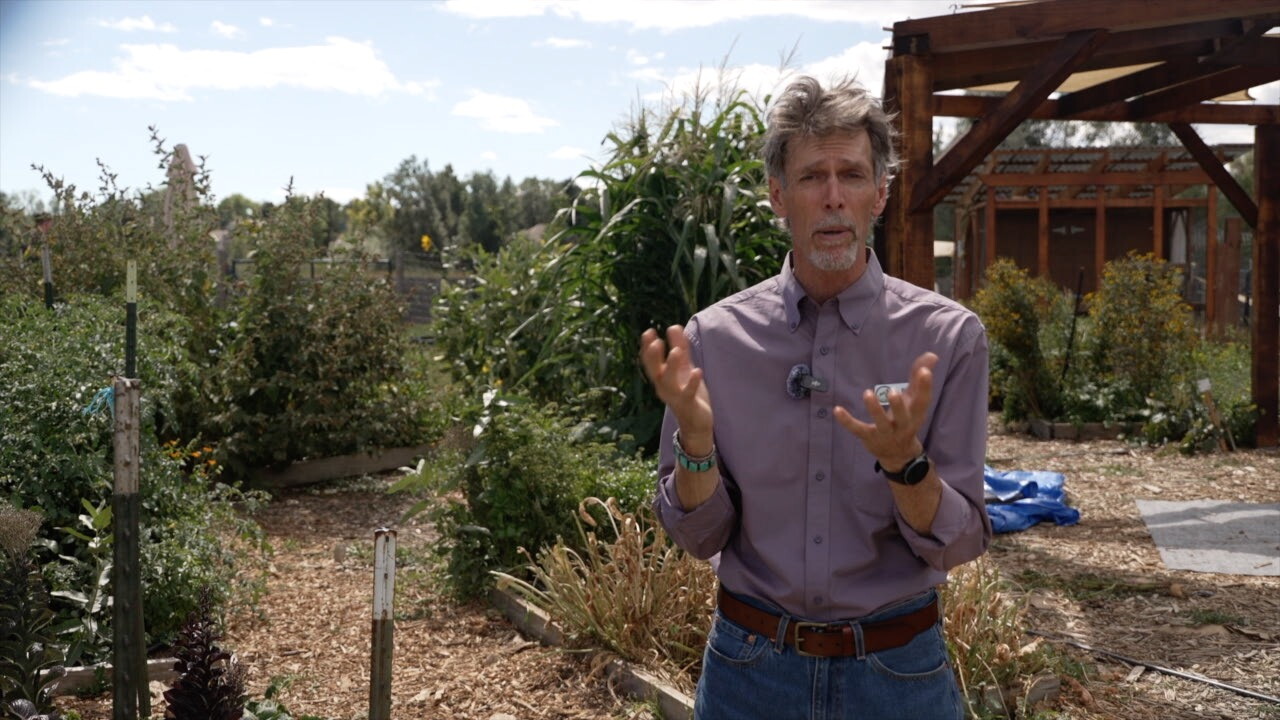
The initiative is currently partnering with the Jewish Community Center and Boulder Housing Partners, which are hosting the first two sites combining honeybee hives and native bee habitats. The city plans to expand to roughly a dozen hives and potentially hundreds of native bee boxes across Boulder next year.
Kincairn said the program is also designed to be replicable.
"Our intention is actually to create a system that's very low cost, very easy to do, and it could actually be accomplished by other cities and communities around the state," Kincairn said.
The city is looking for volunteers willing to add native bee boxes to their properties, which will be studied twice a year. Kincairn said the long-term goal is to build a baseline of environmental data that can be compared year over year.
"We're just figuring out ways that we can not only partner with them, but kind of learn their languages and what they have to share and to contribute in thinking about how we create a healthier world for all of us," Kincairn said.
While Boulder is putting bees to work as data collectors, a Lakewood beekeeper is feeling the effects of an unusual year in the hive.
Bryan Zavada founded Flower Street Farm in Lakewood in 2019, converting his suburban property into a working farm with bees, lavender, chickens, and ducks.
"I got an appreciation for pollinators as I was planting all these pollinator-friendly plants, and that made me want to become a beekeeper. And then hobby turned obsession turned business, and here I am, about 100 colonies later," Zavada said.
This year, however, has been unlike any other. A warm winter, an early spring, hard freezes in April, and summer drought conditions combined to disrupt his colonies at critical moments. Zavada said the warm winter caused some bees to burn through their stored food too quickly, while the April freezes halted a strong spring buildup just as colonies had gained momentum.
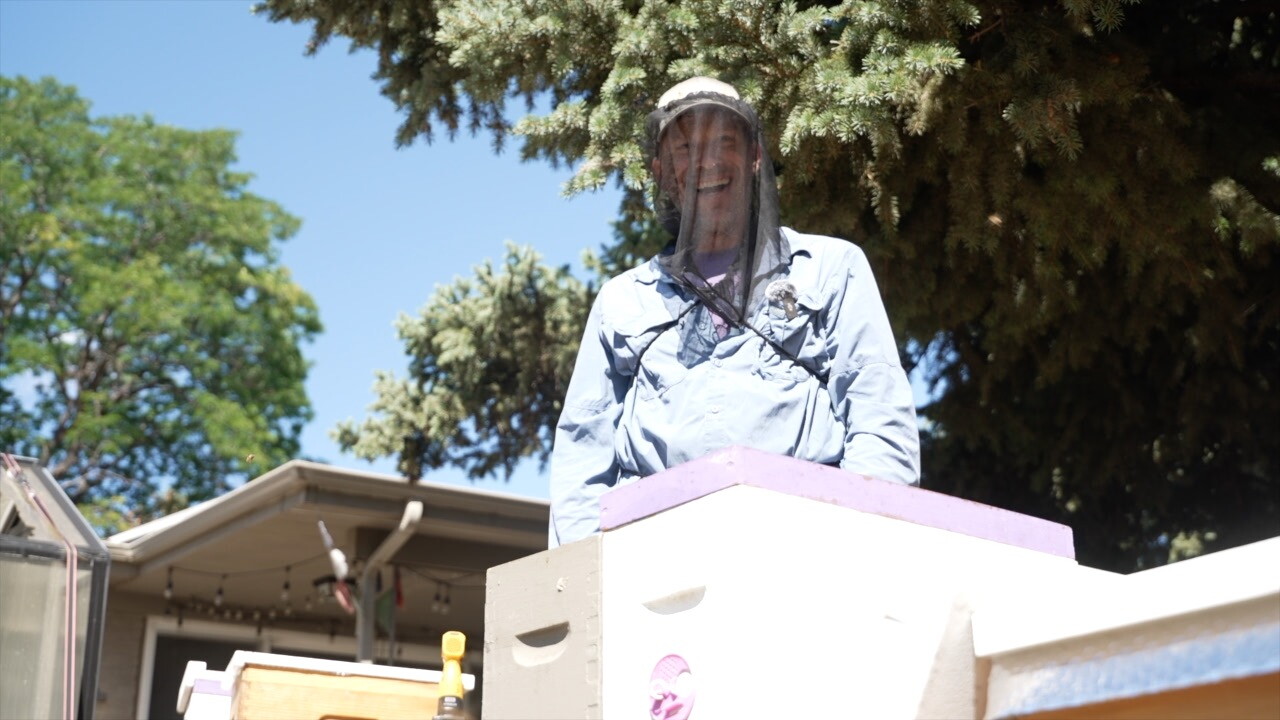
"Really big grow up, build up in March, and then the brakes hit. And since then, there haven’t been a lot of great nectar sources out there, particularly because of the drought, the lack of moisture that we've had out here," Zavada said.
The result: his honey production dropped from about 3,000 pounds last year to roughly 2,500 pounds this year — even as he added more colonies. Where a colony might typically yield 60 pounds of honey, Zavada said he saw closer to 30 to 40 pounds per colony this year.
"I'm growing every single year. So, every year I make more honey. This is the first year that hasn't happened," Zavada said.
Despite the setback, Zavada said the unpredictability is part of what keeps beekeeping engaging.
"Beekeeping's easy when everything goes right. When things go wrong, though, that's when the interesting things and the learning happens," Zavada said.
This story was reported on-air by a journalist and has been converted to this platform with the assistance of AI. Our editorial team verifies all reporting on all platforms for fairness and accuracy.


Denver7 is committed to making a difference in our community by standing up for what's right, listening, lending a helping hand and following through on promises. See that work in action, in the videos above.