

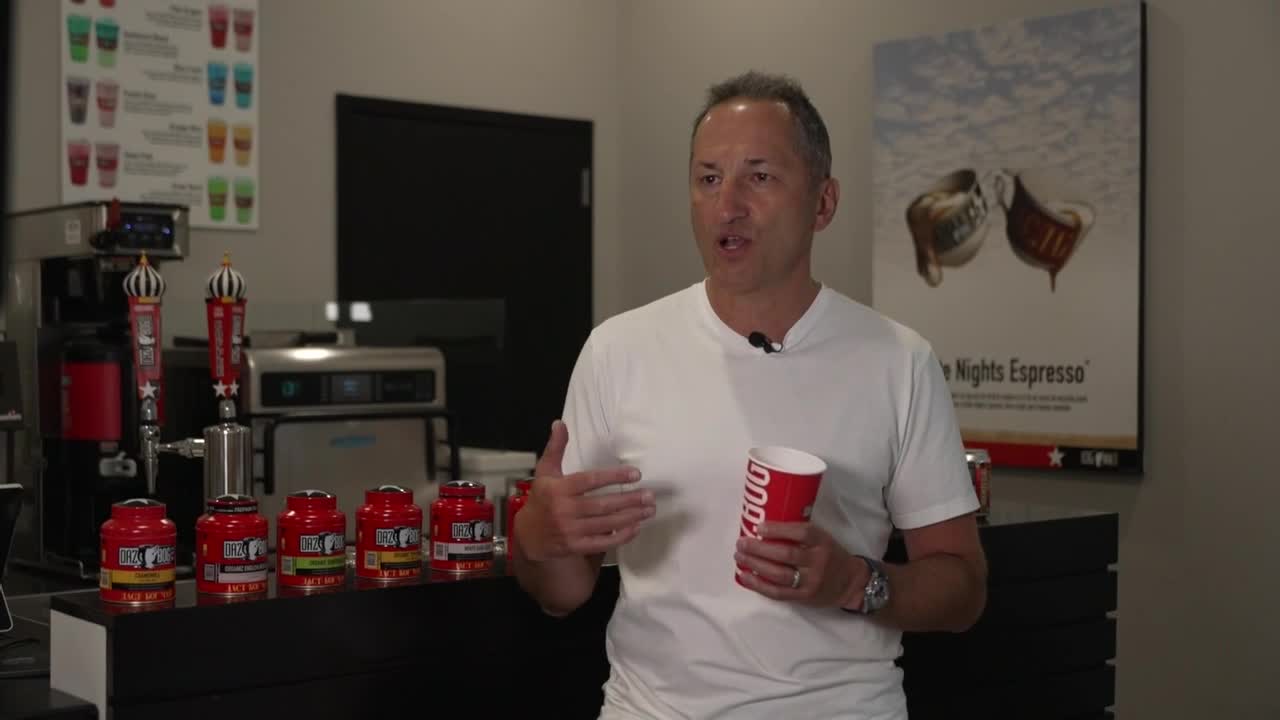


DENVER, Colo. — For many, coffee drives their day forward. For Leo Yuffa, coffee drives his business and livelihood.
He and his brother founded Dazbog Coffee Company in Denver three decades ago.
▶️ Denver7 spoke with trade experts and local businesses as a new round of tariffs take effect
The past few years have looked a little bit different than the first 20. COVID-19 pandemic restrictions upped the popularity of drive-thru shops. A few years later, high commodity prices and changing tariffs shifted the other parts of their business.
"We're doing a lot more promoting of what we do, so people realize that we ship to people's homes," Yuffa said. "When you buy a five pound bag on our website, you save 22-24% percent as a consumer, so you're getting a lot more, you're paying less. I think that people's habits are changing, or the way they shop is evolving."
While Dazbog distributes to large stores like Target, King Soopers and Safeway, they also ship directly to customers or accept subscriptions. Yuffa says they've seen rise in those direct to consumer methods over the past few years.
“Grocery store prices have escalated to to an unbearable amount," he said. "A lot more consumers are calling us, emailing us, and going to our website to order products directly from us.”
He says 10% blanket tariffs from April 2025 changed their distribution a bit as many things became more expensive.
While coffee beans were exempt from tariffs, nearly everything else involved in the packaging and serving of the coffee and tea Dazbog makes was not.
“The bag, the labels, the valves that go into, the tin, ties, the tape, all of the materials that go into packaging, as well as the packaging equipment themselves, went up and continue has continued to go up," Yuffa said.
Those tariffs were set to expire early Friday morning, but Thursday, the Trump Administration announced new 10-12.5% tariffs on trading partners they say use forced labor. The administration says those tariffs affect 99.4% of all U.S. imports.
According to World Trade Center Denver Interim President and CEO Sandi Moilanen, manufacturing, automotive, electronics, food and agriculture, construction and consumer goods have been the hardest hit over the past year of tariffs.
"For many businesses, the biggest challenge hasn’t just been the tariff itself," Moilanen said. "It’s the uncertainty around what the rules will be six months from now."
For these new tariffs, she says the biggest impacts will be felt higher up in the supply chain instead of directly hitting the grocery store shelves.
"Manufacturers that depend on imported components, electronics, machinery, and industrial equipment will probably feel these tariffs first," she said.
The Trump administration says these new tariffs aim to penalize nations that fail to stop modern slavery and forced labor, and goods made with that type of labor hurt businesses and workers in countries that have fair labor laws like the United States.
Nonprofit manufacturers and workers organization Coalition for a Prosperous America released a statement in support of these new tariffs, saying the administration has done more than any other to highlight other countries and their varying commitments to labor rights.
What that means for consumers and business owners, however, isn't certain.
“We'll see what happens, but it is it is tough," Yuffa said. "It is tough for sure. It's tough to digest those tariffs, absorb them, and live another day.”




Denver7 is committed to making a difference in our community by standing up for what's right, listening, lending a helping hand and following through on promises. See that work in action, in the videos above.