





COLORADO SPRINGS, Colo. – Manuel knew the risk in going to the El Paso County Courthouse.
He had heard stories of undocumented immigrants like him being arrested by Immigration and Customs Enforcement (ICE) when appearing for court, even if they were there on minor violations.
“I had heard talks,” he said. “I had seen it on the news where people were being picked up from courtrooms on their way to court, leaving court.”
But he went anyway. He was ordered to appear after he got a ticket in August after he said his family dog had gotten out of the house. When a woman stopped to help him catch the dog, it bit her face.
Manuel said he called 911 for help, he was issued a ticket and the dog was ordered to be put down.
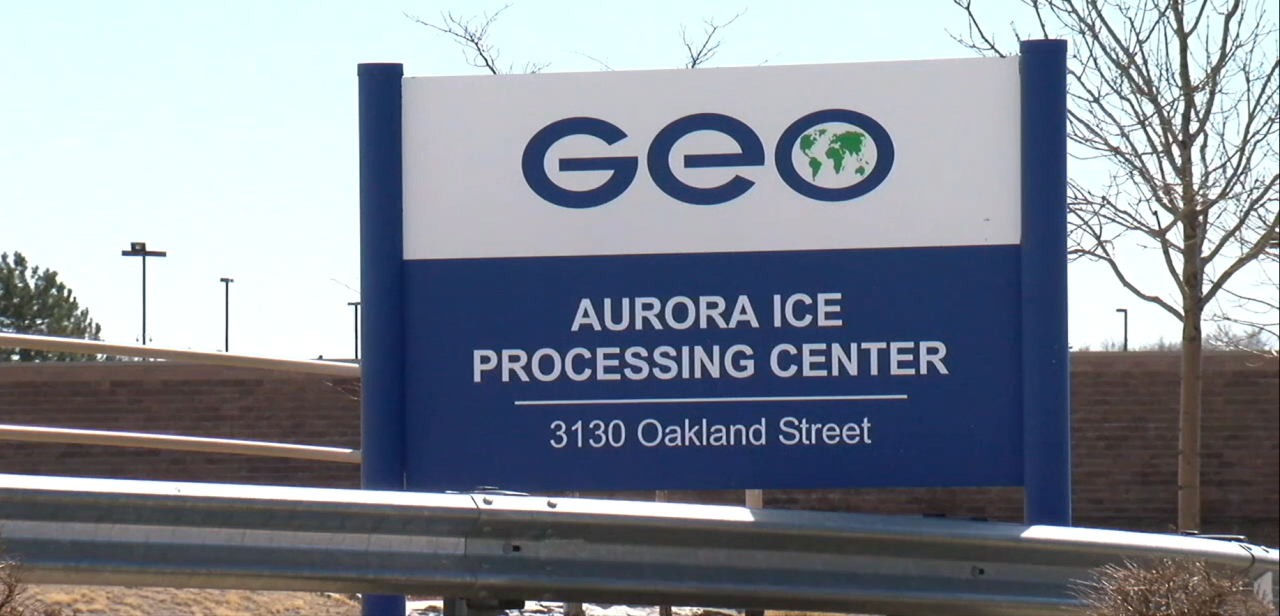
On top of that, his fears were realized when he left the courtroom. He said ICE agents followed him as he drove away and surrounded his car after he pulled into a nearby gas station. He was taken to the ICE Detention Center in Aurora.
“I was hoping for the best,” he said. “Hopefully nothing would happen and obviously that was not the case.”
Manuel, 23, came to the U.S. from Mexico with his family when he was 3 years old. He doesn’t remember anything about the trip or living in Mexico. He went to school in Colorado Springs, spent some time at a community college and was working in construction, but he never gained legal status in the country.
Still, he considers Colorado Springs to be home.
“I am from Mexico, but I feel more American in a way,” Manuel said, asking Denver7 Investigates to only publish a portion of his name and not show his face on camera out of fear of retaliation and to protect his family. “I've lived here my entire life. I went to school here. I have all my friends here. My family is here.”

When he was apprehended, he expected to appear before an immigration judge to request bond so he could be released. If he was able to post, he could get out of the facility and be at home while his immigration hearings moved forward.
But due to a new interpretation of immigration law, Manuel and many others are being denied bond hearings, forcing them to stay in ICE detention while their deportation case continues.
As a result, detained individuals are filing a high number of habeas corpus petitions, stating that their detention is illegal, and federal judges around the country are overwhelmingly finding in favor of those being detained by ICE.
Reinterpreting the law
In July, a leaked internal ICE memo outlined that the Department of Homeland Security would alter how it interpreted a 1996 immigration law to determine who is eligible for a bond hearing after they are arrested by ICE.
Until July, people who were arrested by ICE but had been in the country for years, like Manuel, were eligible for bond hearings. They would deny bonds for people who had committed serious crimes while in the country or were deemed flight risks.
Also, people who were picked up at the border or who had only been in the country for a short period of time were denied bond as they were deemed “seeking admission,” and were not eligible for bond under the 1996 Illegal Immigration Reform and Immigrant Responsibility Act.
But in reinterpreting that law, the Trump Administration broadened out the definition of those seeking admission to anyone who was not inspected upon arrival in the country, regardless of how long they had been in the U.S. This meant that only people who had arrived in the country on a visa who were arrested after it had expired would be eligible for bond hearings.
“For 30 years, people that have come in and were not encountered right away when they came across the border have been granted bond hearings in immigration court. And now the government is saying that they're no longer eligible for bond hearings,” immigration attorney Jessica Dawgert told Denver7 Investigates.
Regarding the change in policy, Department of Homeland Security Assistant Secretary Tricia McLaughlin sent a statement that read in part, “President Trump and Secretary (Kristi) Noem are now enforcing this law as it was actually written to keep America safe.”
It continued, “ICE has the law and the facts on its side.”

Habeas corpus as a way out
When Manuel was denied bond, he began calling attorneys, but the first few he spoke to said he didn’t have much of a case and suggested he voluntarily leave the country.
But he kept trying and eventually found immigration attorney Hans Meyer.

“In my mind it was, if worse comes to worse and I am taken out of the country, at least I go without that doubt of what could have happened if I would have kept looking or kept asking questions,” Manuel said.
Meyer took his case and filed a habeas corpus petition, stating his detention was illegal. It was one of a flood of filings that have come in 2025.
“Habeas corpus is really like a lifesaver,” Manuel said.
Through Dec. 1, 67 habeas corpus cases have been filed in Colorado federal court by people detained by ICE, with more than three-quarters coming after the July 8 ICE memo went out.
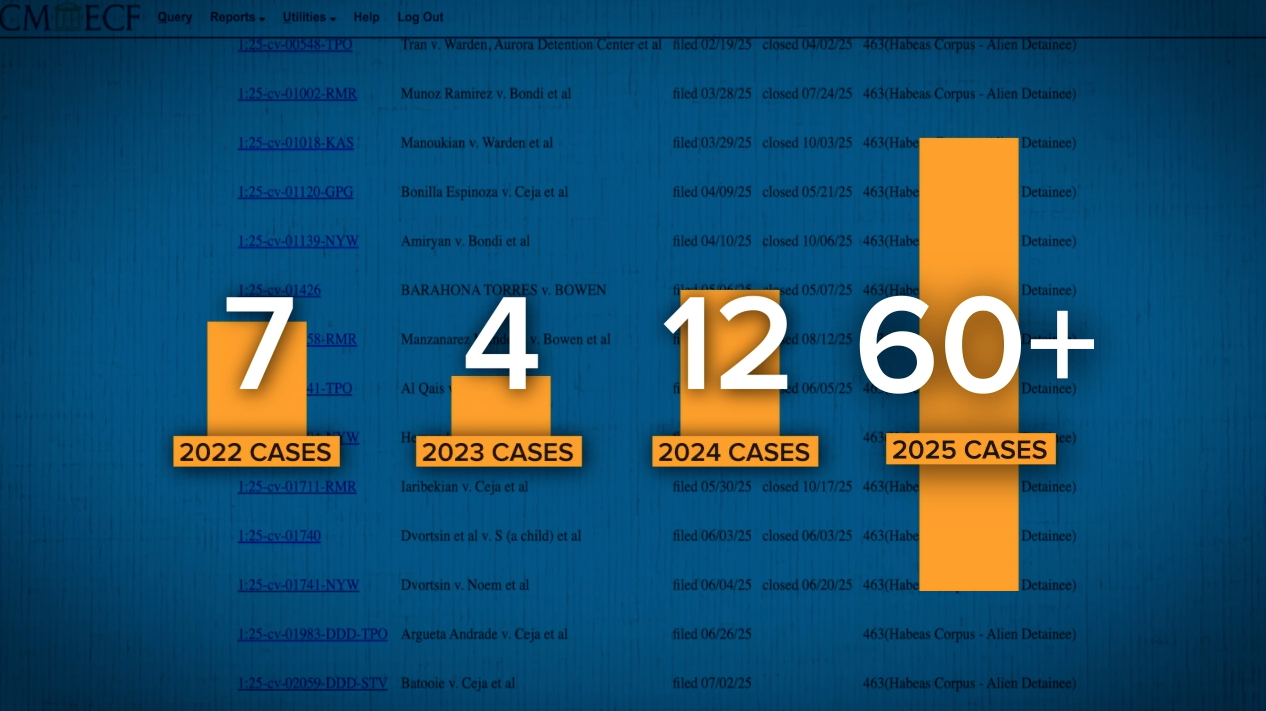
By comparison, there were 12 habeas corpus petitions filed by detained immigrants in 2024, four petitions in 2023 and seven in 2022.
“What we've seen is, I think, what courts have described as a tsunami of cases,” Meyer said.
Success in court
Meyer and Dawgert have both had success with habeas corpus petitions in federal district court.
In each of their cases that have gone before a judge, it was ruled that detention was unlawful and the judge ordered that the client either should get a bond hearing or ordered their immediate release.
And these rulings are a trend nationwide.
According to data compiled by the University of Iowa’s Federal Immigration Unit, which is tracking cases around the country, more than 93% of cases are found in favor of the petitioner who was denied bond in ICE custody.
As of Nov. 28, the group has logged 283 cases where the petition was successful and just 20 where the bond denial was upheld. Since November, the unit only tracked cases in which an individual judge had not yet ruled in a habeas corpus case, meaning there are likely more cases that were either successful or unsuccessful for the petitioner.
“I think the response is in the numbers. We've won over 200 cases across the country saying that a lot of these policies are not lawful,” Dawgert said. “I think this is an extreme policy that we have seen like never before.”

One of Meyer’s other cases was also recently turned into a class action lawsuit, which was OK’d by a judge in federal district court in Denver last month. The client in that case was released from ICE custody after his habeas corpus petition was filed. However, the coming ruling in the class action suit could mean that the case would apply to all people in similar situations to that individual.
“I think the message it’s sending to the government is that it's taking ridiculous positions in the law,” Meyer said.
McLaughlin’s statement addressed some of these rulings.
“On decisions from federal courts about mandatory detention, judicial activists have been repeatedly overruled by the Supreme Court on these questions,” part of the statement read. “We adhere to all court decisions until it ultimately gets them shot down by the highest court in the land.”
Manuel back home
Manuel’s case, like so many of the petitions filed, was successful. He was granted a bond hearing and was issued a $7,500 bond. He was able to come up with money and was released after seven weeks in detention.
“It was such a great feeling. It was such an immediate relief,” he said. “And when I opened the doors and saw my parents, I can't even describe that feeling. I just hugged them. I didn't want to let go.”
He has to wear a GPS tracking device on his ankle as one of the conditions of his bond.
He still has court dates and could eventually be deported, but he hopes he can find a way to stay in the country. He had a DACA application from 2021 that was never ruled on and he’s exploring other options to legalize his status in the U.S.
As he continues the process, he said he wants people to know that there are others still being detained who would have been out on bond in previous years.
“There's a gentleman in (ICE detention) that told me that two voices can be heard more clearly than one and I think if I can do anything in my power to help the people in there, I will,” he said. “And I think it's time for us to speak up."
