

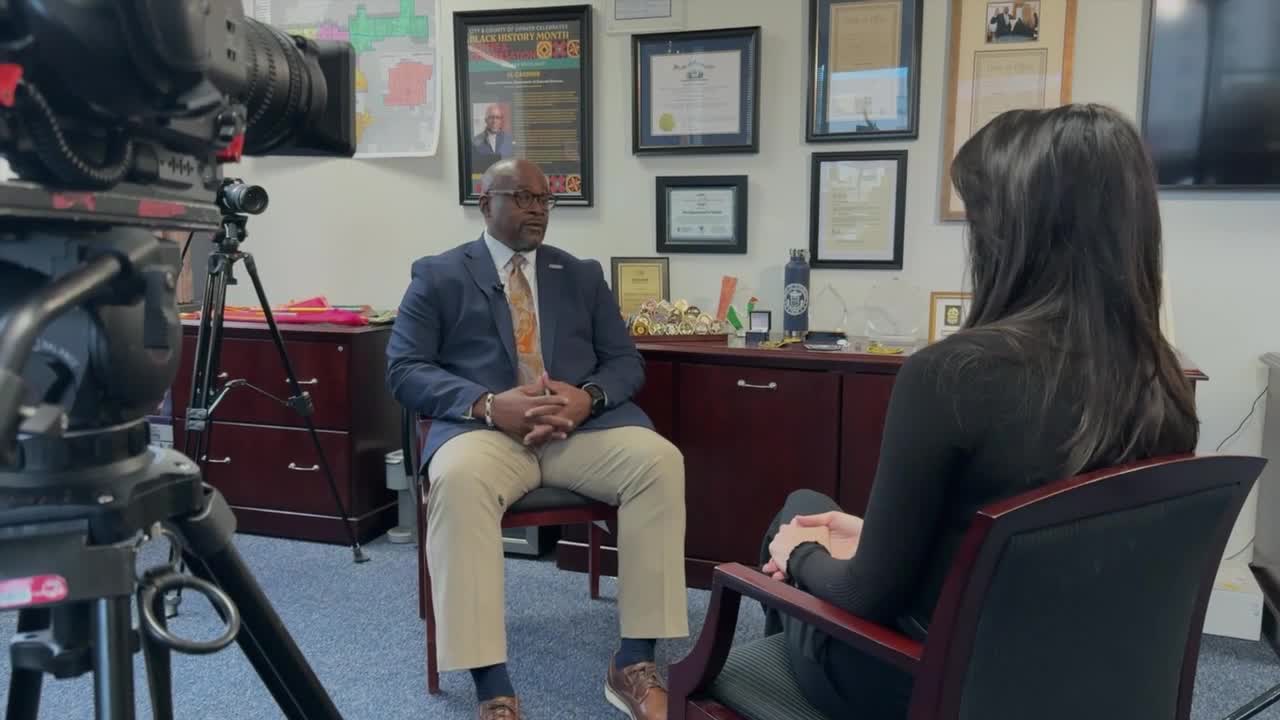


DENVER — If you live in Denver, you might not know the name Al Gardner. But the department he is in charge of touches every single life in the city.
Gardner was sworn in as the executive director of the Department of Public Safety for the City and County (DOS) of Denver late last year.
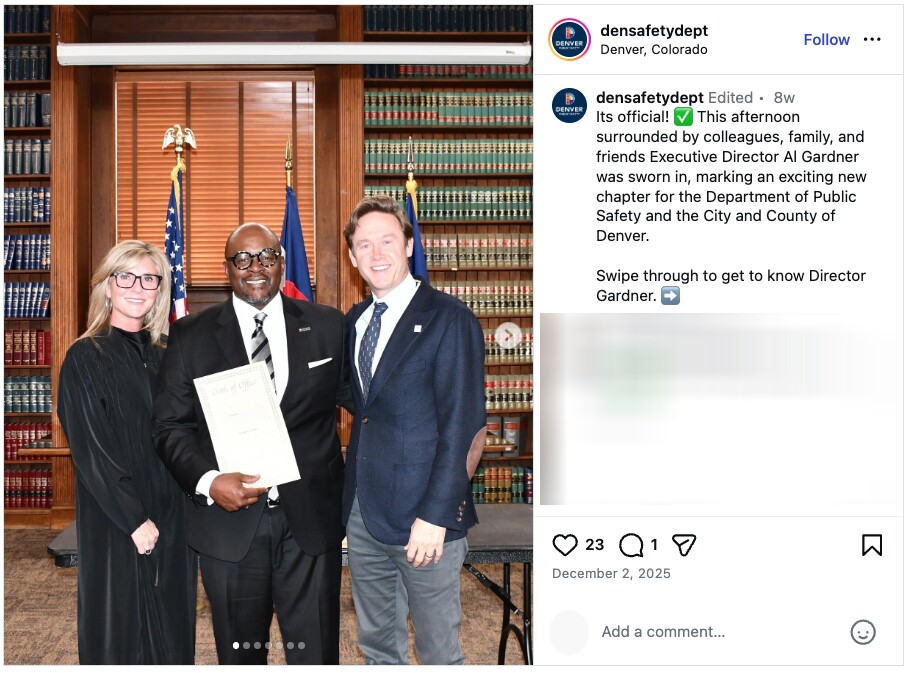
The man appointed as deputy mayor for a one-year term in January 2023 comes from a background in leadership as a head of IT. Plus, Gardner served as executive director of Denver’s Department of General Services and on several citywide boards and commissions.
However, Gardner does not have previous law enforcement experience.
The Department of Public Safety oversees the Denver Police Department, Denver Fire Department, Denver Sheriff Department, Denver 9-1-1, and Community Corrections.
Denver7 Investigates' Natalie Chuck sat down with Gardner in his first television interview since being sworn in, taking the community's safety concerns directly to the new man in charge.
Q: Do you think that most people in Denver know who you are?
A: I don't, and I think that is probably something that comes with the job, because it's a huge job. It's a job that comes with a great deal of responsibility. At the same time, a lot of your work is unseen.
Q: Why is it important for you to introduce yourself to the community and make sure they do know who you are?
A: You know, I think it's probably really important to me to tell the story of director of Safety and the Department of Safety, because it's so involved in everyone's everyday life... I mean, it's a vast amount that we oversee.
I'm fortunate that I've been around the Department of Safety and involved in a lot of parts of safety for a long time, so I wasn't a stranger to a lot of the mechanisms, but sitting in this seat has allowed me a different angle and a more in-depth view of exactly how we can come alongside these agencies.
Q: Some initial reaction when your name came out for the job was – This isn't someone who has on the street law enforcement experience. Why are you qualified for this job?
A: You know, I think when we look at my predecessors, they were the right people for the right time... Now we are in a situation where we're starting to look at technology inside of — not just law enforcement — inside of safety and how those different aspects of technology are able to be used, not to get rid of the human aspect, but to come alongside and enhance it... And I think my background of working with safety, as well as my nearly 30 years in technology now, have been able to be married at a really good time.
Q: The implementation of AI and surveillance cameras in Denver has been controversial. What is your stance on implementing AI, Flock cameras, all of that technology that we're now seeing roll out?
A: First, I think that the conversation around it has been good, and I'm encouraged by that. I'm glad people have been asking questions... My position on it is that I believe technology can be a very useful and valuable tool. And no doubt it has been that... And I think what now needs to happen is to continue the discussion, continue to be thoughtful around how we implement it.
Q: Is the fear around how these surveillance videos will be used valid?
A: Absolutely... One thing that I can tell you is that the men and women that work in the Denver Police Department to work on these apprehensions, to track down these stolen vehicles, to help to find children that are missing — they're only concerned about one thing and that's catching criminals. And the audit trails that we use in terms of these types of technologies is actually very restrictive. It's very tight and it's very easy to see and find out if someone is misusing these types of applications.
Q: People in Denver have questions about whether we could be the next place that immigration enforcement operations come to. How does your department plan on handling it, if we see what's happening in Minneapolis come down to Denver?
A: We are taking a lot of time right now, a lot of discussions that are going on, around how we approach that... It's an evolving situation. No city has encountered ICE the same. It's been different in Chicago, then it's been different in L.A... And now here we are in Minneapolis, which unfortunately, we've lost two citizens.
From a Denver perspective, what we're doing is making sure that we keep (the) community safe and how do we communicate that to them. A lot of it was around sharing the fears and the real concern about what will be done, what can be done, what are our limitations. And that's a tricky place right now because we're finding that out. We're building the plane and flying it at the same time. I think everyone around the country is, and so what we're trying to make sure we can do is control what we can control, and that is trying to keep our community safe.
Q: The mayor this week came out and also announced his 2026 goals, and it was to reduce gun violence and homicides and gun violence in high risk areas, shootings in high risk areas. How does your department plan on helping him achieve that goal?
A: Our part in doing that would be coming alongside the Denver Police Department and ensuring that they're equipped to do and to meet the goals that the mayor has set forth.
Q: Is it a realistic goal?
A: I think it is.
Q: The mayor also mentioned reducing homelessness being a goal back in 2023. You told our Tony Kovaleski during your campaign that you thought homelessness and reducing it should be the top priority in Denver. Do you still think that should be the top priority and why or why not?
A: I do. I think protecting the unhoused and bringing them indoors and addressing some of the issues is a major step to getting to where the mayor wants to be when we talk about solving crime in the city and reducing it.
Q: We do know that there have been budget cuts across the city impacting departments. How are you all feeling that impact in your department?
A: The budget cuts — they're real. And it's not just Denver. There are challenges all across the country. So, outside of what we would need capital investment to do, I think there's a lot of other opportunit(ies)as well to make these departments better.
Q: Are you all feeling strapped for that capital investment though?
A: Well, we're definitely feeling it. We definitely feel it like any other department in this city. But I think that the folks here are very dedicated, and I think we take a concerted effort every day to focus on what we can.
Q: We've seen an investment in the 16th Street Mall. How do you see that evolving?
A: We want everyone and every Denver right to feel safe. And folks that come and visit our city to feel safe.

