



DENVER — It sounds too good to be true: free groceries from Medicare.
Denver7 Investigates found advertisements promoting these offers popping up online and on streaming platforms, often with urgent enrollment deadlines.
For seniors coping with high grocery prices, the pitch can be tempting.
To find out what’s behind it, Denver7 Investigates called one of the numbers featured in a recent ad.

On the other end of the line, a representative answered, stating she was a licensed insurance specialist on a recorded line.
When asked about the “free Medicare grocery card,” the agent replied, “Those plans run through your Medicare Advantage plan, and the Medicare Advantage plan is what’s offering the grocery allowance card. So it just depends on what Medicare Advantage plan that you have and what you qualify for.”
In other words, the “free Medicare grocery card” is actually a grocery allowance benefit offered by certain Medicare Advantage plans.
► Watch Jaclyn Allen's report in the player below:
The company’s job is to enroll callers into a plan — something consumers can do themselves by contacting Medicare or their provider directly.
Mark Fetterhoff, program manager for AARP ElderWatch, said the way these offers are presented raises concerns.
“We’re getting calls on our helpline. People are confused, wondering if it’s real,” Fetterhoff said.
Urgent language is one of the red flags.
“'Hurry up, act now' is a great excuse to say, 'I’m going to take a step back and I’m going to do my research,'” he said.
Medicare does not have a standard grocery benefit, though some Medicare Advantage plans may offer perks like grocery or gift cards.
These offers are legitimate within those plans, but Fetterhoff said they should be explored through trusted, unbiased resources and not aggressive marketing.
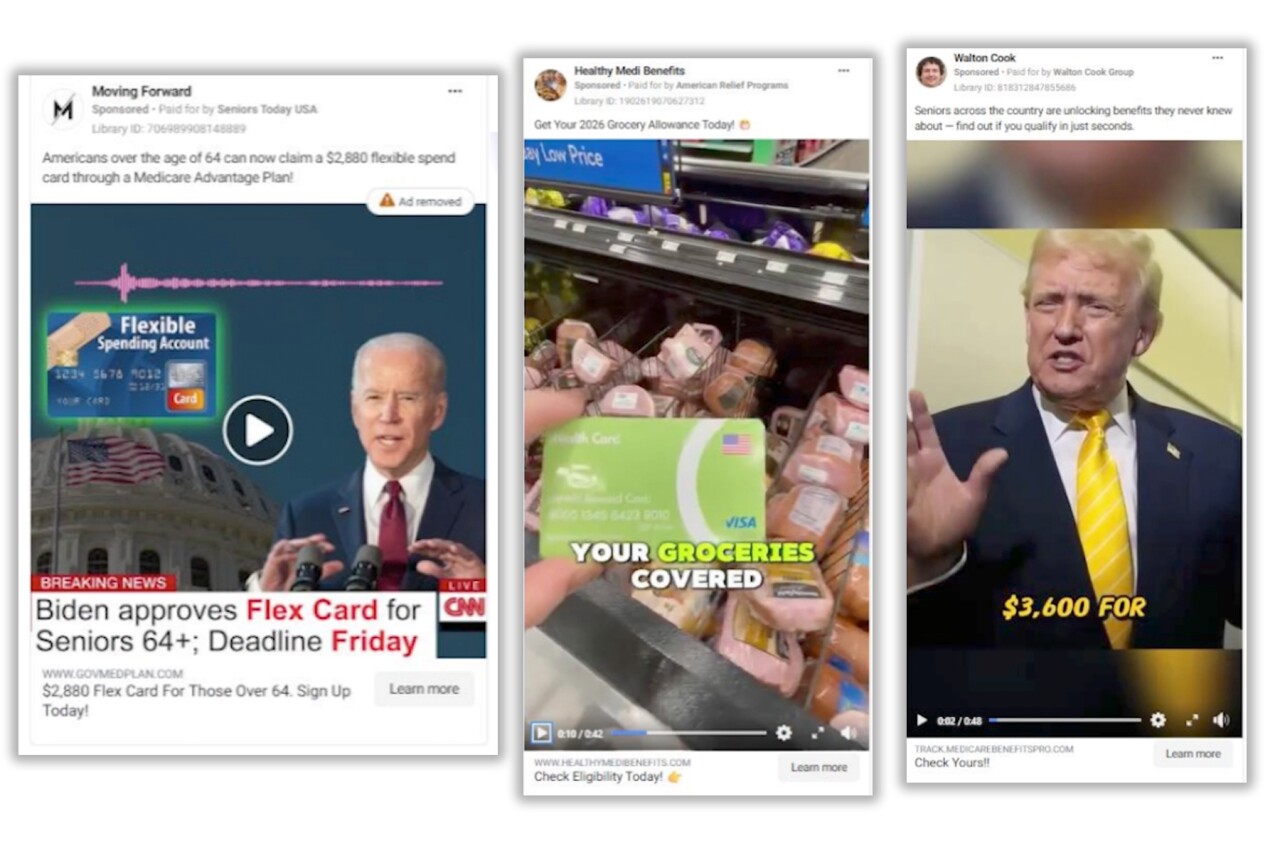
Problematic ads are not confined to television and streaming.
“There’s a lot of deceptive ads that we’re seeing on social media,” Fetterhoff said.
A report from the Center for Countering Digital Hate found that misleading Medicare Advantage ads reached more than 215 million views on Meta platforms in the past year, mostly from seniors.
Some ads impersonated government agencies or used deepfake celebrity endorsements.
Others pressured people to share personal information or switch to plans that may leave them worse off.
The Federal Trade Commission stated seniors have lost billions of dollars to scams like these, and lawsuits have been filed alleging that Meta profited from hosting them.
Fetterhoff advises seniors to use free, unbiased programs such as the State Health Insurance Assistance Program (SHIP) to navigate plan options.
“Again, kind of taking all the noise out of this process is a really important thing to do, and going to trusted resources rather than kind of the flashy ads that we’re seeing on TV and on social media… is the best way to go,” he said.
Seniors can verify benefits or get help navigating Medicare through Medicare’s helpline at 1‑800‑MEDICARE or at medicare.gov. Colorado residents can reach Colorado SHIP at 1‑888‑880‑9191.
Additional trusted resources to check benefits include:
- BenefitsCheckUp.org
- Colorado Department of Human Services – Benefits Assistance
- Colorado Division of Insurance – Senior Health and Medicare
Experts say the safest approach is to work directly with Medicare, your current plan, or qualified state and nonprofit advisors who can confirm benefits without exposing you to unnecessary sales pressure.

