

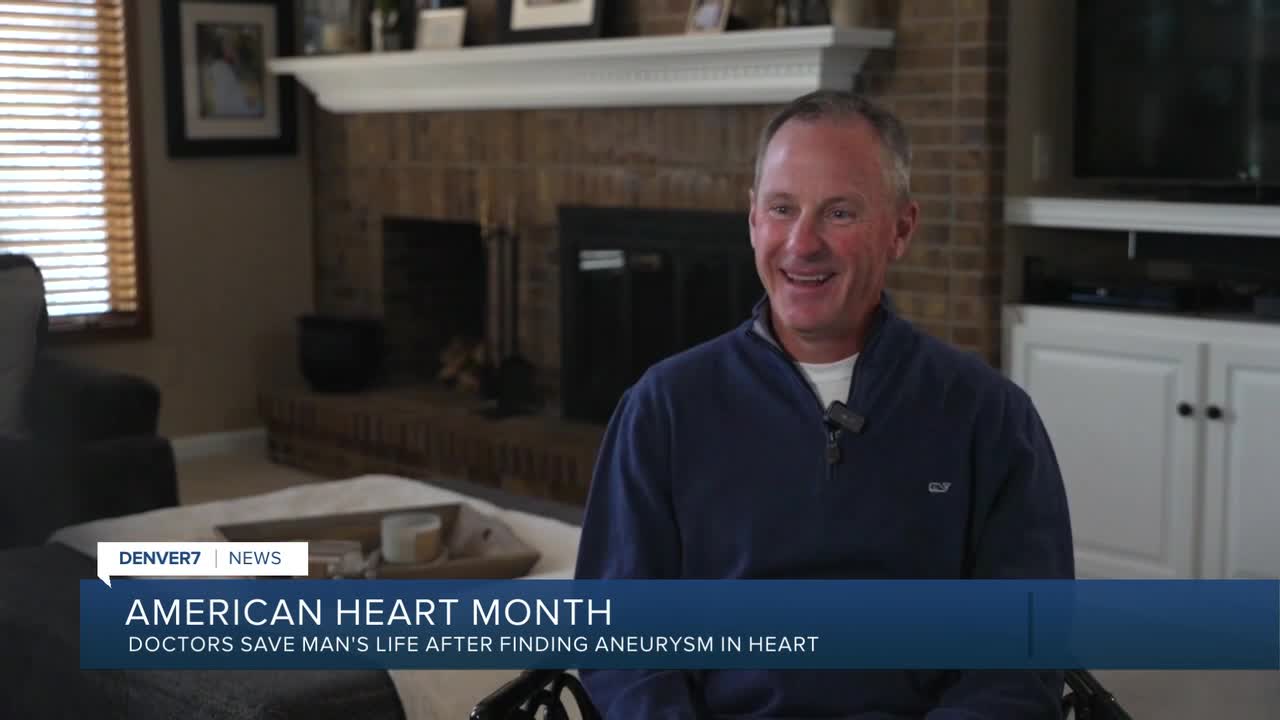


WHEAT RIDGE, Colo. — For American Heart Month, Denver7 is highlighting the importance of regular physicals and check-ups with a doctor as that may have been the key to saving one Wheat Ridge father's life.
Michael Marcoux, born and raised in Wheat Ridge and a 1993 Air Force Academy graduate, has spent most of his life in Colorado. He has a passion for physical fitness. He regularly exercise and even trains for Spartan Races with his son. During an annual physical, a CT scan revealed an ascending aortic aneurysm, or a ballooning of the aorta that can rupture with catastrophic results.
It shows that even the healthiest of people can have unseen ailments.
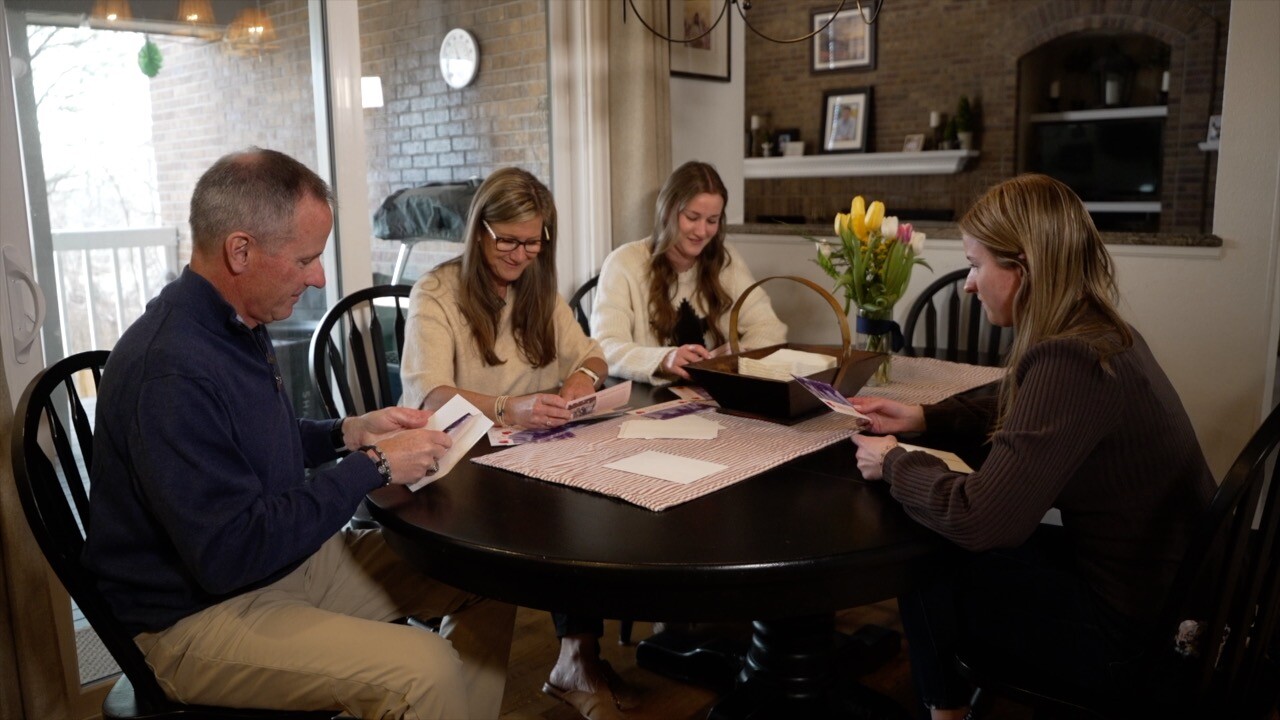
“I believe, had I not known about it or not acted upon it, five years down the road I would have been leaving my wife and five kids without a father,” Marcoux said.
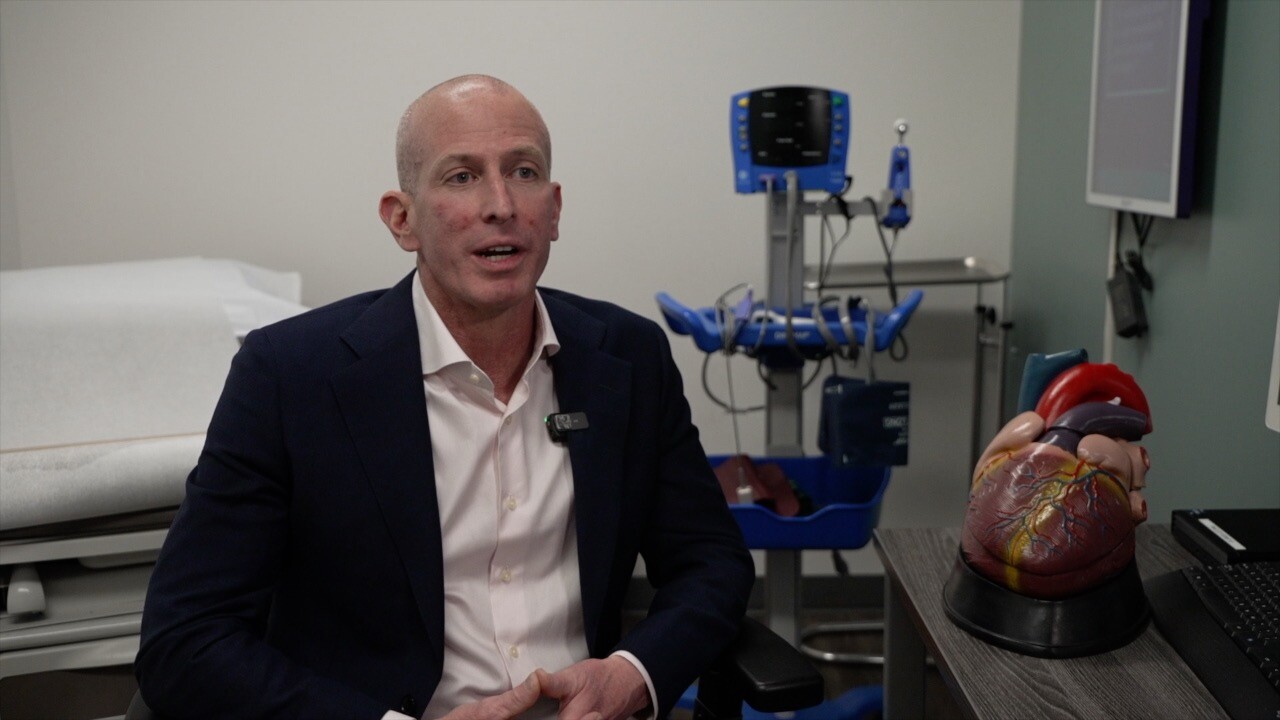
Dr. Jason Shofnos, director of cardiovascular surgery at HCA HealthONE in Denver, said Marcoux’s aorta measured near 4.8 centimeters on imaging and was about 5 centimeters when measured in the operating room. A normal aorta in that area is roughly 3 centimeters.
“Aneurysms are asymptomatic until they’re not,” Shofnos said. “When there’s a frank rupture of this area, it’s nearly 100 percent fatal.”
Marcoux’s condition was linked to a bicuspid aortic valve, a two-leaflet valve present in about 3% of people that can accelerate flow and lead to calcium buildup and a higher chance of aneurysms. Shofnos said bicuspid valves, rather than the typical three-leaflet valve, run in families and that people should consider meeting with a cardiovascular specialist if they have a family history of heart issues.
Surgeons removed the enlarged section of Marcoux’s aorta and replaced it with a Dacron graft, a woven polyester tube commonly used in these repairs. Shofnos said elective repairs are safer when patients are in good shape, and modern risks for many open-heart cases are low. He expects Marcous to return to his prior activity level by the end of a roughly three-month recovery period.
Marcoux and his wife said their Catholic faith, family support and confidence in the medical team helped carry them through the decision to have open-heart surgery. He urges others with a family history of heart problems to get screened.
“Number one, understand it,” Marcoux said. “Number two, get it looked at, whether that's a scan, whether that's an ultrasound. But talking to cardiac doctors is very advisable.”


