

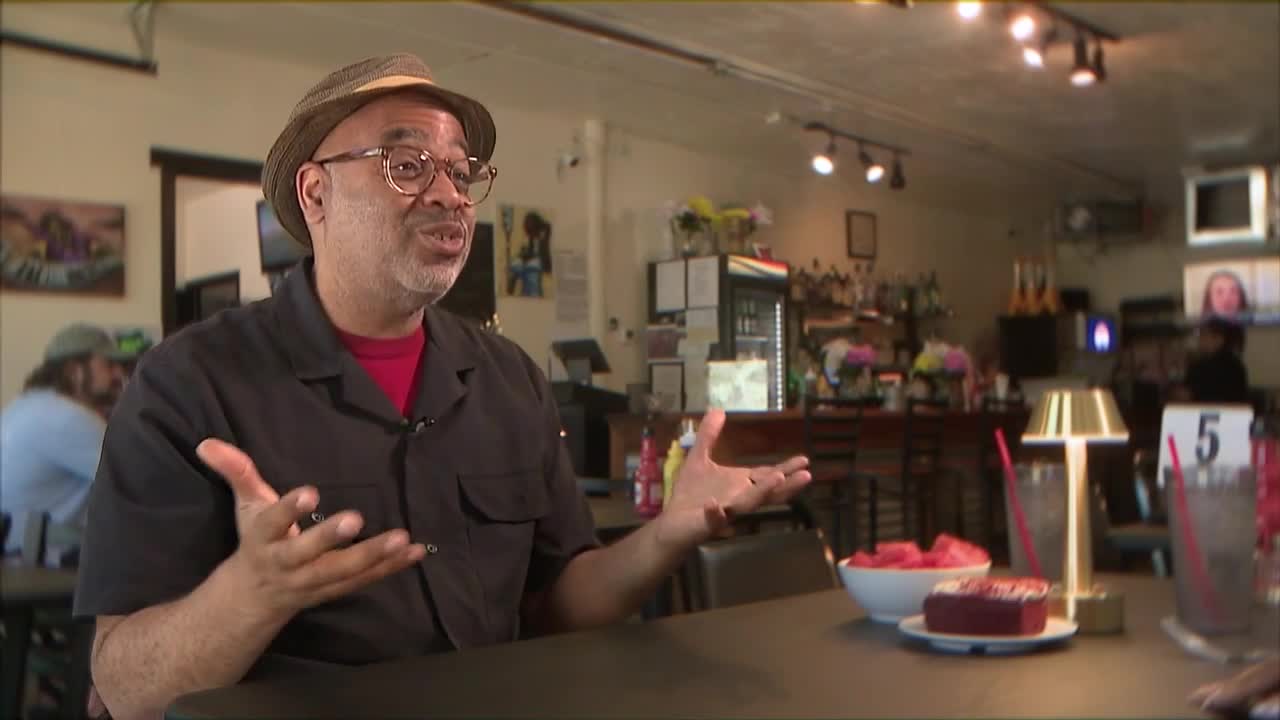


As Denver prepares to host one of the largest Juneteenth celebrations in the U.S., food vendors will be a big part of the weekend festivities.
Juneteenth is a celebration of June 19, 1865, the day Union Army troops arrived in Galveston, Texas and informed enslaved African Americans that they were finally free, two years after the Emancipation Proclamation was issued.
▶️ WATCH: The Soul Food Scholar breaks down the history of Juneteenth eats with Denver7's Micah Smith
“Enslaved people had heard about the Emancipation Proclamation and the Civil War. The big factor is that the Union army arrived and could enforce their freedom,” said Adrian Miller, a culinary historian popularly known as The Soul Food Scholar. “Some people did escape, and they managed to make it past Union lines, but most people were still stuck on those plantations, and so it was a cause of jubilation. And right after that, you know, people gravitated to cities and celebrated.”
Miller said these celebrations were called emancipation celebrations.

“Juneteenth is one of those. So, the early celebrations were a mix of reverence, usually hosted by a church, so there would be sermons, there would be prominent citizens brought in," Miller said. "There was a time for enslaved people in that community to actually talk about what they went through, so people would never forget. And then you got to the party, so the parties would have certain foods. It's a mix of their West African heritage, European influences, and also the Indigenous culture, all coming together. So, you see this playing out through food.”
He said barbecue was especially important.
“Juneteenth is a summer holiday in Texas. So, what are people going to be eating in Texas in June? And so, over time, a Juneteenth trinity does emerge. So, you've got barbecue, usually pork spare ribs, brisket, chicken, and then sausages. In the Black community, we have a coarsely ground spicy sausage, we call hot links," Miller said.
He said traditional foods associated with Juneteenth share one quality: the color red.
“The belief was that the color red symbolizes the blood shed by enslaved Africans, and so that becomes the symbolic food of Juneteenth,” Miller said. “But over time, people have started embracing other red foods. So, red velvet cake is now a popular dessert on Juneteenth.”
Miller said through his research he uncovered newspaper stories and oral histories repeatedly mentioning red foods.
Even though Denver’s Juneteenth festival has grown tremendously through the decades, Miller said the city’s emancipation celebration was initially recognized on a different date.
“We actually celebrated emancipation on Sept. 22 and the reason why we did that is that's the anniversary of when President Abraham Lincoln gave the nation a heads up that the Emancipation Proclamation was coming, so it was, like, a 90-day heads up," he explained. "In Colorado, we were celebrating that — that was our emancipation tradition,” Miller said. “It started shifting in the 1960s or so, and it's because all these Texans started showing up in Colorado, and I have to say, Texans are the biggest cheerleaders for their culture. And so they got here, and they said 'Hey, y'all don't have Juneteenth. Well, we're going to start it.' So, 1950s (and) 60s, Juneteenth starts to gain momentum here.”
Miller said Denver’s Juneteenth celebration remains strong because of what it represents.
“When I do a presentation on Juneteenth, I just say it's the latest word on freedom, because we're not fully free yet, so it's reminder that freedom is fleeting, and we have to continue to work on it to make sure we have the freedoms that are guaranteed under the Constitution, politically, socially, economically, and then also that we feel that we're part of this nation, truly part of this nation,” Miller said.
Denver’s 2026 Juneteenth celebration will be held Friday, June 19 through Sunday, June 21 along Denver’s Welton Street corridor.

