

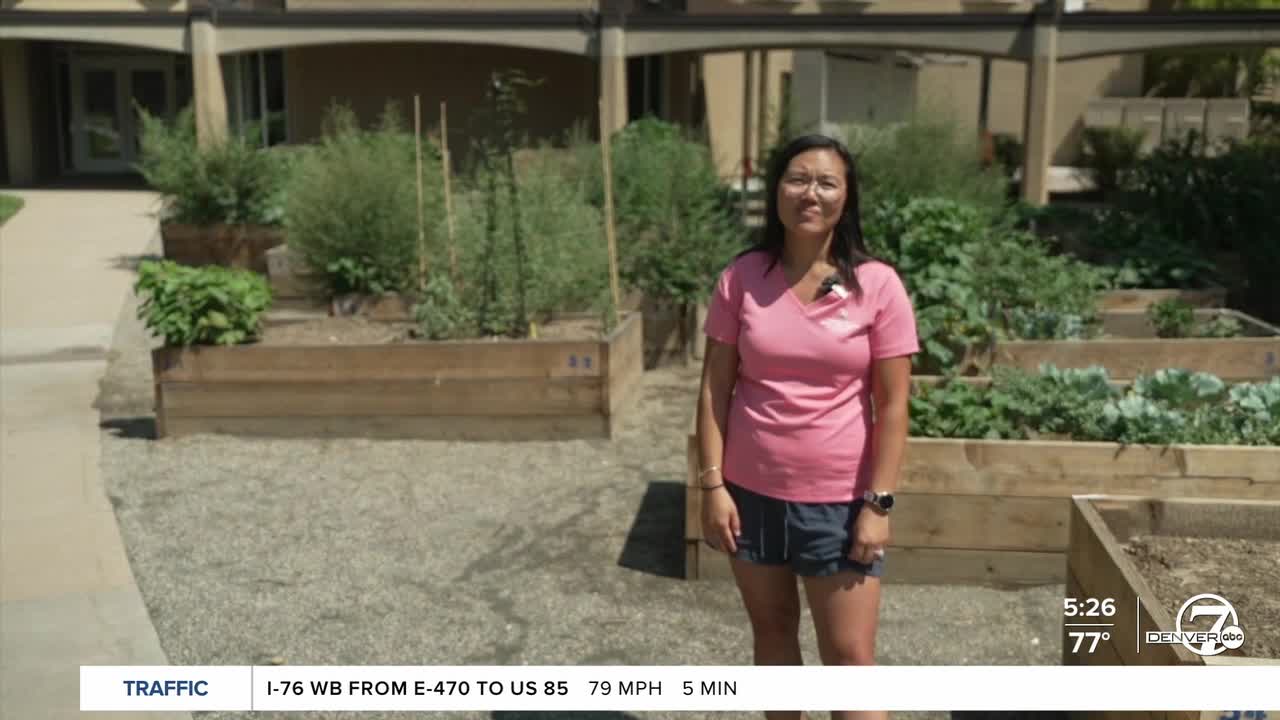


DENVER — A community garden is taking root at a Denver affordable housing campus, bringing fresh food, education and connection to hundreds of residents.
Mosaic Community Campus, located in Denver's Park Hill neighborhood, is a former Johnson and Wales College campus that was converted into an affordable housing community in 2024. The site includes 154 homes across four rehabilitated buildings that were once dormitories.
- Watch the full story in the video player below.
"I think gardening feels like magic. You see this tiny seed… it's really hard to imagine that it is going to grow into a plant, a fruit, a tree," Lauren Howe said.
Howe is the program supervisor for Healthy Food for Denver's Kids, a Denver city grant program created by voters in 2018 to fund healthy food access and food education for Denver's youth. The program provided Mosaic with a three-year, $275,000 grant that made the garden possible.
The grant supports food programming, garden supplies, culturally relevant food purchases and education for the roughly 350 people who call Mosaic home.
Laura Brudzynski, president and CEO of Archway Communities, leads the nonprofit that operates Mosaic and provides support services to its residents.
"We are able to have something more than home here. It's really community," Brudzynski said.
Archway Communities operates 12 communities across the Denver metro area and the Front Range, providing no-cost food programming at each location. At Mosaic, the organization partnered with Denver Urban Gardens to enhance the food education component of the work.
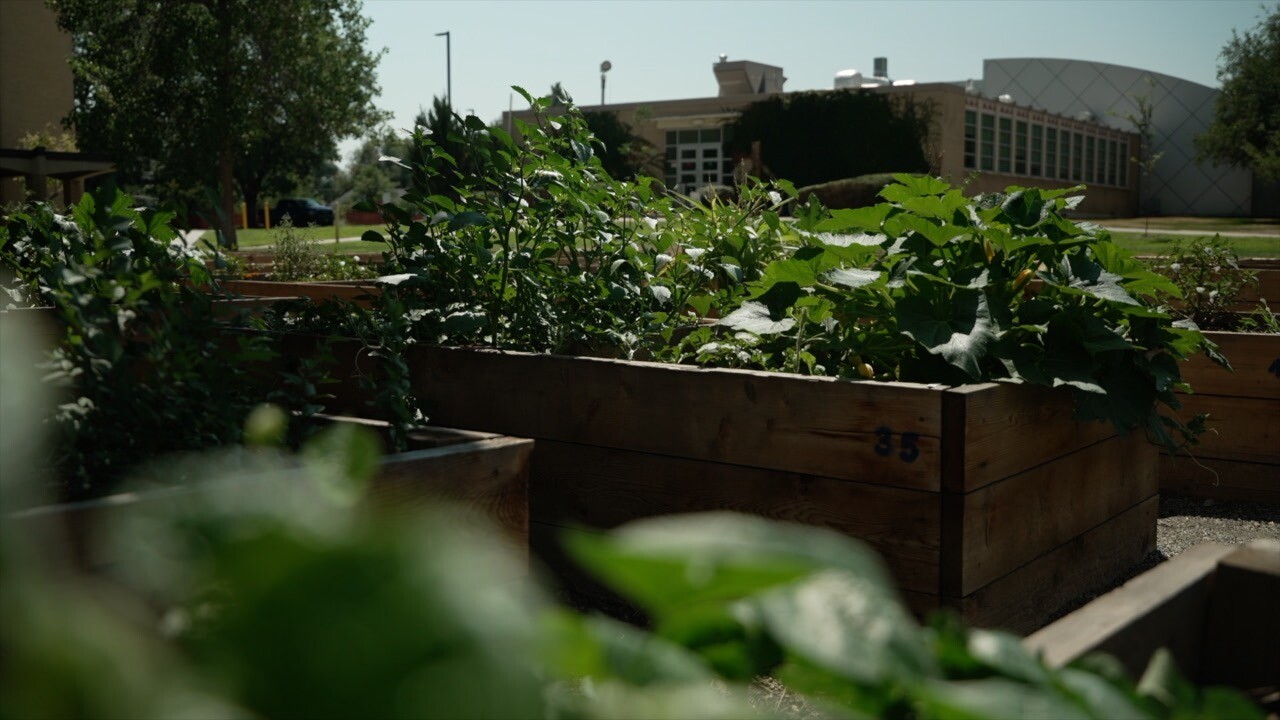
"We together with our staff and volunteers are able to provide education to the people who live at this community, including kids, around how to grow food, where food comes from, and the journey that food takes to get to your table," Brudzynski said.
A kids club at Mosaic gives children hands-on experience in the garden, learning how to grow vegetables like carrots and zucchini alongside Denver Urban Gardens staff. Remaining garden plots are available to residents who want to grow their own food.
"These beautiful garden beds are co-located where families live and are out and about every single day, like this is really where the meaningful and impactful work happens," Howe said.
The garden serves a diverse population at Mosaic, including immigrant families and residents from a wide range of cultural backgrounds. Brudzynski said the ability to purchase and provide culturally relevant foods is a key part of supporting resident dignity and building community.
"Gardening is about access to healthy foods, but it's also about bringing communities together," Brudzynski said.
Howe said the program prioritizes equity, focusing on neighborhoods and communities that have historically faced challenges accessing healthy food.
"Getting kids in the dirt, growing their own food from seed to plate, is one of the number one ways to build lifelong healthy habits," Howe said. "They get to harvest it and then cook it with their family and eat it. That's going to inspire them to want to eat healthy fruits and vegetables. Hopefully, hopefully for the rest of their lives."
Healthy Food for Denver's Kids has issued more than $100 million to more than 120 organizations since 2020. In any given year, the program's grantee partners serve more than 100,000 Denver families.
This story was reported on-air by a journalist and has been converted to this platform with the assistance of AI. Our editorial team verifies all reporting on all platforms for fairness and accuracy.

