



DENVER — Denver City Council on Monday voted to postpone the final vote on an ordinance that would allow some bars and clubs to stay open until 4 a.m., while retaining the state-mandated 2 a.m. cutoff for alcohol sales.
The measure, Council Bill 26-0921, was scheduled for a second and final reading before city council Monday afternoon, but members voted unanimously to delay the vote after Council President Diana Romero Campbell said community concerns intensified following a deadly nightclub shooting in southeast Denver.
► Denver7 political reporter Colette Bordelon spoke to the community about the impact of this measure in the video below:
The shooting, which left one person dead and eight others injured, happened in an area of Denver that Campbell represents. She said she needs more time to speak with members of her district about the shooting, and hopes the delay will give her that time to connect with residents about the proposal for Denver bars.
Council members are scheduled to revisit the issue in two weeks on Aug. 3.
Those behind the measure argue it will make late nights in Denver safer while creating more opportunity for business, while those against it are skeptical of how it would work.
What would the ordinance do, exactly?
The ordinance would repeal what city leaders call "outdated" amusement and cabaret license types, and reduce the number of such licenses from 14 to three — adult entertainment, limited entertainment and nightclub licenses.
It would allow bars and clubs operating under the nightclub license to remain open until 4 a.m., though the last call for alcohol sales would remain at 2 a.m., as mandated by state law.
Eric Escudero, a spokesperson for the city's department of licensing and consumer protection, previously told Denver7 that the ordinance has a couple of goals: one is to make Denver safer by addressing a long-standing issue.
“If some entertainment businesses can stay open till 4 a.m. not serving alcohol after 2 a.m. like it already is, then we can see a gradual release of people, and we think that can reduce incidents of violence,” Escudero said.
The other goal, he said, is aimed at reducing "red tape” for businesses by making it easier to understand the licensing process.
He said that a nightclub license, for example, comes with stronger regulations, such as requirements for camera footage and rules for security guards.
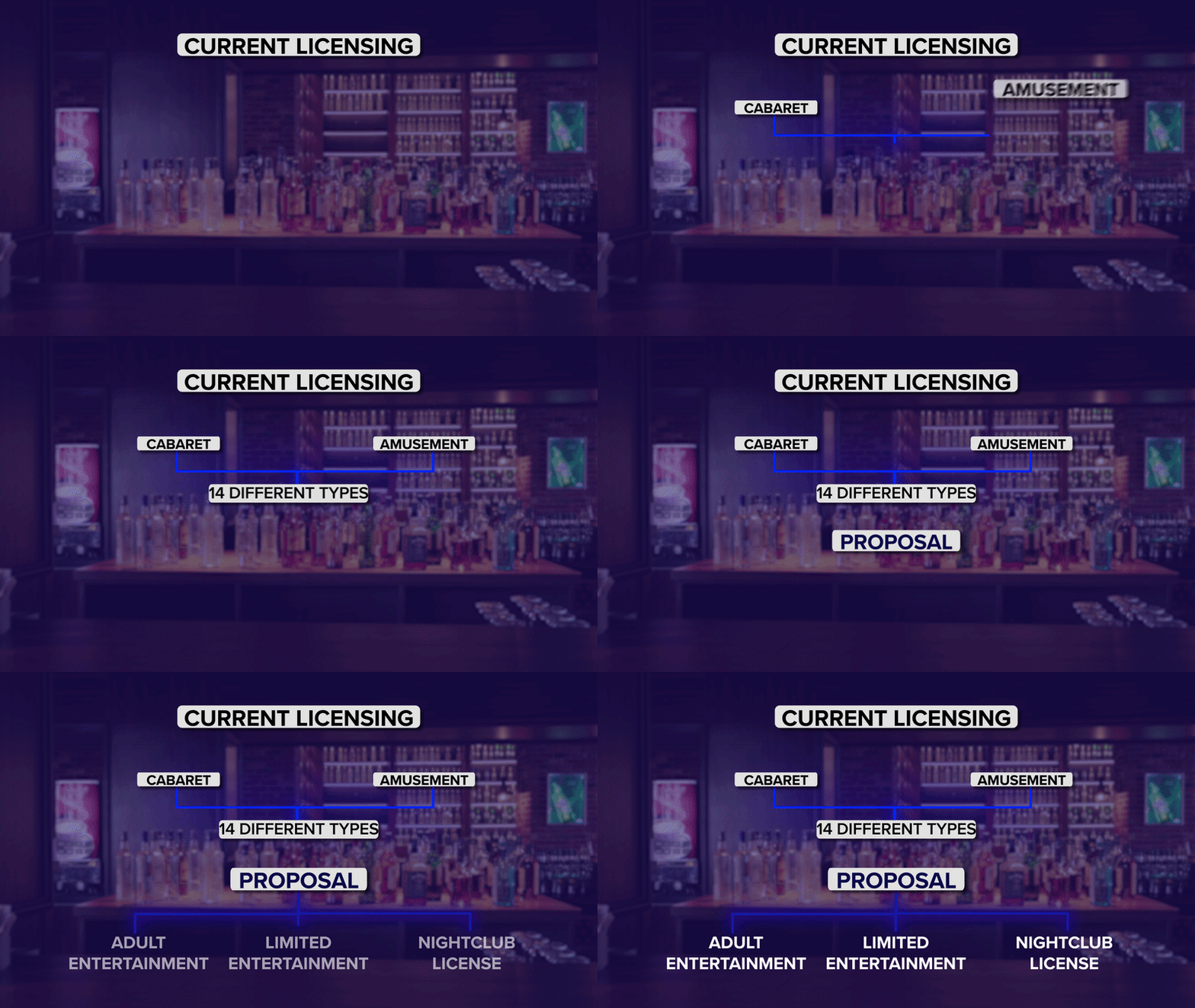
Escudero added that if an entertainment business is still required to obtain a license after these changes take effect, business owners would be expected to apply for the new license types once their cabaret or amusement license expires.
ONE Denver, an organization focused on the nighttime economy, worked closely with the city on this proposal. Stephen Brackett, the executive director of the group, said the proposal will create opportunities for certain businesses in Denver.
“It's actually going to affect a very small amount of people. The main reason being that only really large venues — probably like large venues that are doing EDM, where you have an audience that is ready to dance and celebrate late into the night, and you can charge a high ticket rate, and then serve like super expensive energy drinks and all of those things," said Brackett. “They also have to do it more than 12 times a year. So, the other thing about this ordinance is that it does make it possible for different organizations and venues to do things that might go later. And as long as they do it less than 12 times a year, they don't even need to apply for the ordinance to do so.”
"Extremely performative and considerably underthought"
The idea is not universally loved. Opponents have argued that extending operating hours could increase noise, policing demands, or opportunities for violence.
The Owner of The L on Broadway, Adam Hodak, is concerned about what the measure would mean for his business.
“Overall, I think this is extremely performative and considerably underthought as a measure," said Hodak. "I see it more as a tax on a business because there's no ability to generate revenue for those extra two hours... With labor costs being as expensive as they are, staying open that extra amount of time is a really bad idea, in my opinion.”
Hodak also said that just because a bar is required to stop serving alcohol at 2 a.m. does not necessarily mean they will abide by that standard if allowed to stay open later.
“When it comes down to it, I do believe that this will create a number of bad actors that will just continue serving alcohol for some amount of time after 2 a.m. We just don't have the resources as a city to police that," said Hodak. “People will do whatever they have to do. Bars and restaurants are already struggling. You will just see places serving alcohol after 2 a.m. because they would rather do that than worry about getting in trouble.”
Meanwhile, Mothers Against Drunk Driving (MADD) is worried about what the extension would mean for Denver roadways.
“Our concern really is that the idea is that we're going to mitigate safety issues, but I think we're actually going to see an enhanced amount of DUI drivers on the road," said Rebecca Green, the state executive director for MADD Colorado. "The research is going to show that it actually will impact impaired driving. If you can't get home at 4 a.m. because there are no rideshare drivers, what are you likely to do? You're likely to get in a car and drive.”
Green also questioned how to make this an equitable practice, asking whether it is fair if some bars can afford to hire extra staff while smaller operations may not be able to.
Brackett encouraged anyone with concerns about the proposal to join in the rulemaking process if the measure is approved by Denver City Council in two weeks.
Denver7's Robert Garrison contributed to this report