



DENVER — The Broncos’ plan to build their new stadium at Burnham Yard has dominos falling in Denver. One has some pedestrian advocates on the city’s West Side concerned.
The stadium plan is forcing Denver Water to relocate some of their facilities from the Burnham Yard area to other parts of town.
The utility wants to move its Operations Complex — what it calls an “essential part of our emergency response operations, serving the downtown area” — to what is now known as Parking Lot M outside Empower Field at Mile High, at the southeast corner of the Colfax-Federal cloverleaf interchange.
- Watch the full story in the video player below.
Denver Water said the Broncos would pay for that construction, and the relocation site is ideal as “a central location with good access.”
“While we were willing to be flexible and relocate certain operations facilities a bit further out, it was critical to us that we keep certain operations and personnel in the urban core so that we can maintain the highest level of service to our customers and quick response times in emergencies,” the utility said in a statement to Denver7.
The arrangement Denver Water has with the Broncos and the City of Denver contemplates acquisition of Lot M and replication of a building that is an essential part of our emergency response operations, serving the downtown area.
Denver Water’s existing Operations Complex is in the heart of central Denver, with quick access to highways and major thoroughfares. This provides us with quick access to respond to main breaks and other service disruptions throughout our service area, particularly downtown. While we were willing to be flexible and relocate certain operations facilities a bit further out, it was critical to us that we keep certain operations and personnel in the urban core so that we can maintain the highest level of service to our customers and quick response times in emergencies.
Lot M meets our criteria as a central location with good access. Assuming that we move forward with this property, the Broncos would fund the construction of a replacement facility on this parcel as part of Denver Water’s relocation.
Additionally, if we move forward with this property, we don’t intend to impinge on Colorado Department of Transportation plans for the cloverleaf interchange and would look to harmonize our operational requirements wherever we relocate. In keeping with our reputation for environmental sustainability, positive community relations and neighborhood collaboration, Denver Water will work closely with council offices, the city and local community groups to address concerns surrounding development at Lot M in a collaborative manner.
But some pedestrian advocates are pushing back.
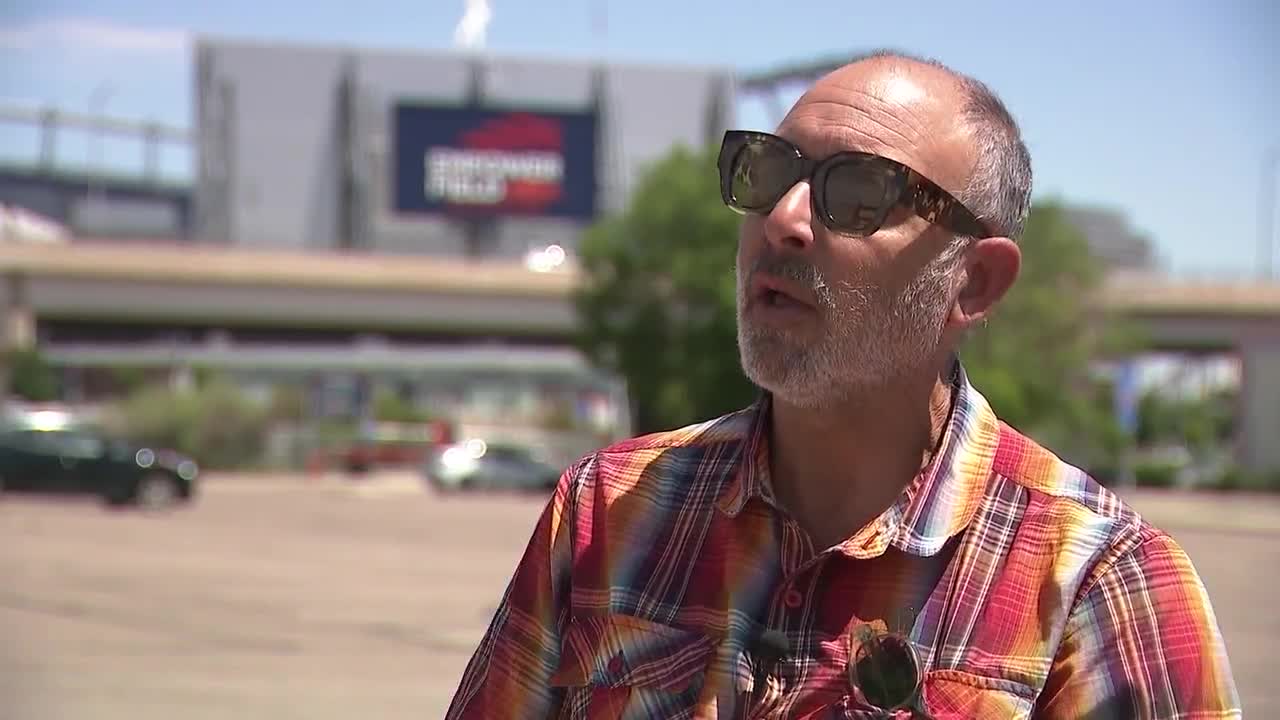
Director of Economic Development for the West Colfax Business Improvement District Dan Shah said he believes there are other sites that would fit Denver Water’s needs for their Operations Complex. He believes building that facility on Parking Lot M would disrupt a roughly decade-long plan to transform the Colfax-Federal interchange, to make it safer, more walkable and home to more housing.
The long-discussed changes would also make the historically working class Sun Valley neighborhood better connected to its west side neighbors and create a safer environment for pedestrians walking in the area.
“There's been so much planning, so much community consensus, really sort of focused on the community's priorities around what should happen in this interchange and around, surrounds,” Shah explained. “It seems very, you know, sort of unplanned to then say, ‘Okay, we're going to put a lay-down yard that's incompatible.’”
Shah said ideally, the interchange would “look like every other intersection that you might find on Federal on the West Side, just blending into the surrounding neighborhoods and providing safe passage for bikes and wheelchairs and pedestrians.”
Lot M is located next to the headquarters for the Colorado Department of Transportation (CDOT), which earned a $2 million grant from the U.S. Department of Transportation’s Reconnecting Communities Pilot (RCP) to study potential changes to the interchange and commence engineering design.
Shah said he supports the Broncos’ Burnham Yard move and Denver Water’s goal of a central location for their new operations facility, but he is not convinced the cloverleaf transformation and the Lot M relocation can coexist — in large part due to a grading issue between the interchange and adjacent parking lot.
Both the utility and CDOT, however, say it is possible. In a Thursday letter to Denver City Council member Jamie Torres, who represents the west side, CDOT said it has heard the community’s concerns about the interchange.
“We want to make clear that the Lot M property would not interfere with possible changes further to the west at the interchange itself,” the letter said. “We also appreciate that Denver Water has made clear that they do not intend to occupy Lot M in a way that would preclude alternatives in the study for Colfax and Federal, and like them, we anticipate the ability to collaborate on our respective needs and find solutions as our study process moves along.”
The CDOT letter states, given the compressed timeline of the Broncos' plan, “it makes the most sense to align the timing of CDOT’s study of the interchange with related recommended changes to the future of the Stadium District and possible revisions to the West Area Plan.”
“While we understand the urgency many feel to address the longstanding frustrations with the cloverleaf interchange, we cannot ignore the strong possibility of changes to the Stadium District in the near future, and we look forward to complementary study processes that avoid the inefficiencies of duplicative taxpayer expense,” the letter adds.
All of these groups say this is an issue they will keep discussing — though the clock is ticking. The Broncos plan to build and open their new stadium by 2031.
Shah hopes the community is not left out of the planning, as he explains was the case when the interchange was first built and hundreds of people and businesses were displaced.
“From our standpoint, that sort of heightens the importance of trying to find, you know, a solution that is in this case that doesn't, you know, sort of repeat those kind of oversights of community input that happened in the past,” Shah said.


