

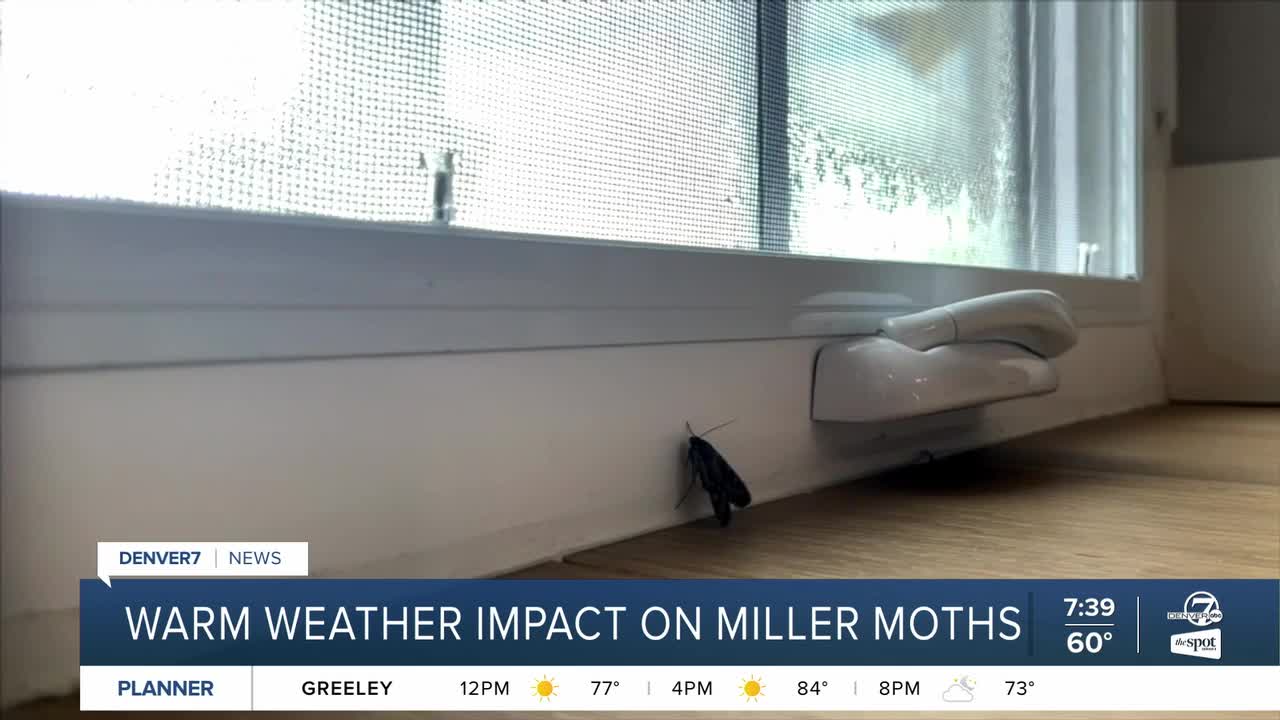


DENVER — It’s almost that time for miller moths to return to the Front Range. With unseasonably warm temperatures we have been seeing, there may be some good news for people who dread this time of year.
Horticulture specialist and entomologist at the Colorado State University Extension in Arapahoe County Lisa Mason said if we continue to see warm temperatures, the moths may not hang around the Front Range for too long since they prefer cooler mountain temperatures.
- Watch the full story in the video player below.
“I'll be interested to see what miller moths are like this year,” Mason said. "They could potentially, just like, book it, to the mountains if we continue to have warmer temperatures, which, for anyone that thinks miller moths are a nuisance, that that could be a good thing for them."
She said there are a couple different factors that play into their migration.
“There might not be a lot of food for them along their migration path, so they're right now on the Eastern plains and in the Midwest, completing their life cycle to adults. Once they become an adult moth, they're going to migrate to the Rocky Mountains, and during that time, they're going to stop along the way where there's food,” Mason said.

The drought might limit food for the moths along their route, according to Mason, so adult moths may focus on irrigated landscapes for flowers.
“There's probably not going to be a lot of food for them along the way until they get the front to the Colorado Front Range. You know, with our irrigated landscapes, there's going to be likely more blooming flowers, so they might hang out longer. However, if it's warm, if it's really warm and the evening temperatures are really warm, they are not going to want to stick around,” Mason said.
The moths tend to continue their migration when nighttime temperatures are above around 50 degrees, according to Mason.
"If the days are hot, you know, they will continue,” Mason said. “If we see a cooling trend for a while, you know the miller moths there, there's not going to be a lot of food for them along their migration path, because things have been so unseasonably dry. So, if temperatures cool down, they might hang out in our irrigated landscapes for a little bit longer than normal.”
Mason said we don’t start to see the moths until May, so experts won’t know for sure their pattern for this year until later in the season. She also added that experts won’t know if they will arrive earlier than normal.

Mason noted that for the most part, last year was a below average season for the moths.
If you do see the moths in your home, they are harmless and Mason said there is no need for pest control services.
She said some people resort to vacuuming them or using a bowl of soapy water to put over lights in garages.
You can also minimize outside lighting as they are attracted to things like porch lights.
The moths do serve a purpose, though, as they are good for the environment.
“Miller moths are a generalist pollinator, and so they're going to visit flowers that they can find if they leave earlier. That's not going to have a huge impact on our flowers, because there are other generalist pollinators out there. So you know, whether or not they migrate, sooner or later, really won't have too much of an impact on our plants that are that are pollinated,” Mason said.

