



DENVER — The Colorado Department of Public Health and Environment (CDPHE) is asking for emergency rule making, to make sure families who want the hepatitis B vaccine can get it.
This comes after a CDC vaccine advisory committee voted to remove universal recommendations for all babies to get the shot at birth. Instead, the recommendation is now if a mom tests negative, that decision is left up to the individual family and their doctor.
The recommendations don’t change for moms who test positive or have an unknown status to be vaccinated.
CDPHE told Denver7 it goes against more than three decades of science that shows universal shots protect babies from chronic hepatitis B, which can lead to things like liver cancer and other major health issues as adults.

Health News
Children's Hospital Colorado reacts to new hepatitis B vaccine guidance from CDC
“In Colorado, we've almost got near elimination of infant hepatitis B infections,” Chief Medical Officer for CDPHE Ned Calonge said.
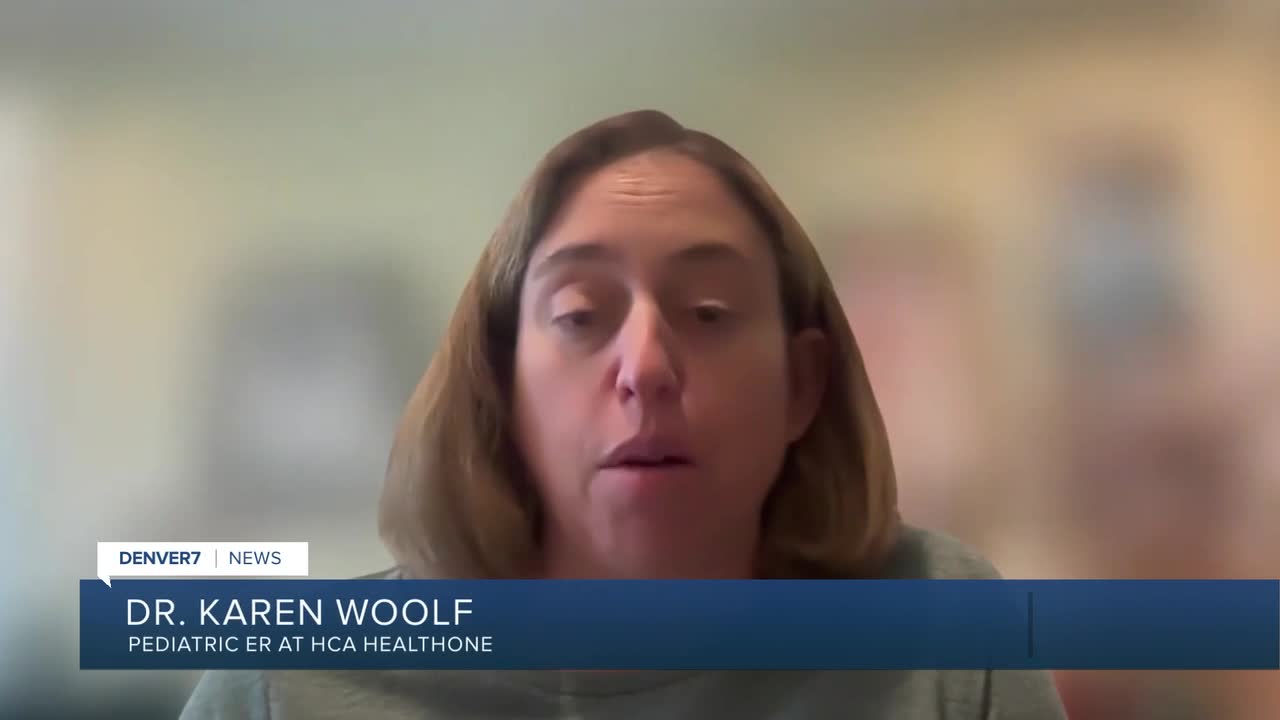
We also talked to Dr. Karen Woolf, a pediatric ER doctor with HCA HealthONE. She said doctors tried only giving the shot if a mom tests positive in the late 80s and early 90s, and it didn’t work out.
“What they saw was kids were still getting hepatitis B, right? So some are still slipping through the cracks, whether it's because the testing wasn't complete,” Dr. Woolf said.
For the emergency rule making, the CDPHE is looking to address a couple of major points ahead of the permanent rule change early next year. It includes incorporating the 2025 American Academy of Pediatrics immunization schedule.
When it comes to insurance, the State of Colorado recently passed new laws expanding who they can rely on for vaccine guidance, which ultimately helps determine insurance coverage. This includes other medical groups like the American Academy of Pediatrics (AAP).
In an e-mail CDPHE wrote:
"The passage of House Bill (HB) 25-1027 [leg.colorado.gov] in the most recent legislative session requires CDPHE to update and revise the Infant Immunization Program and Immunization of Students Attending School regulations (6 CCR 1009-2). This change in law states that the State Board of Health may take into consideration the immunization schedule or vaccine recommendations published by the CDC’s Advisory Committee on Immunization Practices (ACIP), the American Academy of Family Physicians (AAFP), the American Academy of Pediatrics (AAP), the American College of Obstetricians and Gynecologists (ACOG), and the American College of Physicians (ACP) when determining which vaccines are required for school in Colorado."
In this case, the AAP is saying newborns should get the vaccine at birth. Local doctors and CDPHE are saying the same.
Calonge said that means the shot will still be covered by state regulated insurance companies. You can tell if that includes your plan if there’s a state seal on your insurance card.
The state is also working with private insurance companies and Medicaid to create a list for insurance coverage.
United Health Care shared this statement:
“UnitedHealthcare will continue to cover the hepatitis B vaccine for newborns without cost share for its commercial members in accordance with its Preventive Vaccines (Immunizations) Medical Benefit Drug Policy [uhcprovider.com] as well as applicable federal and state mandates. We will also cover the hepatitis B vaccine for newborns for our Medicaid members, in accordance with any applicable state requirements."
Blue Cross Blue Shield shared this response:
"Blue Cross and Blue Shield (BCBS) companies are committed to ensuring access to vaccines that protect individuals and communities from serious illness. The decision to receive a vaccine is made between patients and their health care providers and we remain committed to maintaining rigorous, evidence-based processes to evaluate coverage policies.
BCBS companies will continue covering all immunizations that were recommended by the Advisory Committee on Immunization Practices (ACIP) on January 1, 2025, with no cost-sharing through 2026, while operating within federal and state laws and meeting program and customer requirements."
Denver7 followed up, asking what this means for the new recommendations and we're still waiting to hear back.
Kevin McFatridge with the Colorado Association of Health Plans shared:
“At this time, Colorado health plans do not anticipate changes to coverage for the hepatitis B vaccine. Although ACIP voted to modify its recommendation, the CDC Director has not yet finalized the update, and national medical organizations — including the American Academy of Pediatrics (AAP) and other specialty societies — continue to recommend routine hepatitis B vaccination for all newborns. Colorado carriers generally rely on these longstanding clinical guidelines when establishing coverage policies.
Regarding Colorado law: Yes, Colorado statute requires fully insured health plans to cover vaccines that are recommended by the American Academy of Pediatrics, regardless of whether ACIP recommendations differ. That requirement includes the hepatitis B vaccine. As a result, fully insured plans in Colorado will continue to cover hepatitis B vaccination without cost-sharing.
For self-funded employer plans (which are governed by federal law rather than state insurance law), coverage decisions are made by the employer sponsoring the plan. However, we are not aware of any anticipated changes among those employers at this time."

