


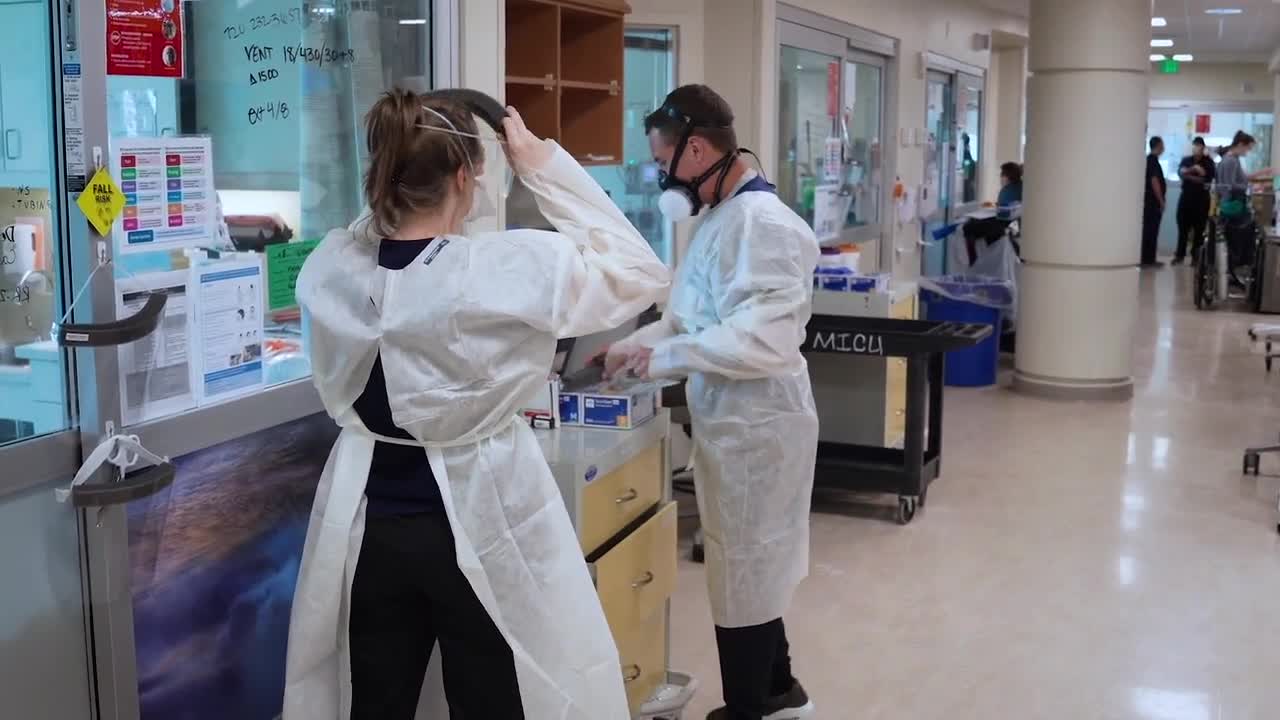


DENVER — As the number of weekly flu hospitalizations in Colorado skyrocketed to levels not seen in more than 20 years at the end of year, doctors at UCHealth were discussing how the hospital would treat patients if things got any worse. At Banner Health, hospital leadership was more proactive.
With just a few hours left before the clock struck midnight on Dec. 31, the Arizona-based hospital implemented mandatory universal masking at all of its facilities across the six-state health care system, including Colorado. That means all patients, visitors and staff will be required to wear masks where patients are present until further notice.
“This measure is necessary because older patients and those with immunodeficiencies are at heightened risk and these extra precautions will help safeguard our most vulnerable populations,” said Dr. Marjorie Bessel, Banner Health’s chief clinical officer, in announcing the measures. “Our top priority is to protect our patients, staff, and the communities we serve by reducing the spread of the virus.”
Banner Health officials attributed the protocols, not seen since the end of the public health emergency for the coronavirus pandemic in the spring of 2023, to the rise in cases from a new variant of the H3N2 flu strain this year called subclade K.
The variant, which was spotted in the summer, is causing more infections as people encounter it for the first time, which means more cases than prior years and more emergency department visits compared to seasons past. Luckily, there’s been no evidence to suggest subclade K is more severe than other circulating strains of the flu, according to the World Health Organization (WHO).
Though it may not be more severe than other H3N2 flu viruses out there, the strain is known to cause higher rates of hospitalizations and longer hospital stays, especially among older adults. This year, however, H3N2 has hit children especially hard, according to the most recent data published by the U.S. Centers for Disease Control and Prevention (CDC).

Health News
Colorado reports third pediatric flu-related death this season
“We’ve really seen an unprecedented year in terms of influenza cases in children at Children’s Hospital Colorado,” said Dr. Suchitra Rao, a pediatric infectious diseases specialist at Children’s.
Dr. Rao said that across all of the hospital’s different locations, Children’s has had close to 600 hospitalizations so far this flu season, with about 20% of those needing to go to the ICU to receive additional respiratory support. The bulk of those hospitalizations have been among unvaccinated children, she said.
“That is definitely sort of a record number. We’re just seeing many more cases and a lot more severity in terms of people coming into the emergency department and people getting admitted to the hospital,” she said.
Across the state, the story isn’t much different. Statewide data shows Colorado is experiencing a record-breaking flu season.
Though hospitalizations have since stabilized and returned to levels typically seen during a normal flu season, Colorado’s weekly flu hospital visits at one point reached more than 800 — numbers never before seen since the state started tracking the data in 2004.
Overall, the number of Coloradans hospitalized for the flu since October (which marks the beginning of flu season in the U.S.) has also broken records.
Numbers from earlier this month show more than 3,000 people had been hospitalized for influenza — that's more than three times worse than the pre-pandemic average, and more than double what the state saw during the 2024-25 season, the worst year for flu in Colorado since records began.
The bad news? Flu season is only halfway done.

It’s precisely those trends that worry Dr. Maria Gillespie, a CSU professor of mathematics and the founder of Mask Together Colorado, a grassroots advocacy group that aims to promote health equity and layered mitigation strategies, such as mask wearing and cleaner air, in the fight against airborne diseases.
A mother of twins — one of whom is immunocompromised — Dr. Gillespie has been keeping track of Colorado’s unprecedented flu season over the past several weeks. And as someone who suffers from asthma, she took note when Banner Health reinstated universal masking across its hospitals. If Banner Health was doing it, why weren’t other Colorado hospitals moving in the same direction?
Hoping to get answers and help move flu trends downward, her group sent a petition to UCHealth and Children’s Hospital Colorado, asking that they follow the lead of Banner Health by providing and requiring high-quality masks, such as KN95 and N95 respirators, for all patients and staff through the end of the flu season.
Gillespie, who spoke with Denver7 about the petition, said it isn’t just about requiring masks in hospital settings during flu season, but about raising awareness that asymptomatic spread of illnesses can happen between doctors, nurses and patients, and the measures health care professionals can take to protect the community.
She said that while it’s standard practice for hospitals and other health care settings to clean and disinfect surfaces to reduce the spread of influenza viruses, “there’s not a lot of emphasis on protecting the airborne route, cleaning the air.”
“We need clear air in hospitals, not just clean surfaces for the safety of patients,” Gillespie said. “We need this kind of protection, because people are going to the hospital and picking up the flu even if they went there for a broken leg. And that’s not what you want on top of a broken leg.”
The push for better masks in health care settings isn’t being done solely in Colorado. In a letter addressed to the WHO, the World Health Network — a multidisciplinary group of experts — called on the international public health body to update their guidelines “by establishing respirators as the universal default for all healthcare encounters.”
Doing so, the group wrote, would lead to fewer infections among patients and health care workers, as well as less burnout and staffing shortages in health care settings.
While hospital-acquired infections do occur, a systematic review published in 2023 found that influenza infections after visiting a hospital accounted for about 11% of all confirmed infections in a hospital setting over a two-year period.
It’s those types of infections that hospital officials want to prevent as much as possible, given that children and older adults are at greater risk of severe outcomes from the flu.
Denver7 brought Gillespie’s concerns to health officials at UCHealth, Children’s Hospital Colorado and Denver Health, by asking why the hospital systems have yet to implement universal mask mandates given this year’s record-breaking flu season.
Dr. Michelle Barron, the senior medical director of Infection Prevention at UCHealth, told Denver7 that conversations around universal masking did take place between hospital leadership earlier this month, but said decisions around reinstating universal masking are complex and require thoughtful considerations.
“There’s downsides to it, especially for patients that are hard of hearing” and who may not be able to lip read when nurses or doctors speak to them, she said.
Those masking barriers are something Gillespie keeps in mind and knows how to address, as Mask Together Colorado doesn’t just advocate for mask wearing and cleaner air, they also work to educate people on the different types of masks available on the market, like the KN95 BreatheTeq or the OmniMask.
- Dr. Gillespie explains how health care professionals can address mask discomfort and issues with patients who may be hard of hearing in the video player below:
While there are currently no plans to mandate masks for patients or staff at UCHealth since current mitigation measures have proven successful this flu season, according to Dr. Barron, that could change “if we started seeing transmission within the hospital where we were giving it to patients, as opposed to them coming in with it.”
So far, she said the hospital system has not encountered such a scenario and added that while “it’s a smart idea to be wearing a mask when you’re in a hospital setting… it’s much more likely that you’re going to get the flu” elsewhere, since hospitals have specialized air filtration systems that remove airborne pathogens from the environment in addition to other standard precautions staff take to minimize the risk of infection to patients or other staff members.
She added that UCHealth encourages people who come to the hospital to mask, especially if they’re sick. And while there’s no universal mask mandate at UCHealth, the hospital system does require masking in certain areas of the hospital, like the NICU or transplant units, as “there is no room for error in these patient populations.”
While she wasn’t aware of any conversations happening among hospital leadership surrounding universal masking at Children’s Hospital, Dr. Rao did tell Denver7 the hospital has “a lot of protocols that that are in place to try to prevent the spread of respiratory viruses from one individual to another,” whether that’s patients or staff.
If anyone shows signs of respiratory illness, “we always will mask and we will wear protective gowns to prevent, again, that spread from one individual to another,” she said.

Dr. Rao added that’s Children’s Hospital tracks how well these measures are working. So far, she said, “all the measures that we currently take into account do a great job at preventing that spread of disease.”
In a statement, a spokesperson for Children’s Hospital did confirm to Denver7 that Mask Together Colorado’s petition was received by its hospital leaders. They added:
“Children’s Hospital Colorado asks all patients, visitors and team members to wear a mask if they are experiencing respiratory symptoms. Universal hand washing, staying home from school/work when sick, covering coughs/sneezes and masking when symptomatic are key to preventing the spread of respiratory illnesses.”
And while Denver Health was not part of Mask Together Colorado’s universal masking petition, Denver7 also reached out to the hospital system to ask whether universal mask mandates were being considered.
In 2023, Denver Health told Denver7 they would reinstate universal masking “should any community respiratory virus infection rate rise to a level requiring universal masking to ensure patient, visitor and employee health.”
Given those prior statements, Denver7 reached out to a spokesperson for the hospital to ask why universal masking had still not been implemented given Colorado’s record-breaking flu season.
“We closely track respiratory illness activity and would consider interventions like universal masking if community transmission levels and the severity of disease began to impact the safety of our patients, visitors or staff, or our hospital operations,” a Denver Health spokesperson said in a statement. “At this time, none of those have happened thankfully. Plus, all employees, patients, and visitors are currently welcome to wear masks.”
All of the medical experts Denver7 spoke with for this story recommended people who may be experiencing flu-like symptoms to stay home from work or school whenever possible, get really good rest, cover their coughs and sneezes, wash their hands thoroughly, disinfect any high-touch areas around the home or the workplace, and wear a mask around others to prevent the spread of disease.
Despite a mismatch of this year’s flu vaccine against the H3N2 subclade K variant, both Dr. Rao and Dr. Barron recommended parents get their children vaccinated against influenza, as recent data from the United Kingdom shows this year’s vaccine is performing better than expected against severe disease in kids by reducing hospitalizations in about 75% of cases.
While that same study found the vaccine was performing poorly in adults (preventing severe disease in only 32-39% of all cases), both said it was still a good idea for adults to get vaccinated as well if they haven’t done so, as influenza B is starting to pick up.
“Do not think flu season is over. Flu season typically lasts through March or April, so we still got a few months to go,” Dr. Barron said.
Gillespie, the founder of Mask Together Colorado, told Denver7 she’ll continue to advocate for universal masking in health care settings, as she’s heard that patients “want more safety than they sometimes realize” but may be too afraid to ask from their doctors.
In response to Dr. Barron’s concerns about the barriers that come with masking in health care settings, Gillespie said there is innovation out there.
“If you fix the comfort issue, if you find good, comfortable masks for everybody, it's not going to be an issue to ask doctors and nurses to do this,” she said. “Higher levels of disease call for higher levels of protection, especially in health care.”


Denver7 is committed to making a difference in our community by standing up for what's right, listening, lending a helping hand and following through on promises. See that work in action, in the videos above.