

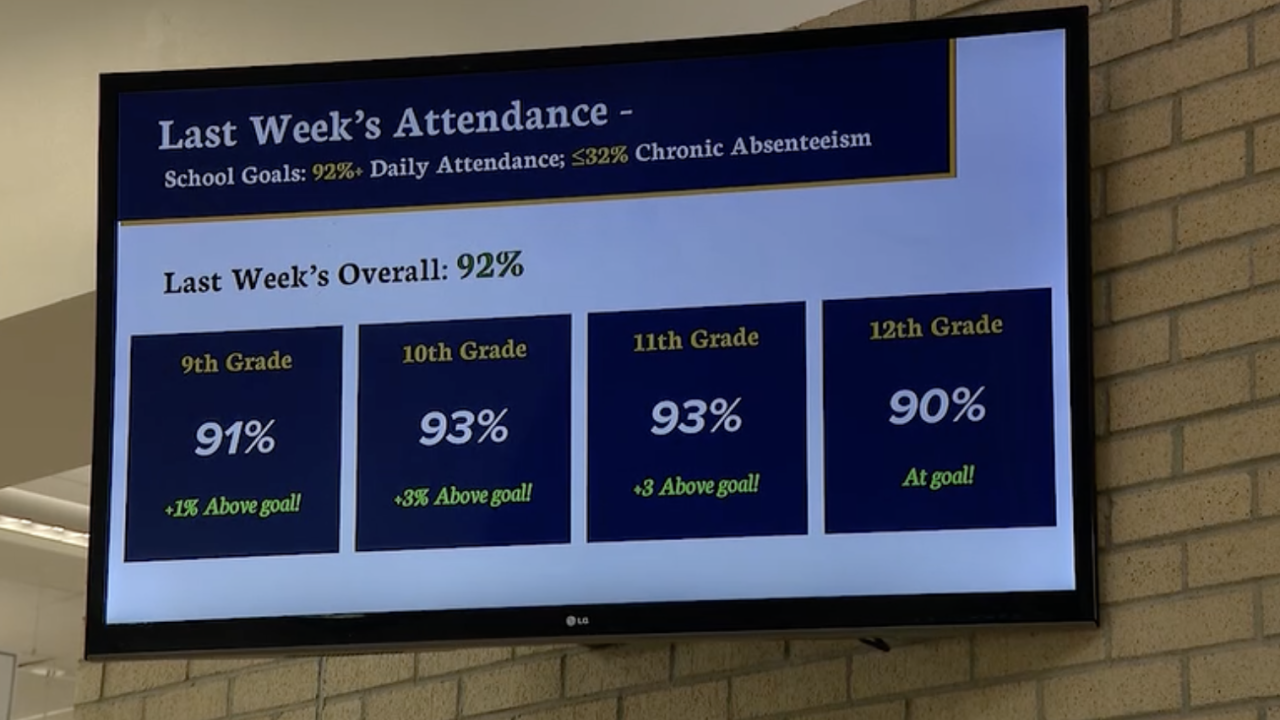


DENVER — While education professionals say attendance is important every school day, the first school day of October stands out as a day Colorado public school students shouldn’t miss.
Attendance from the first day of school in October — known as the October count — determines a district’s funding for the remainder of the year, which the majority of those funds coming from the State’s Public School Finance Act.
Denver7 reporter Alex Dowd breaks down how that funding timeline works in the video below:
Colorado funds schools on a per-pupil basis, but that funding formula is facing a change over the next few years to account for falling enrollment and rising costs of living.
Starting the 2026-2027 school year, a district’s per-pupil funding is calculated using either the count this year, or an average of this year’s count, and the two previous years.
Districts will slowly phase in the rest of the new formula, until the switch is complete for the 2031-2032 school year.
The biggest changes add funding for Special Education, for rural and remote schools and for districts that cover a smaller area of the state.
The new formula starts the same way as the old with a “base district funding.” That number is determined by the October count minus extended high school students and multi-district online students. That number is multiplied by the state per-pupil rate, which the Colorado Department of Education set as $8,900.40 for the 2026-2027 school year.

Next, that state adds in funding for at-risk students, which is the statewide base multiplied by 25% and a district’s at-risk pupil count. For districts with a. Count below 7,000 students and an at-risk percentage larger than 70%, that rate is raised to 32%.
The number of students in English Learning Language and Special Education programs is also multiplied by 25% and then the base state rate.
After counting students, a district’s foundation funding is multiplied by a cost of living factor and a “locale factor,” which is determined using data from the National Center for Education Statistics classification system.
District size is also considered in this new process. The Department of Education includes it to provide more funding for smaller districts to compensate for their small purchasing power. This funding goes to districts with 6,500 or fewer students.
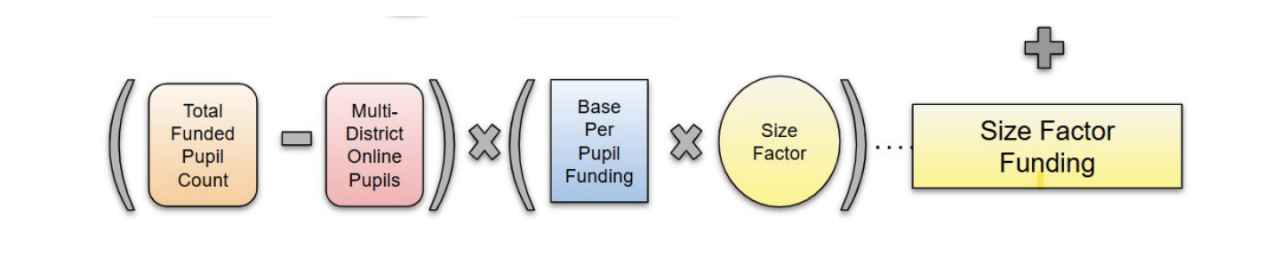
The final step adds back in the funding given to online students and extended high school students, which is a slightly lower rate than the per-pupil base.
While the October count number is crucial for districts, Denver Public Schools officials say it’s best to keep your student home if they’re sick and contagious.
