

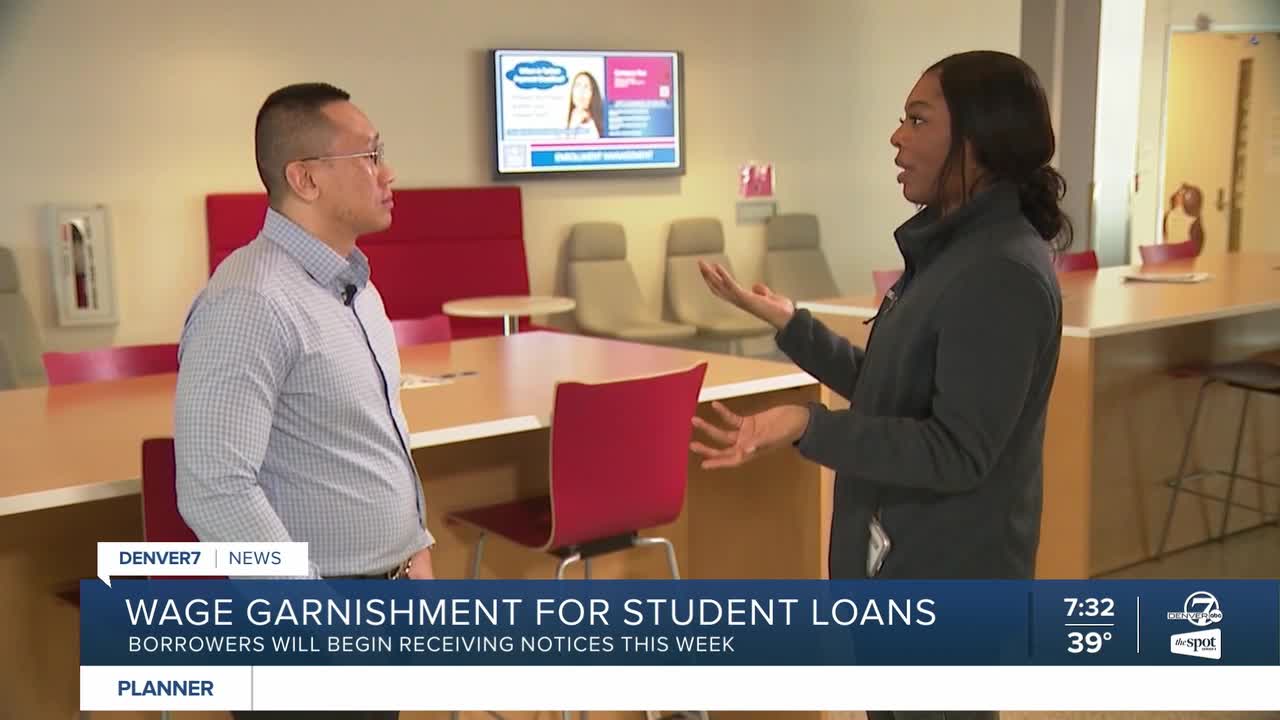


DENVER — Starting this week, some Colorado student loan borrowers in default could receive notices their wages may be garnished.
It’s a move by the U.S Department of Education that could affect millions who are nine months or more past due.
“During the pandemic period, there was a repayment pause for all borrowers during that time that existed throughout the pandemic period, and as well as post pandemic,” Executive Director of Financial Aid and Scholarships at MSU Denver Michael Nguyen cited. “In October 2023 the Department of Education then had borrowers start repaying back on their student loans and then, in April of 2025 the Department of Education provided notice that they would actually start collecting on students who were in default of their student loans, and that would be through wage guard and instrument tax refunds and Social Security benefits.”
1,000 notices will be sent out this week, and that number will increase each month, according to reporting from the Associated Press.
“There are remaining just over 5 million borrowers from who had defaulted before the pandemic, who are still in default,” Deputy Executive Director and Managing Counsel with Protect Borrowers Persis Yu said. “People this year defaulted at 3.6 times the rate that they did before the pandemic. And so there's an astronomical number of people who are going into default right now.”

From the time you get a notice, to the time your wages are garnished, you'll have 30 days to make payment arrangements to get yourself out of default.
Once those 30 days are up, the government can take up to 15% of your paycheck.
Nguyen said borrowers agree to this when they take out loans when signing master promissory notes and has been a part of the Federal Student Aid handbook.
“This was always in existence, but because there was the pandemic period where there was this pause. Now this is starting to circulate as a concern again, because the Department of Education is wanting the borrowers to act on the responsibility that they signed upon,” he explained.

And though borrowers do sign off on this, Yu said, sometimes it’s not on the forefront of their minds.
“When you sign up for a loan, there are many, many disclosures that that borrowers sign up for, and this is buried within that realm of disclosures, right? But of course, you know, I mean, I think there's a number of different things to think about, to contextualize what a student is going through when they're taken on a loan,” she said. “I think there's a lot of talk about choice, but for many people, the choice is, do you go to school, which means you have to take out a loan, or do you not take a loan, which means you can't go to school? Right? For a lot of borrowers, that is really the choice, because you many people can't work their way through school.”
During that 30 days from when you get this notice, you can also challenge the default and request a hearing.
“Financial hardship is a reason to challenge the garnishment notice, and so people can raise financial hardship and get the garnishment either reduced or entirely eliminated, that's that is a possibility,” Yu explained. “Most people right now are living paycheck to paycheck, so they don't have 15% to spare. And because this is taken from the employer, this means that this is money that gets taken out before you ever have a chance to pay your rent, to buy your food and take care of other really basic necessities.”
Yu also mentioned, there may be people who do not get a notice and are in default. If that's the case, you could lose some of your tax refund this tax season.
“The federal government can seize the entire amount of the tax refund, and for, especially like low-income families who are relying on that tax refund because it has the Earned Income Tax Credit, this is often funds that many families rely on,” she warned.
The most important steps you can take are now—before you even receive a notice, “really check the status of their student loans,” Nguyen encouraged.
If you do have any more questions, and need to check your status, click here.
