

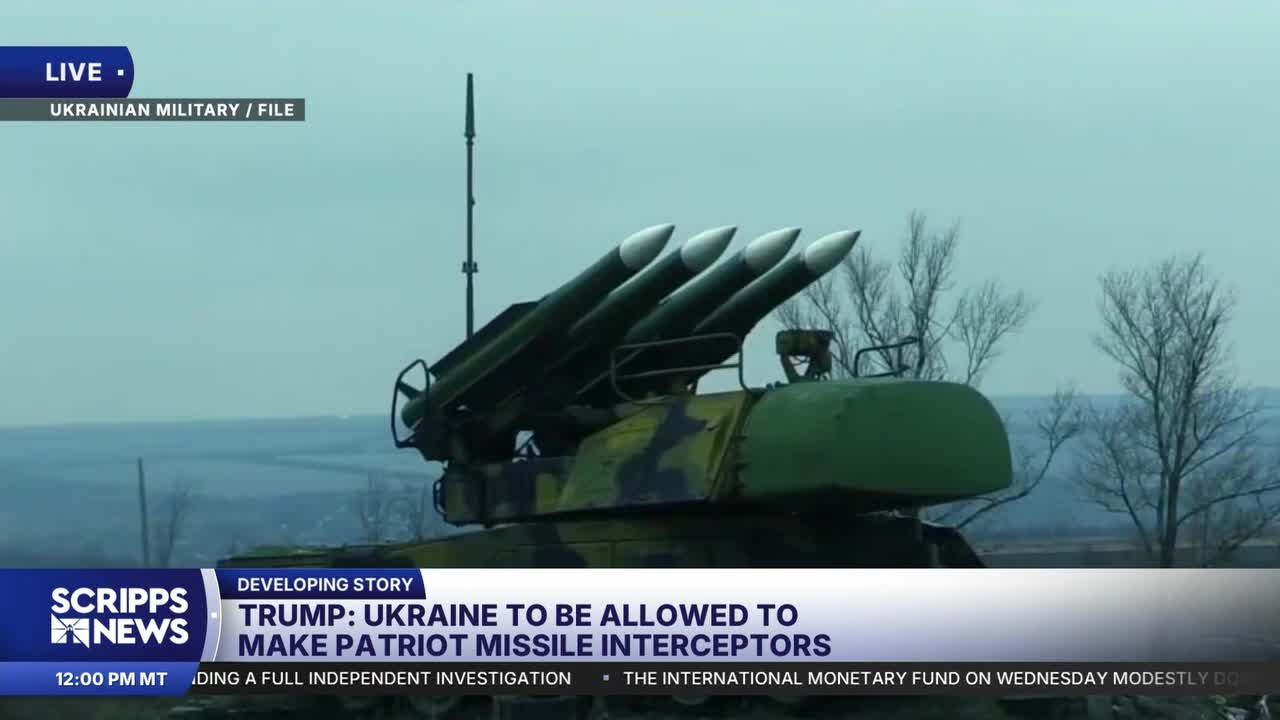


Two nights before President Trump stood beside Volodymyr Zelenskyy at the NATO summit here and handed him the words he'd been chasing since the last administration, Russia fired 29 ballistic missiles at Kyiv. Ukraine's air defenses stopped none of them. Zero for 29. Ukrainian Air Force spokesman Yurii Ihnat put it plainly: "The success rate is low, to put it mildly."
That's the arithmetic sitting underneath everything that happened in Ankara on Wednesday.
RELATED STORY | Trump says Ukraine war could end 'hopefully soon' as Kyiv burns Russia's fuel lifeline
Trump told Zelenskyy the United States would grant Ukraine a license to manufacture its own Patriot missile interceptors — the system that, more than any other, has kept Russian ballistic missiles from finding their targets in Ukrainian cities across more than four years of war. "We're going to give a license to you to make Patriots," Trump said. "That's pretty cool, right? This way, he can't complain that we're not giving them enough. I say, make them yourself."
It is, on its face, a significant concession, exactly the kind of long-term industrial commitment Zelenskyy has been requesting since he first raised it with the previous administration. He made the case again as recently as May, in an interview with CBS News' "Face the Nation": "I asked previous administration, I am asking today's administration — give Ukraine licenses. We will increase the production of Patriot missiles."
Patriot interceptor isn't hardware you photocopy. It's seekers, propulsion, and guidance systems built on decades of classified engineering, the kind of intellectual property Washington has historically guarded even from close allies. When Germany negotiated a licensed PAC-2 production line years ago, meaningful output still wasn't expected until late this year or next. One Ukrainian defense analyst pointed to Poland's experience localizing missile production: nearly a decade to get there, and Poland wasn't building it under Russian bombardment. Military analysts estimate that even in the best case, Ukraine's first viable PAC-3 interceptor is years away, not months.
IN CASE YOU MISSED IT | Russia's missile and drone attacks on Ukraine kill at least 20
Security analysts note a quieter risk nobody at the podium mentioned: a compromised manufacturing facility inside a war zone wouldn't just be an industrial loss. It would hand Moscow a look inside America's own counter-ballistic secrets.
So the acute crisis — the one that let 29 missiles through in a single night -- is not what this license solves. What might solve it, at least in the short term, is blunter and less cinematic: Kyiv is appealing to nearly 40 partner nations to loan interceptors now, from their own stockpiles, in exchange for future deliveries already under contract. That's the version of help that could matter this month. The license is the version that matters in 2030.
There's a reason the timing is this tight, and its name is Iran. The Patriot shortage squeezing Ukraine isn't only a Ukraine problem. The U.S.-Israel war with Iran has already burned through roughly a third of the global stockpile of Patriot interceptors, at a cost of $4 million to $5 million a piece.