


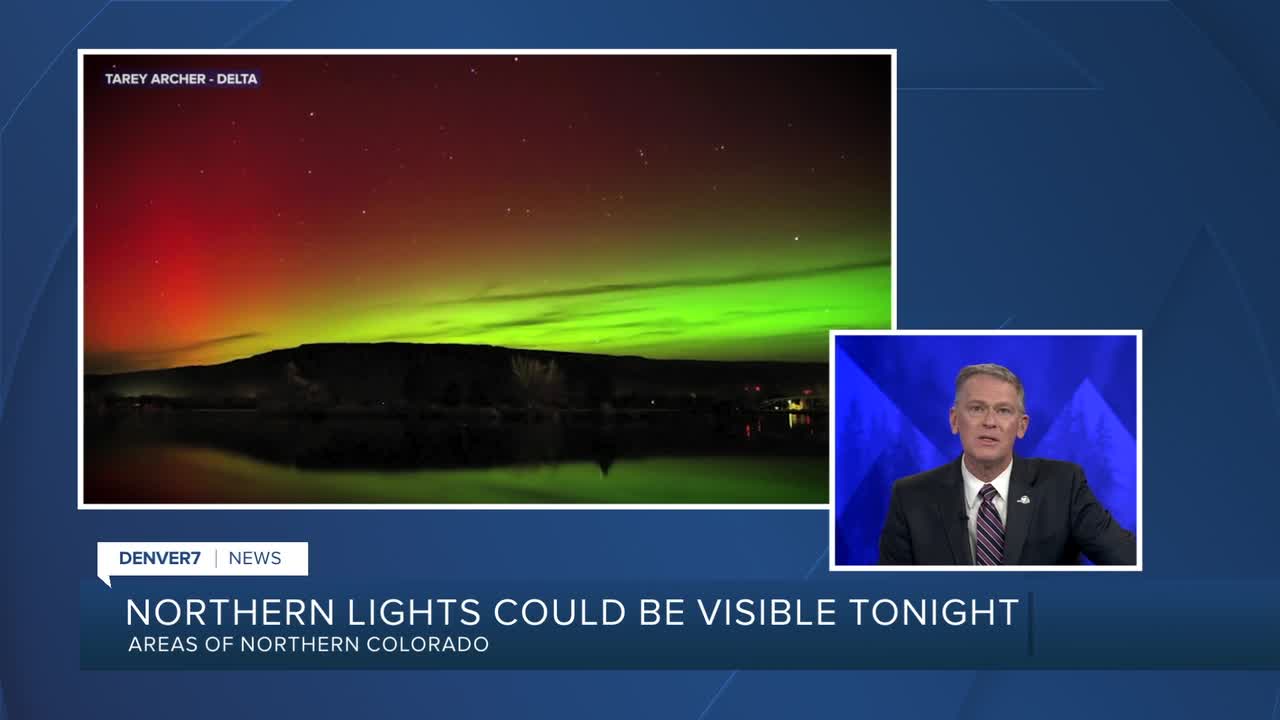


DENVER — A large burst of energy from the sun will paint part of the nation’s night sky with vibrant colors that could reach as far south as Colorado, space weather forecasters said Monday.
That’s because a coronal mass ejection from the sun, or CME, let out enough energy earlier in the day that could produce the so-called “northern lights,” according to the National Oceanic and Atmospheric Administration’s (NOAA) Space Weather Prediction Center in Boulder.
The center has predicted that much of Monday’s northern lights will be visible in states along the Canadian border, but there’s a chance that the aurora borealis — another common name for the light display — could make it as far south as northern Colorado.
Monday’s storm was rated as G4, or “severe,” just one level shy of what space forecasters say can cause complete collapse of grid systems and extensive disorientation of satellites flying above in the atmosphere.
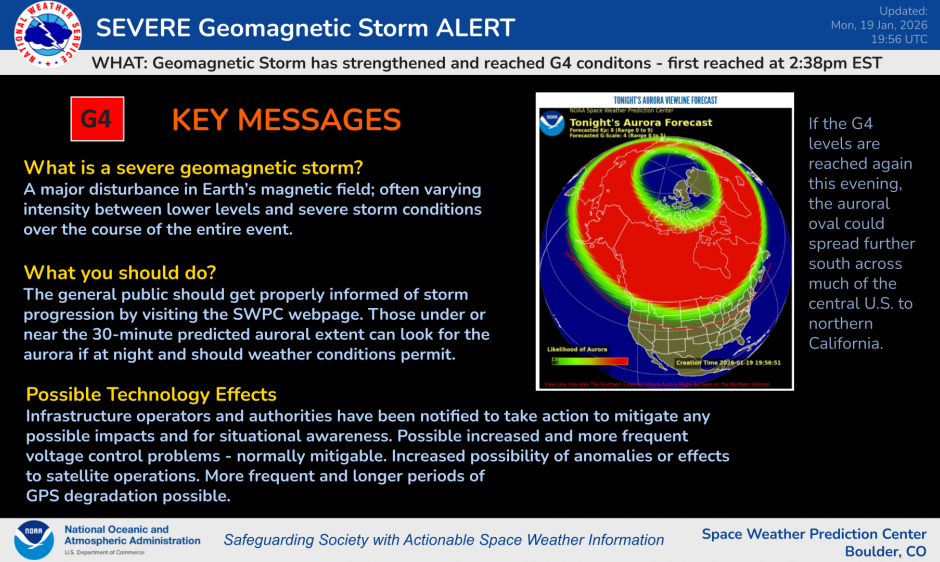
Besides the breathtaking views, a severe geomagnetic storm could cause power systems to accidentally shut down, disorient spacecraft and satellite systems for hours, and disrupt radio frequencies, though there are ways to mitigate some of those impacts, officials said.
Where can the northern lights be seen in Colorado?
Though the view line from this geomagnetic storm will barely cross into northern Colorado, those wanting to try their luck at experiencing these magnificent views should head toward the northeastern plains, as far away from city lights as possible.
If you’re able to make the drive to the Wyoming border, even better.
If you’re concerned about making the drive only to find clouds covering the view, you’re also in luck — National Weather Service officials in Boulder say there's about a 10% chance of cloud cover in Akron, a 20% chance of cloud cover in Sterling and a 6% chance of cloud cover in Wray by around 11 p.m.

In case that drive is not in the cards, officials from NOAA’s Space Weather Prediction Center said if G4 levels are reached again, “the auroral oval could spread further south across much of the central U.S. to northern California.”


Denver7 is committed to making a difference in our community by standing up for what's right, listening, lending a helping hand and following through on promises. See that work in action, in the videos above.