

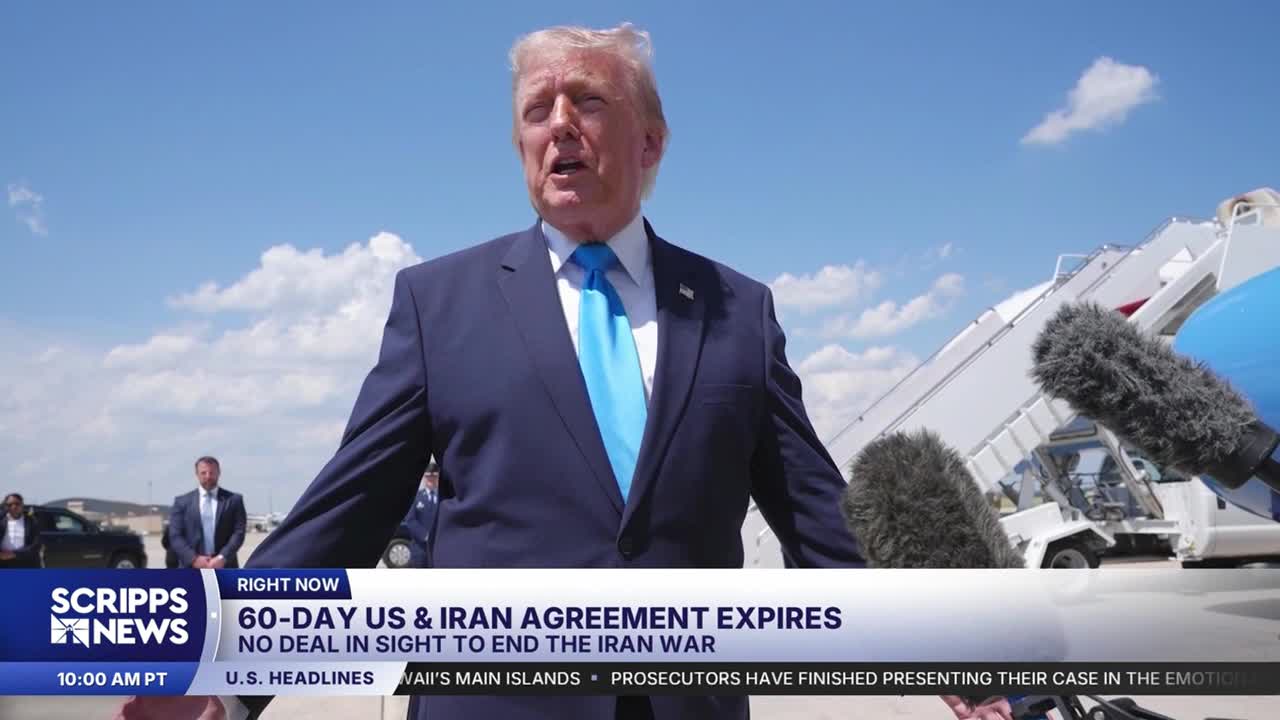


The 60-day memorandum of understanding between the United States and Iran expired Monday with no signs of a permanent deal to end the war in the Middle East.
The agreement, reached in June, called for an immediate ceasefire, the lifting of a U.S. naval blockade in the Strait of Hormuz, sanctions relief for Iran, at least $300 billion in reconstruction and economic development funding for Iran, and an Iranian promise to never pursue a nuclear weapon.
RELATED STORY | Trump now seeks compensation from Iran after it demanded US pay for cost of war
In the weeks since the agreement, both sides have launched tit-for-tat attacks that have prolonged the war, kept the Strait of Hormuz at contention, and kept global energy prices elevated. Nearly a quarter of the world's oil supply transited through the strait before the war broke out.
Last week, President Donald Trump doubled down, suggesting that the U.S. has "total control" of the strait and will not end the blockade.
"I THINK WE WILL KEEP IT!" Trump posted on Truth Social. "Our Naval Blockade is being called, by everyone, 'A WALL OF STEEL,' and there is nothing Iran can do about it."
IN CASE YOU MISSED IT | Iran says Strait of Hormuz won’t reopen until US meets sweeping demands
As Trump continues to press Iran to wave the white flag and surrender, Iran has continued to accuse the U.S. of violating the memorandum of understanding and, in turn, carried out attacks on U.S. allies and military bases in the region. At least 18 U.S. servicemembers have died as a result of the war.
