
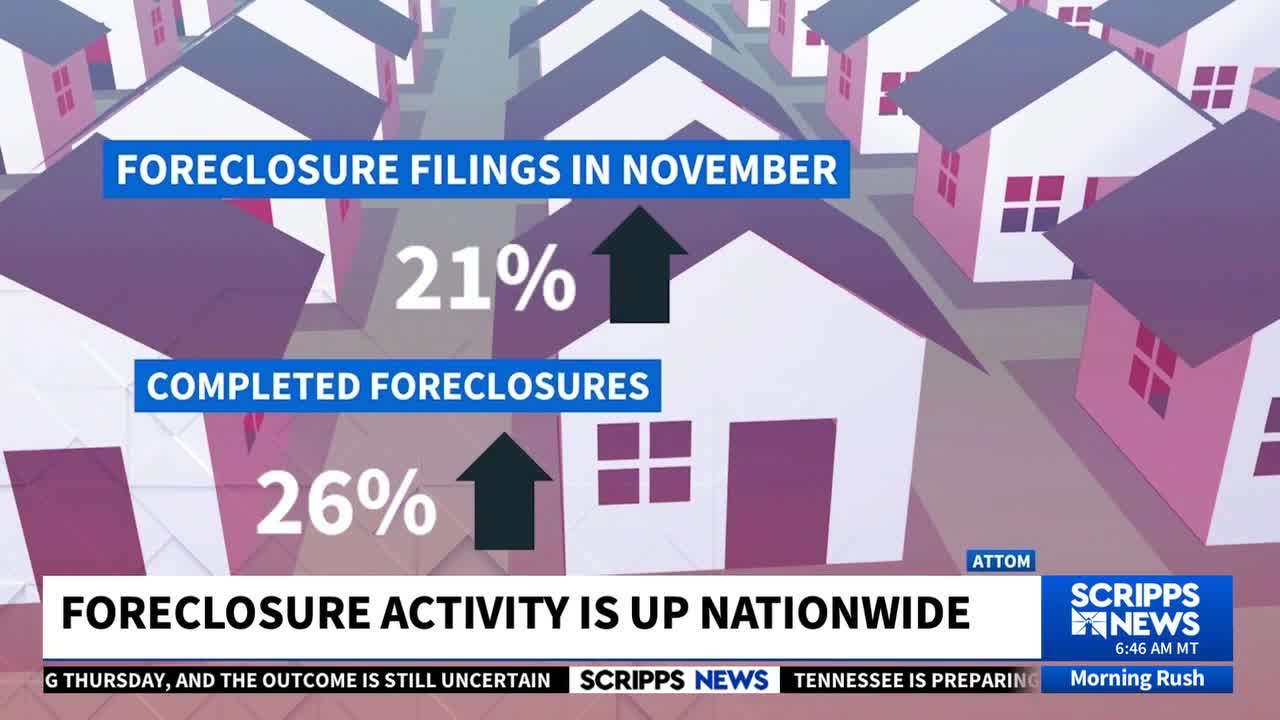


Foreclosure filings in November jumped 21% from last year, while completed foreclosures surged 26% year-over-year, according to real estate data firm ATTOM.
Despite the double-digit increases across all categories nationwide, housing market experts say these statistics represent a return to normal market conditions rather than a warning sign of impending crisis.
"The thing to keep in mind about these foreclosure rates is that foreclosures were kept artificially low throughout the pandemic," said Jeff Ostrowski, housing market analyst at Bankrate.
RELATED STORY | Your home may have lost value this year. Here’s where the drops were steepest
The upward trend has continued for nine straight months, but the increases come from historically low baselines established during the pandemic when foreclosure moratoriums were in place.
"The reason it's not dire is that if you're starting with a low baseline, so doubling the number one is two. That doesn't mean it's a scary number though," said Jeff Lichtenstein, CEO and broker at Echo Fine Properties in South Florida.
Delaware leads the nation in foreclosure rates, followed by South Carolina and Nevada. Among major metropolitan areas, Philadelphia has the highest foreclosure rate, followed by Las Vegas, Cleveland and Tampa.
Nationwide, one in every 3,992 housing units had a foreclosure filing in November 2025. Foreclosure filings include default notices, auctions and bank repossessions.
"Foreclosure is definitely financially devastating for the homeowner who's going through it. But it's also just a normal and healthy part of the housing market," Ostrowski said.
IN CASE YOU MISSED IT | Trump officials temporarily withdraw policy cutting long-term housing support
Current foreclosure rates remain well below historic highs, largely because fewer homeowners are underwater on their mortgages after home prices spiked during the pandemic. This equity cushion provides protection for many homeowners facing financial difficulties.
"So many homeowners have so much equity. You'll sell it if you're in financial distress, but you're unlikely to lose the home to foreclosure," Ostrowski said.
This equity buffer helps homeowners weather difficult economic times, even as they face pressure from inflation, rising property taxes and increasing homeowners insurance costs.
While homeowners have more equity protection than in previous downturns, the cumulative effect of economic pressures is becoming apparent for some households.
"For the middle class or upper middle class, it takes time because you don't notice it right away. But once you get to month three, four, five or six, all of a sudden you have to adjust your lifestyle. And we're starting to see some of that," Lichtenstein said.
WATCH | The Foreclosure Franchise: Florida's Housing Crisis | Scripps Howard Awards Finalist
Lichtenstein expects the upward trend in foreclosure activity to continue into the new year, but he doesn't anticipate another housing emergency. Consumer protections like the Dodd Frank Act put into place after the 2008 housing crisis, stricter lender requirements and banks have become more willing to work with homeowners compared to previous economic downturns.
For homeowners behind on mortgage payments, experts recommend being proactive. Contact your lender to explore options like forbearance or look for state-level assistance programs.
Taking early action might help you avoid foreclosure if you've fallen on hard times.
