


Redistricting — the drawing of new borders for congressional districts — typically occurs once a decade when new census data is released. But in the battle for the majority in Congress next year, 2025 became the year of mid-decade redistricting, starting with Texas.
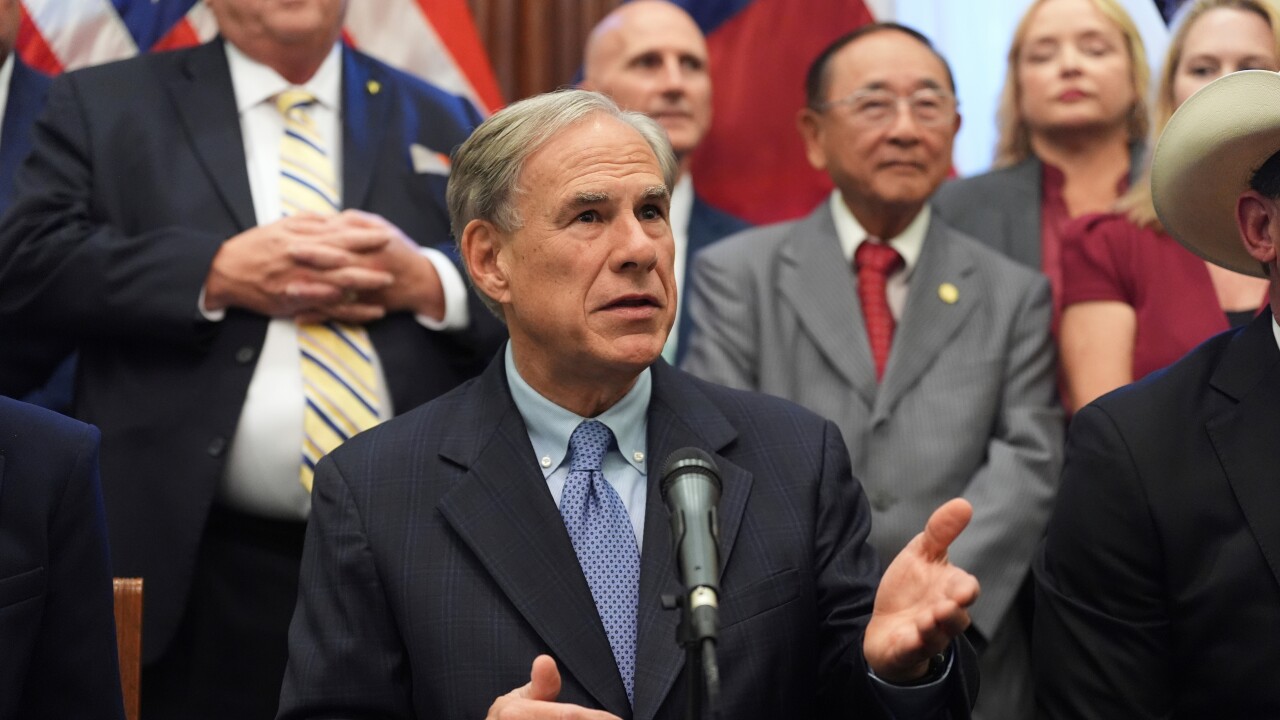
In late August, Texas Gov. Greg Abbott made the state’s new congressional map official, calling lawmakers into multiple special sessions to get it done.
“Trump was trying to figure out ways to shore up that majority, and so he decided to lean on a state like Texas, where Republicans have full control of the redistricting process and can gerrymander to benefit themselves as much as they want,” said Erin Covey, U.S. House editor at the Cook Political Report.
RELATED STORY | Threats and hoaxes target Indiana GOP senators in Trump’s redistricting push
Democrats called the move a partisan power grab and launched a redistricting effort in California to counterbalance it.
The ripple effect grew, and six states finalized new maps in 2025: Texas, California, Utah, North Carolina, Missouri and Ohio. While states like Texas and California were under no obligation to finalize new maps, Ohio and Utah were required to redraw boundaries. Ohio’s map was approved for only two election cycles because it lacked bipartisan support, while a court ruled Utah’s previous map unconstitutional.
Some of the new districts lean solidly red or blue, but analysts say not all changes guarantee gains for either party.
“The result of all this redistricting will probably be a wash. Maybe Republicans pick up a single seat or two on net. And so it is really remarkable — after all is said and done — it’s not really going to impact net control of the House that much,” Covey said.
The changes may not be over. Lawsuits are pending over some maps, and states such as Virginia, Maryland and Florida could still draw new lines before the 2026 midterms.
“If our history is any guide, in the 1890s we saw similar patterns continue for several election cycles, with the two parties vying to advantage and disadvantage one another,” said Michael Thorning, director of structural democracy at the Bipartisan Policy Center.
RELATED STORY | Supreme Court questions future of race-based districts under Voting Rights Act
Racial gerrymandering is illegal, but there are no federal laws against gerrymandering for partisan advantage.
“It has always been very contentious, and while it’s uncomfortable, it is a normal part of our political process,” Thorning said.
Some states allow lawmakers to draw district lines, but maps drawn for political reasons can sometimes cross into racial gerrymandering.
“Many people who study gerrymandering have pointed out that it’s difficult to disentangle racial gerrymandering from partisan gerrymandering,” Thorning said. “You could wind up in a situation where map drawers think they are pursuing a legal partisan gerrymander but either advertently or inadvertently engage in racial gerrymandering.”
Some states ban partisan gerrymandering, an idea that polls show Americans broadly support. Several surveys indicate the public favors using independent, nonpartisan commissions to draw maps.
It remains unclear how far redistricting will go before the 2026 midterms. State filing deadlines for candidates could serve as a cutoff, though some states can push those dates back. The next major deadline is primary day, with the earliest primaries of the next election cycle starting in March.


