



LOUISVILLE — Democratic Colorado lawmakers are confident that their plan to change the way workers unionize in the state will be successful next year, hoping that a new governor leads to a different outcome for the legislation.
Dubbed the Worker Protection Act by advocates, two iterations of the concept to eliminate the second vote needed to form a union in Colorado have passed out of the state Legislature and were then vetoed by Gov. Jared Polis in 2025 and 2026.
Watch the video report below:
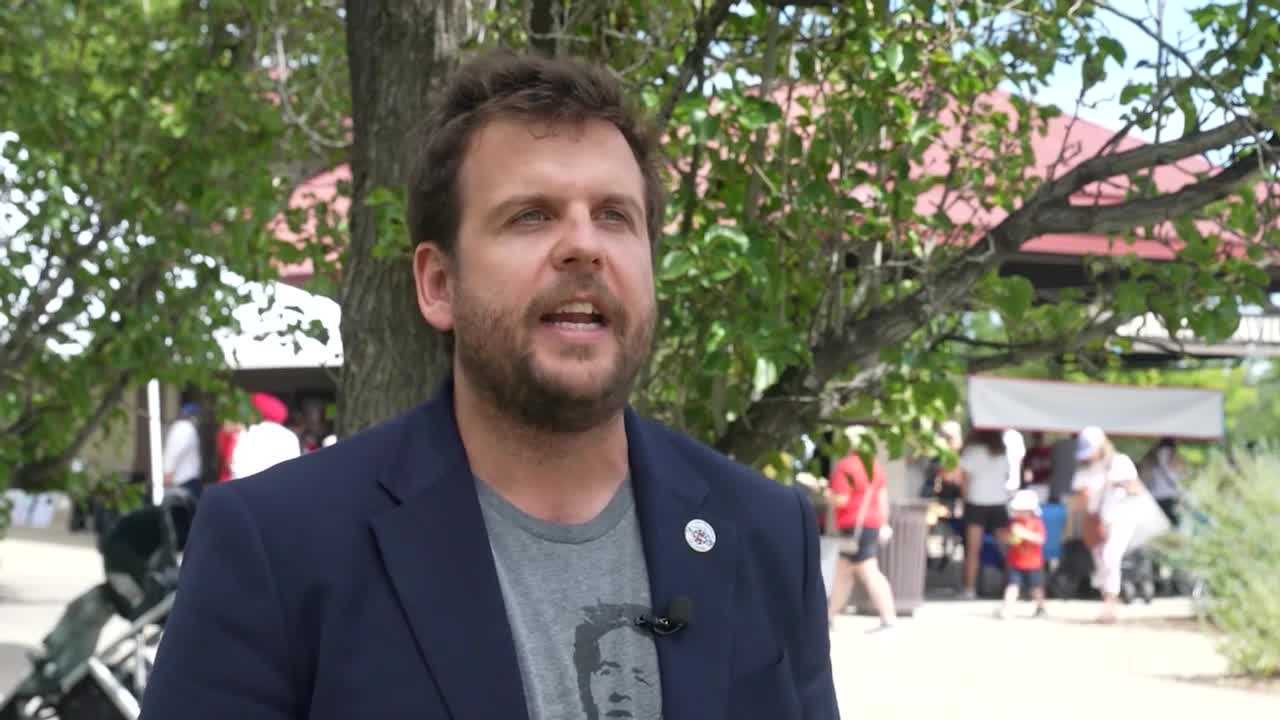
Maggie Roesink, who works as a server and bartender at the Hotel Boulderado, attended the Louisville Labor Day Picnic and described to the crowd her experience with forming a union. This summer, employees at the Hotel Boulderado announced their plans to unionize.
"The idea of a second vote is just another step to keep the union from forming, in my opinion," Roesink said. “We're already fighting for people to go up against their employers. Basically, we're trying to convince people that they need to fight for themselves and for their rights. And adding that second vote just makes it so much harder for us to reach those goals that we need and to fight back against the people in power.”

House Bill 26-1005 proposed changes to Colorado's Labor Peace Act, which was enacted in 1943. Supporters claimed the modifications would encourage good faith collective bargaining negotiations, but opponents argued they were trying to fix something that was not broken.
In Colorado, a simple majority vote is needed for workers to be officially recognized as a union. Seventy-five percent of the vote is needed during the second election to negotiate a union security agreement clause with the company, where workers pay for representation.
Colorado is the only state that requires two elections for workers interested in forming a union. The legislation sought to eliminate the second election.
Senate Bill 25-005 sought that same elimination of the second election needed to negotiate a union security agreement clause in a collective bargaining process. When the legislation passed out of the Colorado State Capitol, Polis vetoed it.
Within his veto letter, Polis wrote that "there must be a high threshold of worker participation and approval to allow for bargaining over mandatory wage deduction. And SB 25-005 does not satisfy that threshold, which is why I am vetoing the bill."
Near the end of the letter, Polis said lawmakers "missed an opportunity this year to modernize this outdated law," referring to the Labor Peace Act. The governor encouraged both sides to continue conversations so "we can make progress on this issue."
In his veto letter from 2026, Polis echoed some of the same sentiments he shared in 2025, saying once again that "unfortunately, both business and labor leaders missed an opportunity this year."
Polis said he would have supported a "modernized framework" that addressed the challenges faced by union organizers by building upon a "broad-based agreement among business and labor leaders."
Sponsors of the legislation told Denver7 that they believe the proposal will become law in 2027 with a new Colorado governor.
“This will be the last Labor Day where we're under the Labor Peace Act, and workers face this unique barrier. Next Labor Day, we're going to be celebrating the passage of the Worker Protection Act," said one of the lawmakers who has sponsored the bill since the beginning, State Rep. Javier Mabrey, D, District 1.
Denver7 covered HB26-1005 when it was being considered by the Legislature earlier this year, and State Rep. Chris Richardson, R, District 56, explained why he did not support the legislation last session and why his opinion did not change this year.
"In the early 1900s, there was a lot of strife, a lot of violence unfortunately and some lives were lost," Richardson said, explaining the history of the Labor Peace Act. "That was the impetus between bringing labor and business together and trying to come up with a way where labor's voices, employees' voices, could be preserved. They could organize, but the violence could end."
Richardson said the Labor Peace Act has stood the test of time, adding that it protects people's voices and pocketbooks.
Denver7 will continue to cover this proposal when the 2027 legislative session begins early next year.



Denver7 is committed to making a difference in our community by standing up for what's right, listening, lending a helping hand and following through on promises. See that work in action, in the videos above.


