



DENVER — Colorado lawmakers voted to advance a bipartisan bill on Tuesday that would create a research pilot program for a powerful psychedelic which supporters believe could help those who often struggle in silence.
The decision from the House Health and Human Services committee came after a number of people shared deeply personal stories about how the natural medicine ibogaine changed their lives. That included a retired first responder who thought she exhausted all of her options for mental health treatment, a veteran who suffered from PTSD and worked within a cemetery where he was required to move the remains of fellow veterans, and a woman who was abducted and raped as a young child.
All three of them told legislators that ibogaine treatment pulled them out of their darkest moments, and transformed them into the versions of themselves they are today.

House Bill 26-1325 aims to establish an ibogaine research pilot program that examines the safety and effectiveness of using the natural medicine to treat mental health and substance use disorders. A committee would select five ibogaine pilot sites as part of the program in Colorado.
Ibogaine is a naturally occurring chemical compound derived from the root bark of the Tabernanthe iboga shrub found in Africa. While federally illegal, it was decriminalized in Colorado when voters approved the Natural Medicine Health Act in 2022.
Minority Leader Jarvis Caldwell, R-District 20, is one of the prime sponsors of the bill. He told the committee this proposal would not "rush" a new treatment to the market, and instead would use research to capitalize on what could be an exciting opportunity for healing.

Denver7 360 | In-Depth News
An in-depth look at the potential future of ibogaine in Colorado | Denver7 360
According to the legislation, ibogaine has "shown promise" in treating severe post-traumatic stress disorder (PTSD) and other mental health conditions connected to combat deployments. The research pilot program would explore both the therapeutic effects and potential risks of the natural medicine, while laying a foundation for a future regulatory program.
Colorado's Behavioral Health Administration (BHA) is the organization that would operate the pilot program and could seek federal authorization for expanding or advancing the research efforts around ibogaine.
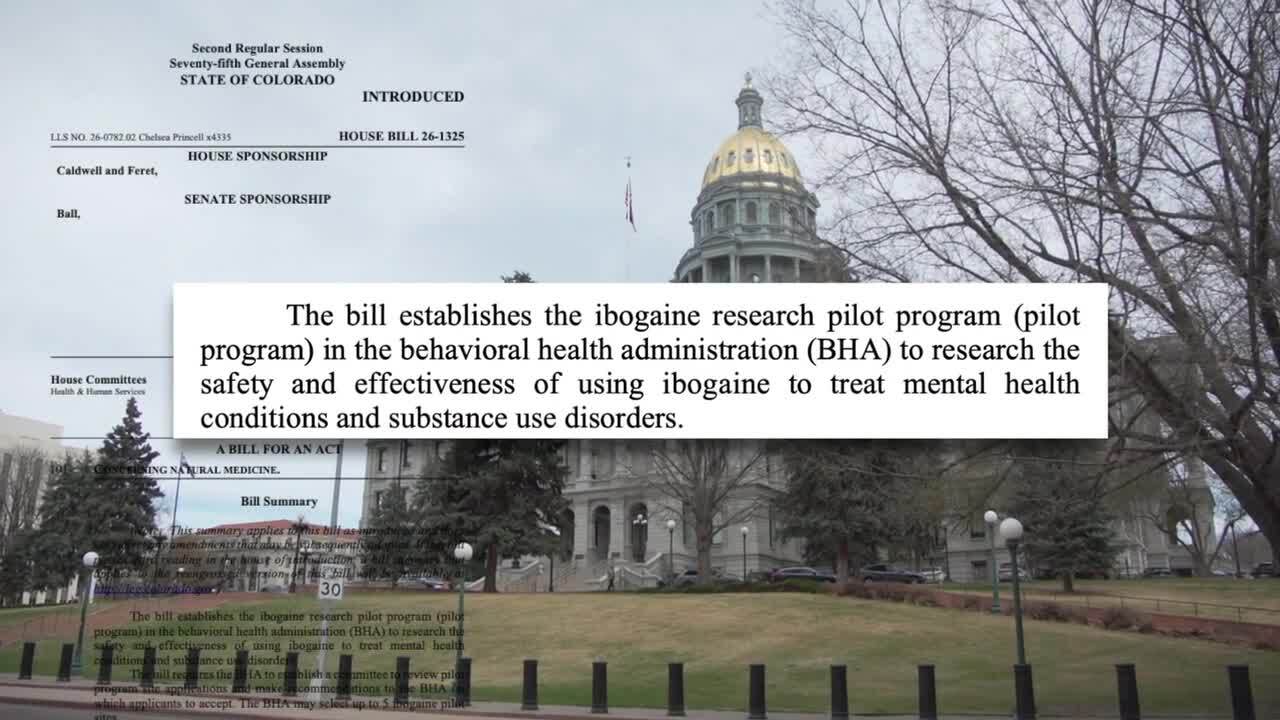
Applicants who would like to become one of the five ibogaine pilot sites must demonstrate an intent to pursue federal approval to safely study the compound and establish a benefit-sharing plan for the Indigenous cultures that traditionally worked with ibogaine or iboga.
The only lawmaker who voted against advancing HB26-1325 was State Rep. Brandi Bradley, R-District 39, who had concerns about the safety risks associated with ibogaine and the cost the legislation will have on the state.

The year after the Natural Medicine Health Act was passed, Senate Bill 23-290 implemented the regulatory framework for the administration of mainly psilocybin and psilocin within licensed facilities. The Department of Revenue's Natural Medicine Division started accepting license applications at the very end of 2024, and the first Healing Center license was issued in March of 2025.
Currently, there are nine standard Healing Center licenses in Colorado, and 32 micro-Healing Center licenses, which are for facilities that do not store more than 750 milligrams of total psilocin on site.
Reflective Healing in Fort Collins obtained their standard license in April of 2025 and moved into their facility the following July.
“It's been hard to be on the cutting edge, because we're trying to keep up with the laws as they change," said Joy Gribble, supervisor at Reflective Healing. “It's arduous to be a renegade.”
Gribble spoke with Denver7 alongside her colleague Rob Colbert, the clinical supervisor and practicum supervisor at the Healing Center.
“It's building the ship as you're sailing it," Colbert said. "I don't know that the Department of Revenue or Department of Regulatory Agencies really knew what they were getting into. They had cannabis as a model, but Healing Centers are not in the same financial position, so a lot of the fees are a huge hurdle. And it's not like we're going to recoup that money so quick. We're not doing sessions every day of the week, right? It's maybe a few a month. And so, the sustainability level and those fees, I think, needs to be addressed."
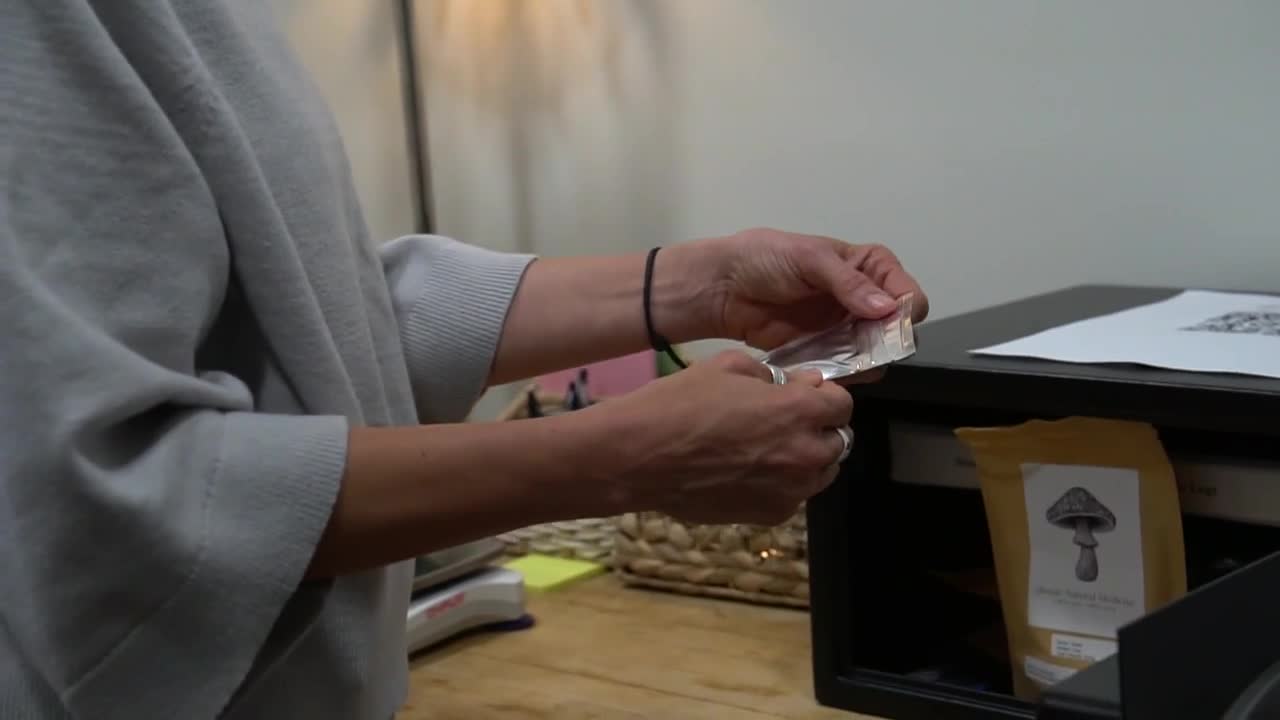
Colbert and Gribble explained what the process of administering psychedelic mushrooms looks like inside of a Colorado Healing Center, but stressed the experience can be different for every facilitator and client.

"I would say I've had a full range of experiences with people. Kind of depends on what they're working with or toward. Giggling, laughing, crying, wailing, screaming — I've seen a lot of different things, but it's all been useful. None of it has been destabilizing or dangerous or anything like that," said Colbert. “You never know what you're going to get. Every day is unique."
"It can kick in within 20 minutes. It can take an hour and a half. It can depend on metabolism, or if they're on medications that are speeding it up or slowing it down," Gribble added. “Sometimes they want us to scribe for them what's coming through, things, insights that are coming through. Sometimes they're crying. Sometimes there's no motion and nothing happening for those three to four hours. Then at some point, I feel like people usually realize they're coming back into the room and they sit up and want to engage and share what happened, and so it's usually about a six-hour session.”
The two said they have seen clients benefit from the sessions, which are paired with standard talk therapy as well.
"I definitely have seen folks reduce symptoms of things like OCD, which can be debilitating," Colbert said. "I've got veterans that I've worked with that have been able to address traumas that happened before war, during war, after war, and so their ability to get back to a standard of life that they want and deserve has been really impressive in that. That's not everyone. I've also had people that had pretty minimum experiences, that didn't have a lot happen, and so the integration piece is for them to still make decisions on how to have meaningful change in their life afterward.”
"I've also worked with a lot of people with terminal illness or recent cancer diagnoses, and a lot of people between 65 and 80 who have some fear of death and want to move past that or move through it. So, I've seen tremendous results for those populations," Gribble said. “A lot of people in midlife who are retiring or divorcing and feeling unsure of what the future looks like. And psilocybin has been really impactful for that population, too.”
Denver7 asked Gribble and Colbert if Colorado is ready to add a new psychedelic into this natural medicine framework.
“The people are ready. The state will catch up," Colbert said.
“I feel like we already have a template set," Gribble added. "The state is ready, actually.”
Colbert has experienced an iboga ceremony, the root bark from which ibogaine is derived.
"One of the participants, we were having a discussion about it, and he said it's the Mount Everest of psychedelics," Colbert recalled. "I agree. It's a challenging experience. The duration is really long, and I think the potential for transformation is just astronomical. It's amazing.”
The two believe that ibogaine does have the power to change lives, a sentiment that echoed throughout the first committee hearing for HB26-1325 as well.
"Of course, we need to come up with safety protocols and make sure that people are well screened and monitored during sessions. However, all of that technology exists," Colbert said.
"It's monitoring the heart and making sure that there's IV fluids available. Those are the only two that are necessary for ibogaine," Gribble added. “Once there are some well-run studies, that will help us see what is needed and how people need to be trained differently, then we can move forward with that. But I think that's still an unknown, and that's why slowly progressing into this world is the safest way to do it.”
Gribble called HB26-1325 a "responsible" proposal, with the two supervisors hoping to see an ibogaine research pilot program launched in Colorado.
The perspective shared inside of Reflective Healing in Fort Collins was met with pushback by Luke Niforatos, who is the executive director of Smart Approaches to Marijuana (SAM). He stands in strong opposition to HB26-1325, asserting that ibogaine is "actually like putting a nuclear bomb in your brain."
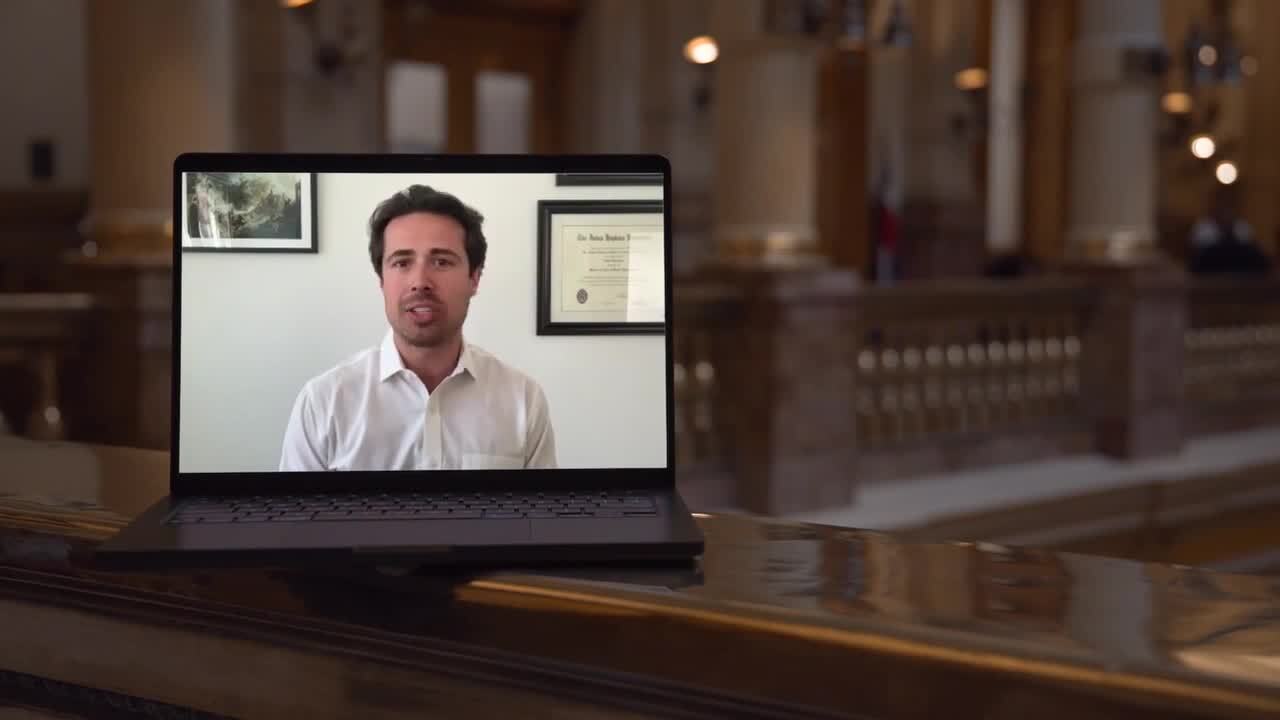
"It has the potential to cause heart attacks. It's done this before. It has significant cardiovascular impacts, in addition to mental health impacts, psychosis, schizophrenia and other such symptoms are possible, and right now, it's so early that the state really has no business encouraging the use of these substances," said Niforatos. “This, frankly, is not a state lawmakers business. This is the business of scientists and medical professionals."
During the committee hearing, lawmakers referenced a Broomfield criminal case where Ameen Alai was sentenced to four years in prison after pleading guilty to one count of distributing a mixture that contained ibogaine. The plea agreement asserts that in March of 2021, Alai gave another person a dose of ibogaine and left them unattended. That person later died, and the court determined the ibogaine given to the man by Alai caused the death.
As part of HB26-1325, facilitators would not be held liable for a participant's physical or psychological injuries due to the natural medicine, unless it was the direct result of their intentional misconduct, gross negligence or a departure from the recognized standard of care.
Niforatos takes issue with that portion of the legislation as well.
“If ibogaine is truly so helpful and so harmless and a great idea to start encouraging the use of, why would state lawmakers put in the bill a higher level of immunity from lawsuit for medical malpractice? I think this is insane," Niforatos said. "This is a dangerous substance, which in the literature, it has killed people who were seeking help."
Still, Niforatos acknowledged research on ibogaine could be useful, but argued it should be done by the U.S. Food and Drug Administration (FDA).
"I think we are decades away from having an FDA approved ibogaine type of medication," said Niforatos.
Ultimately, such counter-arguments will be weighed by lawmakers once again in the Capitol if HB26-1325 survives the Appropriations Committee, where anxiety is growing surrounding what legislation will live or die under the shadow of a massive budget deficit in Colorado.
According to the bill's prime sponsor, an amendment made on Tuesday reduced the fiscal note from roughly $300,000 a year to approximately $150,000.
Denver7 will update this article as the bill moves through the Capitol.


