

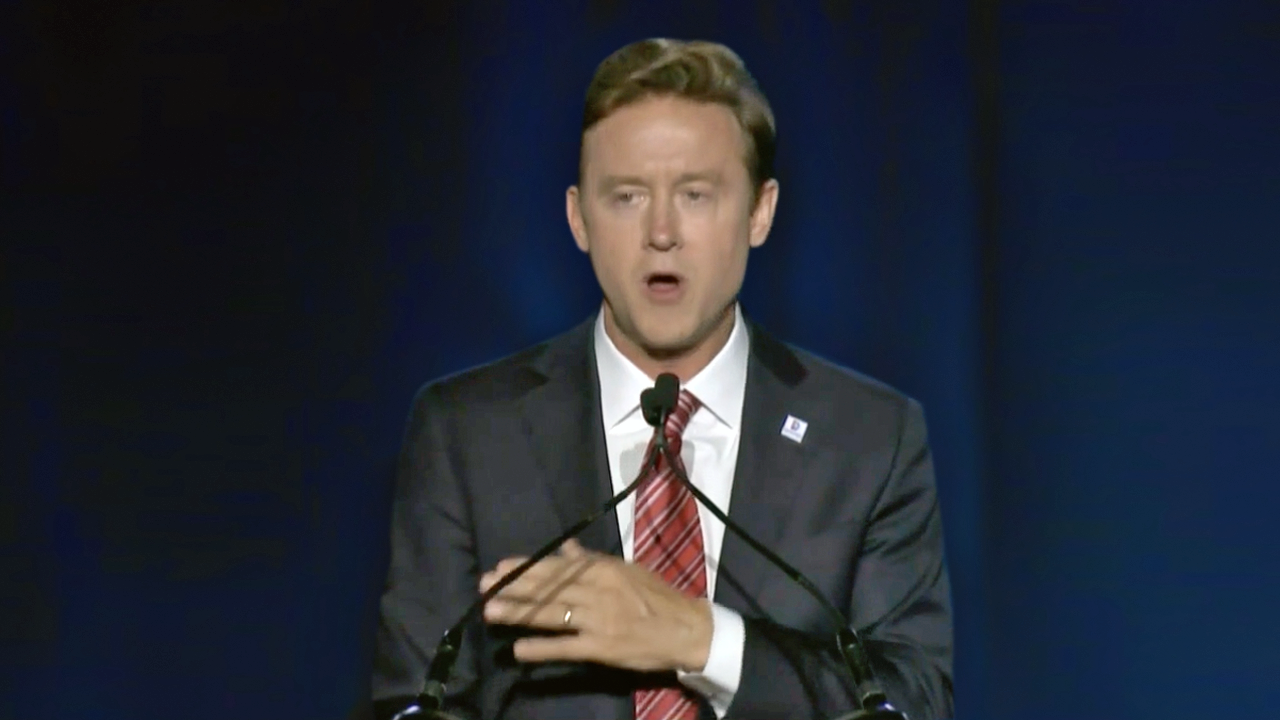


DENVER — Denver Mayor Mike Johnston used his third State of the City address Tuesday night at the National Western Center to unveil two new signature initiatives — a task force aimed at delivering universal childcare and a sweeping development vision he's calling the "Mile High Line."
Johnston built the back half of his address around three "opportunities" he says will define Denver's next chapter: child care, homeownership, and neighborhood connectivity.
Citing a shortfall of licensed child care slots — fewer than 5,000 for 31,000 kids under age 4, with families paying an average of $25,000 a year per child — Johnston announced the Haynes-Gary Task Force, named for Anna Jo Haynes and Nancy Gary, the two women credited with building Denver's earliest preschool infrastructure.
READ MORE: Denver cuts local childcare licensing with hopes of expanding access
The task force is charged with cutting red tape for providers, building a caregiver pipeline, and charting a path to affordable care within five years — but the full "childcare for all" plan isn't due until "before the end of our second term," a term Johnston hasn't yet won. The near-term step is a six-month listening tour.
On homeownership, Johnston pledged to help bring for-sale condos back to Denver after what he described as a generation-long freeze driven by Colorado's construction-defect insurance laws, and said the city would use its own land and financing tools — including the Downtown Development Authority — to speed up and cheapen construction. The section carried no specific unit target or funding figure.
The speech's biggest reveal was a single name given to seven major development sites across the city: Park Hill, the Globeville-Elyria-Swansea area around the National Western Center, downtown, Ball Arena/River Mile, Burnham Yard (the future Broncos stadium site), Old Mile High (the current stadium site once the team relocates), and Santa Fe Yards.
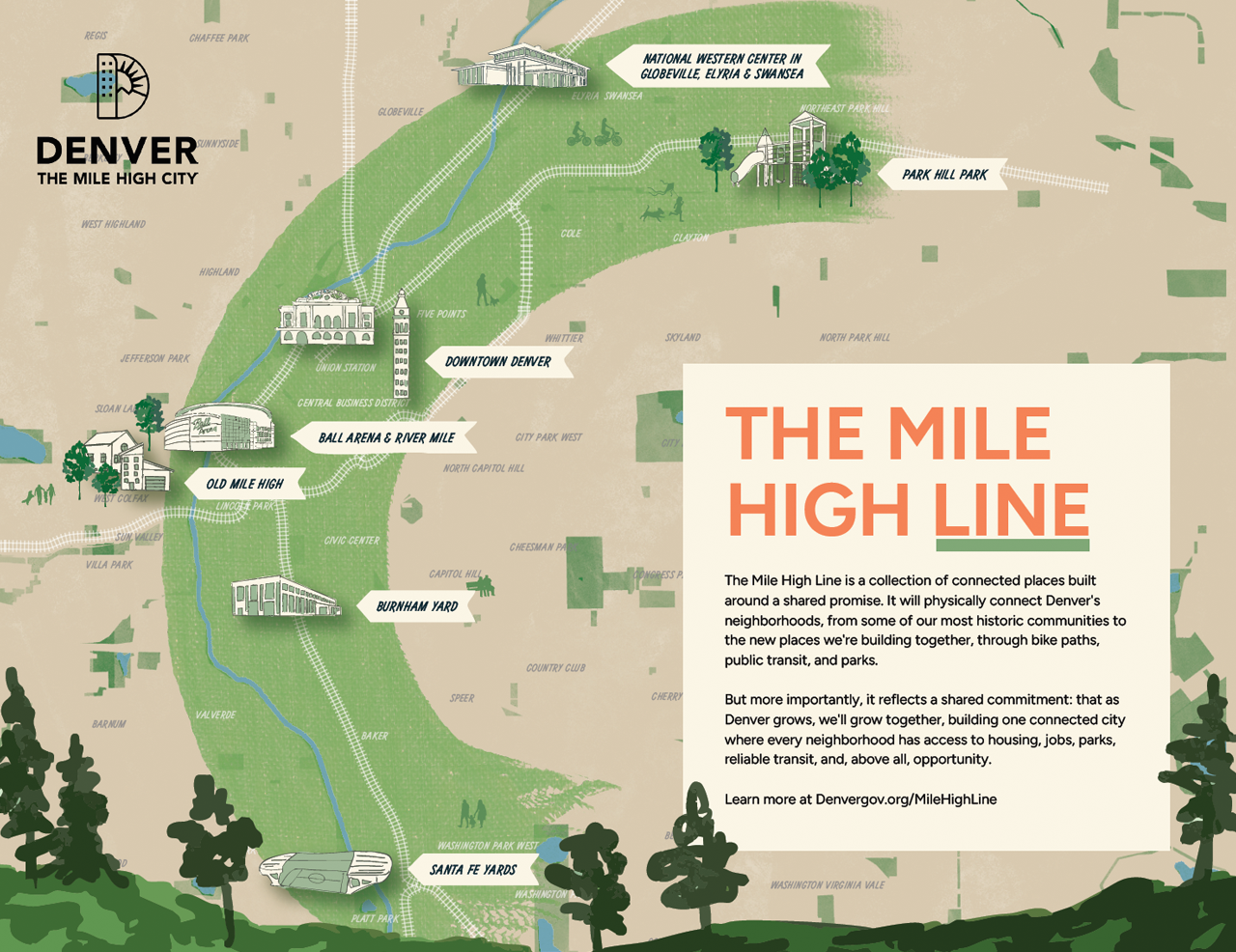
Johnston is calling the combined vision the Mile High Line. All seven sites sit on existing light rail and would eventually be linked by bike and pedestrian paths. He set a goal of 20,000 new housing units across the sites, calling it an economic, housing, transit, climate and equity strategy rolled into one.
Asked directly for a funding source and construction timeline, Johnston acknowledged the sites are on wildly different clocks — Elyria-Swansea "could be ready to start next year," while the Broncos aren't vacating the current stadium site until 2031 — and did not name a specific funding mechanism beyond the city's landholding and the DDA's existing tools.
In a one-on-one interview ahead of the address, Johnston was pressed on the gap between his stated 2026 goals and the city's actual standing. Asked why gun-related homicides are up nearly 40% year-to-date against his own January goal of a 10% reduction, Johnston didn't dispute the trend but recontextualized it: the increase, he said, still leaves Denver at roughly half the murder rate the city averaged between 2020 and 2023. He described the pattern as a normal reversion after a steep, multi-year decline and pointed to a new "hot street" patrol strategy, alongside continued outreach in high-crime areas, as the response going forward.
► Watch Veronica Acosta's report in the video below:
On child care, pressed on why the task force's full deliverable is tied to a second term he hasn't won, Johnston reframed the criticism as being about scope rather than timeline: universal childcare, he said, doesn't exist in most American cities, and building it starts with listening before piloting a plan next year and scaling after that.
On the Mile High Line's financing, Johnston leaned on the land the city already owns — nearly 150 acres across the sites, plus the Downtown Development Authority's existing investment tools — rather than naming any new funding source.
Johnston opened the address with an extended homage to Justina Ford, the first Black woman licensed to practice medicine in Colorado, using her story to frame Denver as an "open frontier" — a city defined by opportunity rather than pedigree. He leaned on that framing to contrast Denver's response to national political turmoil, citing the city's handling of an influx of migrants bused in from Texas as proof that "change drives hope."
On accomplishments, Johnston touted a 64% drop in unsheltered homelessness since 2023 — which he called the largest such decline recorded by any American city — illustrated through the story of a formerly homeless Denver man, identified only as Seth, who moved from the streets into stable housing and a trucking career with the help of the city's outreach program. He also cited a 31% drop in overall crime and a 45% drop in violent gun crime in the La Alma Lincoln Park neighborhood following a targeted policing and community partnership there, alongside a citywide homicide rate roughly half of what it was between 2020 and 2023.
On housing, Johnston said the city has cut permitting time from three years to 180 days and delivered 6,000 affordable units, crediting the changes with helping bring some Denver rents down as much as 10% over 18 months. On downtown, he cited 108 new businesses since January 2025 and foot traffic back to 90% of pre-pandemic levels, alongside November's passage of the billion-dollar Vibrant Denver bond measure.
The listening tour for the Haynes-Gary Task Force is expected to begin within the next six months. Elyria-Swansea is the earliest Mile High Line site with a stated construction window, potentially starting next year, while redevelopment of the current stadium site remains years off pending the Broncos' 2031 move to Burnham Yard.
The mayor's address wasn't without interruption; three people were escorted out for outbursts.


