



DENVER — After spending almost three decades behind bars, a Colorado man who was previously convicted of killing a baby is a free man as a result of new evidence that shows the infant died of lung disease.
The child's mother is not convinced, and firmly believes in the original guilty verdict from 2000.
Denver7 sat down with both individuals to discuss this complicated case, where one family feels vindicated and the other feels wronged.

Tucked down a hotel hallway in Colorado, Stephen Martinez is settling into a room of his own — and a life of his own.
“It's better than being around concrete and steel. So, it's nice," said Martinez about the hotel room. "This brings hope. This brings joy, brings the new beginning."
▶ Watch: Denver7's Colette Bordelon talks with both Martinez and Kim Estrada, the child's mother
Martinez has been incarcerated for 27 years and told Denver7 he has been trapped in a mental health hell that entire time.
“When they give you a life sentence, life without parole, that's what they take. They take your life," said Martinez.
On April 21, Martinez was released from prison and his case was dismissed. Over the years, he has insisted he is innocent and did not murder four-month-old Heather Mares. New evidence from experts who examined the case uncovered the baby died from lung disease.
Prosecutors agreed Martinez received ineffective counsel at trial, launching him into life outside a cell.
"I'm finally going to be made righteous, because they pinned this on me," Martinez said. "They made me out to be a monster.”
On the opposite side of this case is Kim Estrada, Mares' mother, who said she thinks of her daughter every single day.
“To have her in my life was just, it was an amazing feeling, even though it was short-lived," Estrada said. “My life sentence is my daughter who's taken from me. I don't get prom. I don't get graduation. I don’t get to be a grandma. I don't get to see her get married. I'll never get to see that.”
No matter the evidence presented in this case, Estrada told Denver7 she believes Martinez is guilty of killing her child.
“I still have questions that I want answered that will probably never get answered," said Estrada. “We wanted that opportunity to look at him face-to-face and ask him, 'Why?'”
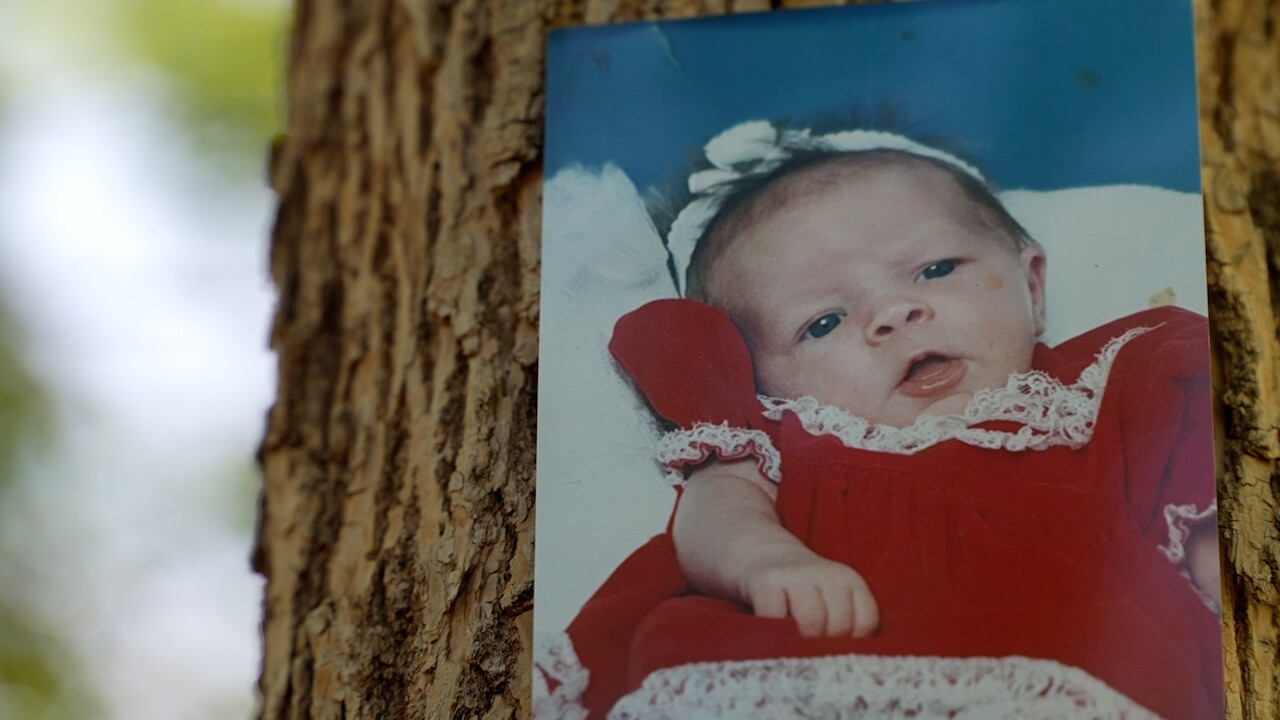
Martinez and Estrada have different accounts of the baby's health leading up to her untimely death.
"She never had any signs of a cold, allergies, nothing," Estrada said about her daughter.
“She was sick quite a bit," Martinez said.
The arrest warrant from Oct. 17, 1998 stated that Denver police responded to a call of a baby choking at a home off Pecos Street. When officers arrived, they were told by paramedics that the case would require an investigation because the baby had "blood in her throat and nose."
Mares was taken to the Denver Health Medical Center, where she later died.
The affidavit reflects that Estrada left the home where she and Martinez lived and went to the bank.
"If I wouldn't have done that, she probably wouldn't have died that morning," Estrada said. “She couldn't stand up to him, no matter what she did."
Martinez was the only person alone with Mares between Estrada's departure and when the paramedics arrived at the home. Estrada told investigators at the time that Martinez had been "jealous of her children several times" and claimed he would become angry when the baby cried.
“He's just evil, and he knows what he did was wrong, and he knows that he got off on this," Estrada said.
In addition, the arrest papers show that Estrada described Mares as being "fussy" before she left for the bank. Near the end of the document, Estrada allegedly told police that the "baby seemed to be acting normal and did not appear to have any problems" before she left for the bank.
Martinez claimed he was home alone with the baby that day when he heard her making concerning noises.
"I was sitting there eating, and I heard Heather, she started, like, gasping, choking, even. So I put my plate aside and I went in there and just... She was in distress, that's for sure," Martinez said. "I did a finger sweep, because I thought maybe she grabbed a little toy or something. I picked her up, and I'll just pat her on the back. And then she threw up on me, but it looked like blood and baby formula."
When Martinez could not help the baby, he called 911 and said he followed the instructions given by the operator.
"When I put her back in the crib, she threw up again," Martinez said.
The baby's sheets were discovered in the washing machine with blood on them, which Martinez said was due to the vomit. He added that the sheets were originally on the baby's bed when investigators arrived, but said he removed the sheets and his shirt to try and clean up the mess during what was a chaotic day.
A "strange occurrence" is also detailed in the arrest warrant, where Estrada alleged there was a day roughly two weeks prior when a "scrape" was found on the baby's nose after being left alone with Martinez. According to Estrada, Martinez told her "he had been holding the child and had tripped on a phone cord."
According to filings from Martinez's team, Estrada originally told a nurse that she had fallen while holding Mares a few weeks before her death.
The documents from 1998 continue to describe the findings from doctors who treated Mares at the hospital, which "indicated that Heather had suffered from a fractured skull and that she had bleeding inside her brain." The Emergency Room Attending Physician at the time told investigators that the head injury was "most likely a result of the child's head striking against a flat hard surface."
The doctors concluded that Mares' injuries were the result of child abuse, not choking, according to the affidavit.
“The truth needs to be known," Martinez said.
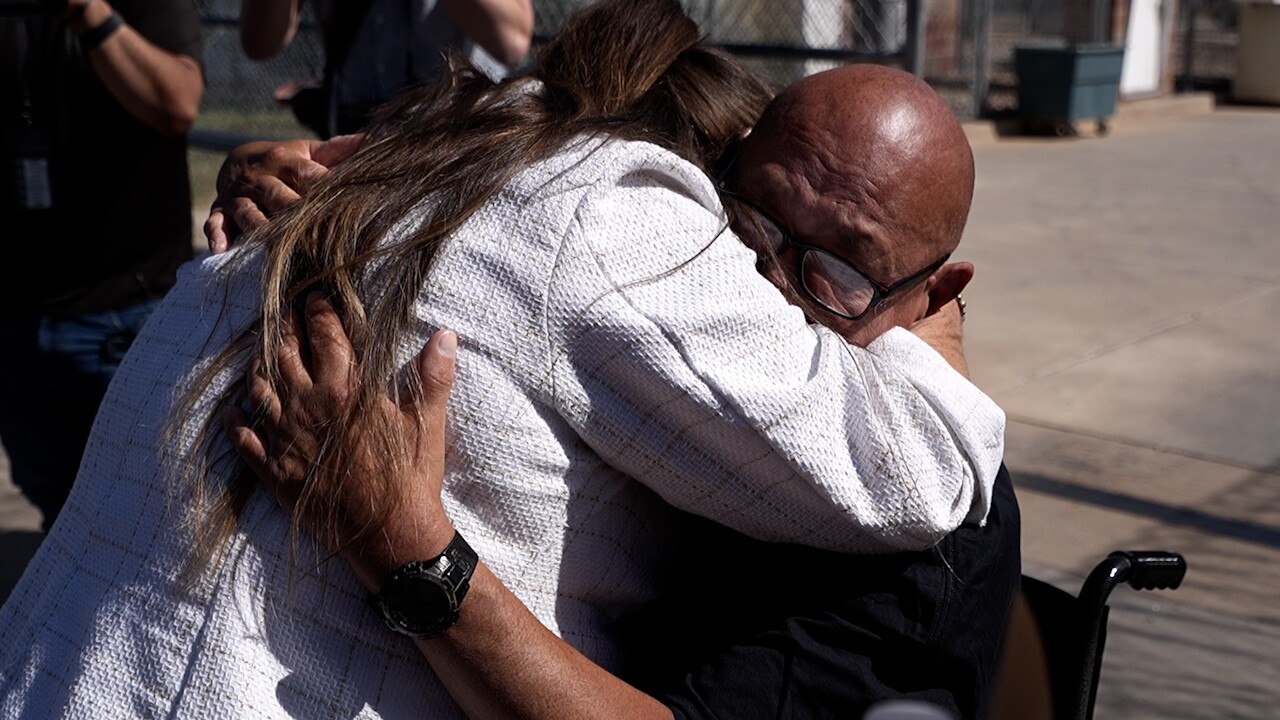
Charges were filed against Martinez on Oct. 21, 1998.
"Just total shock. I was like, how could I be charged for murder?” Martinez said. “People that are trying to kill someone — premeditated — they don't call 911 and definitely don't stick around at the same place for hours waiting to find out what's going on."
His trial took place in early 2000, and a jury convicted him of murdering Mares. He was sentenced to life in prison without the possibility of parole.
"I didn't do this. That's not the type of person I am," Martinez said. "I couldn't come out and hurt anybody unless I had to defend myself. So, to an innocent child? No way, no freaking way, would I ever do that. So to anybody that even thinks that I did that? No, you're wrong. I didn't do it."
On April 17, the Korey Wise Innocence Project (KWIP) filed a motion for post-conviction relief that begins by asserting that "Stephen Martinez has served 27 years for a crime he did not commit, first-degree murder of a four-month-old baby."
The organization provides free legal services to individuals who are serving time behind bars for crimes they did not commit. Those who claim they are innocent can apply for that kind of help, and such applications are screened carefully before being selected as the ones KWIP investigates.
KWIP claimed that Martinez's trial was "plagued by a fixation on shaken baby syndrome and a false confession" which was magnified by ineffective counsel.
The autopsy performed on Mares originally determined the baby died from "complications of blunt trauma to the head" and ruled her death a homicide. However, the filing from KWIP detailed expert reports that assert Mares died from "severe lung disease" and that she "suffered from significant, documented respiratory illness throughout her short life."
Five medical experts who were retained on behalf of both Martinez and the State looked at the case and reached the same conclusion that severe lung disease caused the baby's death instead of trauma. Those five reports assert that there was no examination of an alternative explanation for Mares' death due to a "rigidly-held belief" in shaken baby syndrome.
In addition, the motion claims that the skull fracture observed by doctors in 1998 "could have been caused by a fall that occurred a couple of weeks prior" to her death.
According to KWIP, the original coroner in the case revisited her findings along with the new expert reports and found that, now, "a jury would reasonably doubt the manner" of the baby's death. The document stated that "Dr. Martin changed her views on the case and would not testify in the same way today."
The motion argued that "the experts' conclusions, based on science that did not exist in the year 2000, fundamentally call into question the reliability of the verdict."
KWIP also listed dates they determined were significant in Mares' medical history, which include:
- Aug. 24, 1998 — A wellness check-up where a doctor noted the baby had an upper respiratory infection.
- Sept. 16, 1998 — Mares was taken to Pediatric Urgent Care after vomiting "blood-tinged digested milk, a symptom of persistent lung disease." According to the filing, the hospital documented this as a "possible viral infection."
- Oct. 16, 1998 — The documents claim Mares was "sick and irritable" on the day before her death.
Estrada denied the medical records referenced in the filing from KWIP, saying that doctors "never once said she was sick. Never once did they say that we would be fighting lung disease or anything later in life.”
However, Estrada did acknowledge that it was possible doctors recorded that her daughter had a viral infection in Sept. 1998.
Denver police interrogated Martinez on Oct. 18, 1998, and KWIP alleged that Martinez told investigators he had fallen while holding Mares roughly two weeks before she died. According to the document, Martinez tripped on a telephone cord and "thought he protected her head as they fell, but he wondered if she'd made contact with the floor."
During the trial, the court documents stated that the coroner who conducted Mares' autopsy testified that the kind skull fracture observed on the baby "would not usually come from a simple fall."
Martinez, along with the court filing, claimed police continued questioning him after he asked to stop speaking with investigators around halfway through their interrogation. Despite the continuation of questions from police after Martinez requested the interrogation end, his attorneys did not file a motion to suppress such statements at trial.
According to KWIP's investigation, police told Martinez that if he admitted to shaking the baby and slamming her into the crib, he may receive a more lenient sentence.
"They were telling me, 'Well if you say this and not that, you don't have to go to prison.' And so, you know, I didn't want to go to prison," Martinez said. "I, kind of, basically followed their lead and invented something which I regretted highly the rest of my life, and probably always will the rest of my life."
An expert on police interrogations deemed Martinez's admission to Mares' murder a false confession. According to that expert opinion, Martinez's statements to investigators do not align with the medical evidence and are not corroborated by physical evidence.
Estrada does not believe Martinez made a false confession.
"Nobody told him what to say," Estrada said. "I still don't understand how the courts can let somebody out like this, how the judicial system can just let this go."

The Denver District Attorney's Office filed a motion to dismiss Martinez's case on April 20 due to ineffective counsel in his original trial.
"We could not meet our burden of proving the case beyond a reasonable doubt if we were to take it to trial today, and for that reason, we moved to dismiss the case in its entirety," said Denver District Attorney John Walsh.
As a result, a hearing was scheduled in front of Judge Andrew Luxen on April 21, who vacated Martinez's murder conviction and dismissed the case against him.
"I find myself nearly speechless today," the Assistant Director of KWIP, Jeanne Segil, said after the hearing. “This case is a tragedy on every front. A four-month-old girl died. A grieving family thought they found justice for their loss, but the system failed them, and it failed Stephen Martinez.”
Segil continued to call shaken baby syndrome an "unsupported hypothesis," and said it has since been discovered that respiratory illness can cause those symptoms.
“The respiratory illness, when it became so severe, the respiratory distress then stopped. Then there was hypoxia, loss of oxygen that caused the heart to stop. The heart could no longer then pump blood into the brain," said Segil. “Everything that you see, all of those injuries, stems from that, because the blood then had nowhere to go. It continued to circulate throughout the body, and it thinned. And so, it could not go through the brain, and so it went around the brain, and it went behind the eyes, and when blood can no longer get pumped through the brain, the brain swells.”
Meanwhile, relatives of Mares pleaded with the judge to uphold Martinez's life sentence, with Estrada saying her baby "didn't die of pneumonia, she died in his hands."
"She's not dead until she's forgotten, and that day will never come in my book," said Estrada. "I want you to hear my voice, and I want you to know this isn't going away, and neither am I.”
Martinez said he always hoped for a miracle, and shared his story to advocate for other people who are incarcerated, but innocent.
"It changed me to be a better person, a better husband, a better uncle, a better nephew. The part that hurts is I can't be a better son. Mom and dad are gone," Martinez said, wiping away a tear. "They'd be ecstatic knowing that their prayers were answered.”
Now, Martinez is ready to lead a new life — one where he will take nothing for granted.
“Everything is new and exciting," he said with a smile.

