

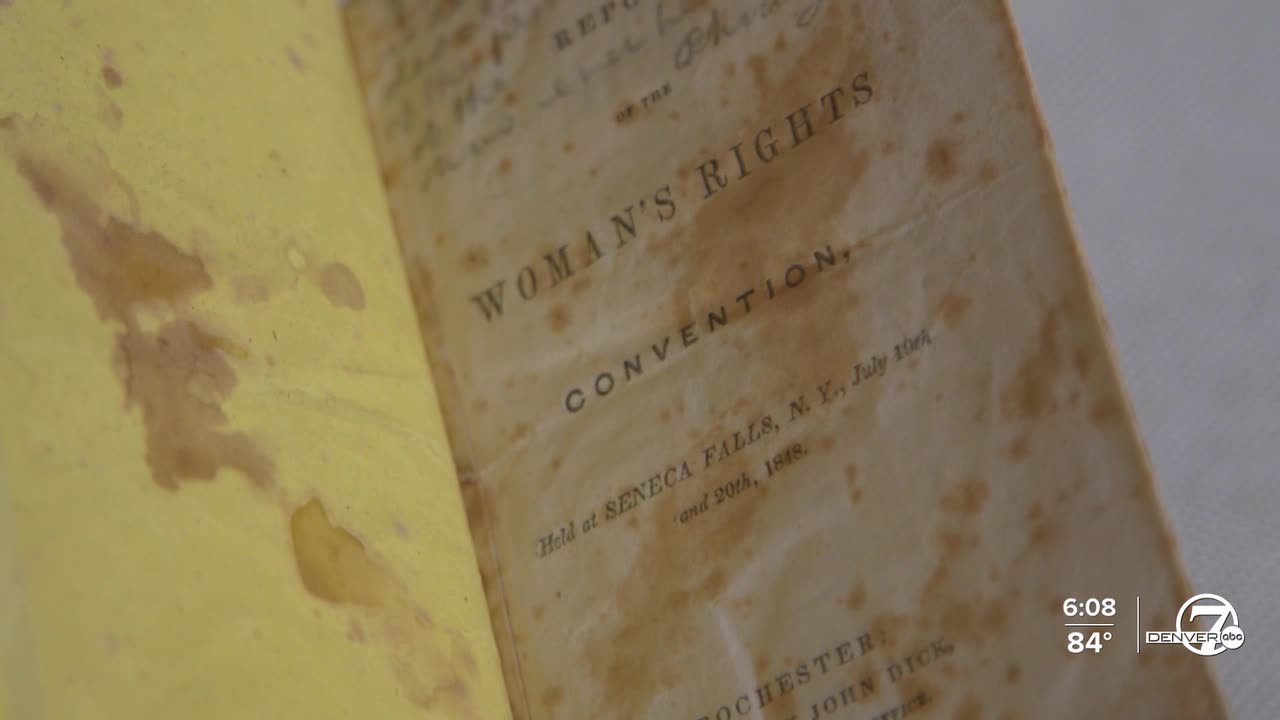


DENVER — One of the most significant artifacts in U.S. women’s rights history is in Colorado for the first time at the Center for Colorado Women’s History.
A rare original printing of the Declaration of Sentiments — one of only two remaining copies — is now on display.
The document written in 1848 by prominent activist Elizabeth Cady Stanton laid out a radical list of grievances and demands, including the right to vote, own property, pursue higher education, and live an independent life.
“The list is amazing. There are 16 grievances, and a handful of them we've achieved,” said Director of the Center for Colorado Women’s History Susan Fries. “The others we're still in the struggle for… like economic justice, domestic violence issues, so forth.”
On loan from the Library of Congress in Washington, DC., the palm-sized and fragile pamphlet was found in a scrapbook of women’s rights artifacts.
The document was signed by more than 100 participants at the first-ever Women’s Rights Convention in Seneca Falls, NY, in 1848.
This oldest-known copy of the Declaration of Sentiments was printed by “The North Star,” an anti-slavery newspaper founded by prominent abolitionist Frederick Douglass. Douglass attended the convention and signed his name as a supporter.
Colorado was an early pioneer in granting women the right to vote. Wyoming granted women's suffrage in 1869, but it was a territory at the time. Colorado held a referendum in 1893, which passed. This marked the first time in U.S. history that a state's popular vote passed women’s suffrage into law.
“These rights that these women laid out in 1848 are still relevant to us today. We're still talking about them. We're still advocating for some of these, and it's a good reminder of the things that we've attained and the long road that it takes to do these things,” Fries said.
The 178-year-old document will remain on display through July 6.




Denver7 is committed to making a difference in our community by standing up for what's right, listening, lending a helping hand and following through on promises. See that work in action, in the videos above.
