

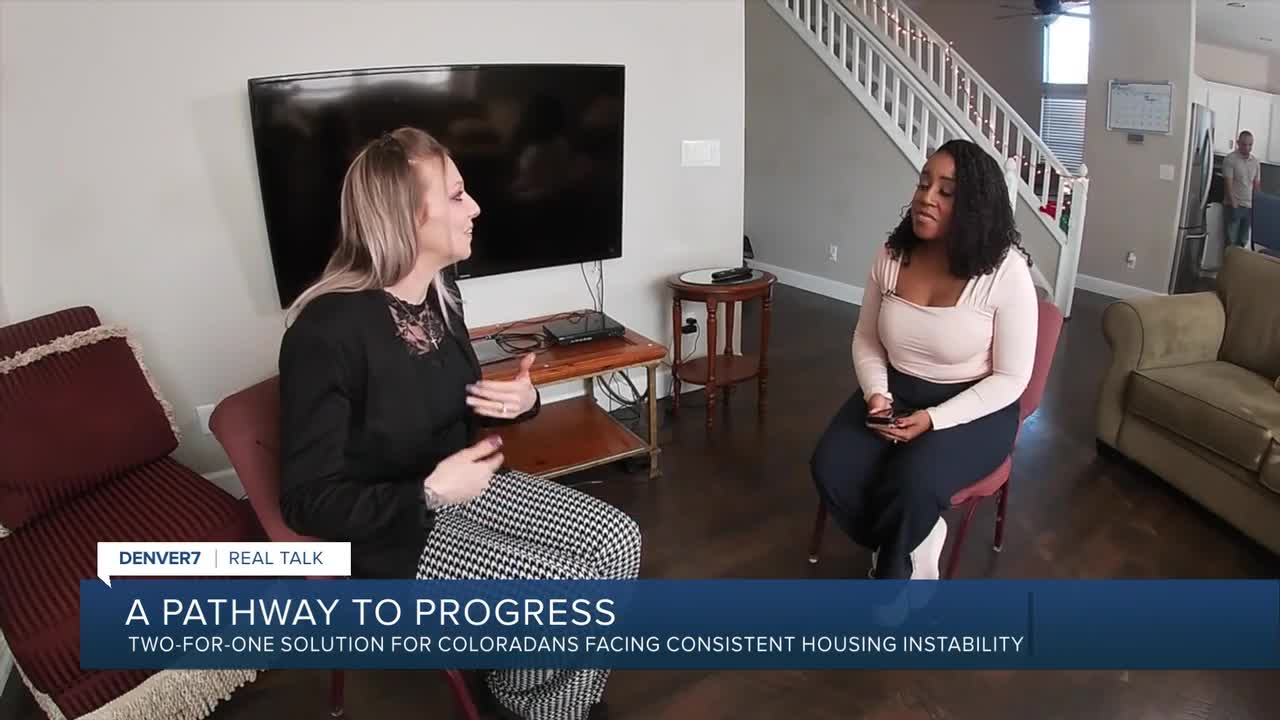


DENVER — Lower the Barrier Colorado, a Denver-based nonprofit that helps provide workforce training and housing through it’s Pathway2Progress program, is looking for community support to expand their work.
Pathway2Progress is designed for adults who are working, in training or actively pursuing employment but are stuck in cycles of housing instability.
“Being someone with lived experience, I’ve met people who were so afraid to get out of incarceration because they didn’t have a job, they didn’t have a place to go, they didn’t have resources,” Jeff Legins, Pathway2Progress co-founder and program director, said.
Legins said the program combines stable housing, accountability and wraparound workforce support so residents can focus on rebuilding their lives.
“You can’t get housing without a job, and you can’t get a job without housing,” Legins said.
Legins said program participants live in a home with roommates and pay a very reduced rent. They also get trained and placed in construction jobs as flaggers, forklift drivers and other positions.
“Maybe it’s not a permanent job; maybe it's transitional,” Legins said. “We have other partners, where you can get into different trades once you get your feet wet, and then some of them are making $54 an hour.”
Telesha Padilla, a Pathway2Progress peer coach and navigator, helps participants going through the program and said her lived experience helps her relate to participants.
“I started using substances when I was about 13 years old, was an IV user by the time I was 14, was an eighth grade dropout and was active in the streets for about 10 years,” Padilla said.
But it’s been 14 years since Padilla said she turned her life around.
“I’ve actually been able to take opportunities that were presented to me,” Padilla said.
Now, Padilla is helping others do the same.
“A lot of people just need to be taught that their lived experience on the street, their pain and their trauma can really be transferred over into real world stuff,” Padilla said. “Domestic violence survivors are really good at reading the room and being able to adjust their behaviors based upon what’s happening. If you were a businessman or businessperson in active addiction, a lot of times you can manage inventory inside of a restaurant.”
Legins and Padilla said good people can find themselves in bad situations, due to their own choices or life circumstances, but with support, they can finally get on the right path.
For more information on the program and ways to support it click here.


Denver7 is committed to making a difference in our community by standing up for what's right, listening, lending a helping hand and following through on promises. See that work in action, in the videos above.
