

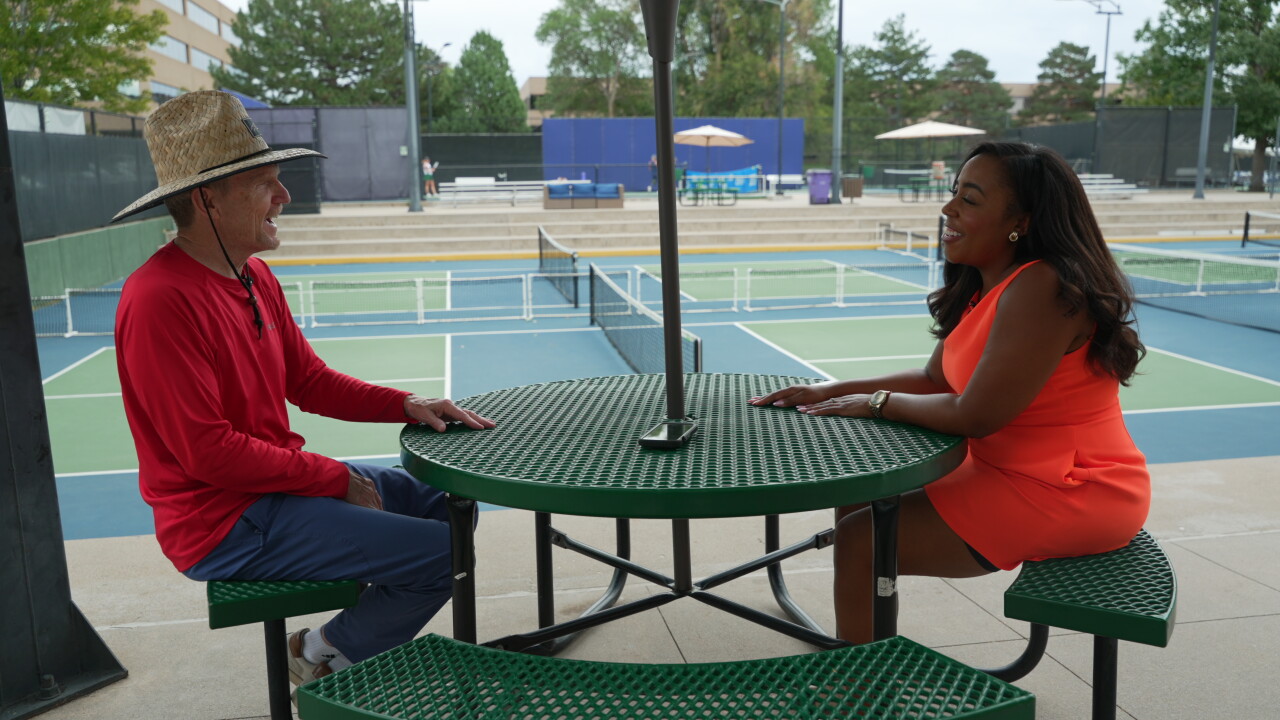


Starting Wednesday evening, Next Step Next One, a nonprofit working to reduce the kidney transplant waitlist by inspiring living kidney donors, will host a series of community conversations over the next month.
“For every one of these conversations, you see people kind of start to come out. And for the patient who is in need, we learned through this program the fear is: the ask is hard, the rejection is harder. Many times, they don't even ask because they don't think that they're worthy of someone else taking on a risk to help them. And so when you bring these two together, there's just magic in the room,” Brian Tiell, Next Step, Next One founder, said.
Tiell, a former Denver7 chief photographer, said a trip to Guatemala inspired him to start the nonprofit.
“I was invited to come along on the 3 Volcano Challenge down in Guatemala to produce a short documentary of these living kidney donors, 17 living kidney donors who were going to scale these three volcanoes to show what you could do post-donation. And what I realized halfway through day one, walking and talking with these people, had nothing to do with the heights that they were scaling, but the sense of purpose they found in their life by doing something for someone else,” Tiell said.
Tiell would also become a living donor.
“It was such a nothing burger. It was eight weeks ago… I had surgery on Wednesday. I came home on Thursday. Friday, I took a quarter mile walk. By Monday, I took a three-mile walk, and I just slowly got my strength back,” Tiell said. “I donated what's called non-directed, altruistically to another, just to a stranger. And in that donation, I wrote him a letter and I said, "I want you. I know you are thankful, but I want you to know I am too. That I have health that I can help you become healthier with.’”
Tiell’s wife is also a living donor and when she shared her story publicly, Tiell said he was inspired to host more community conversations, especially in communities of color where Black donors make up just 8% of all living organ donors in the U.S..
“She just spoke from the heart. ‘This is what I did, and this is why I did what I did in donating to a stranger’. That moved people. That moved people that they saw a real person, with a real experience, with no mistrust, and an encouragement that they could do it too. And so those communities are adversely affected on the negative side,” Tiell said.
Tiell’s friend, Mark McIntosh, has also inspired others with his story.
“Brian and I've known each other quite a while because you know he used to be the chief photographer at Channel Seven and I was a sportscaster at Channel Four,” McIntosh said.“Back in March of '23, I was diagnosed with a rare blood cancer that I guess is a dual diagnosis of amyloidosis and myeloma, and it was destroying my kidneys, so I was immediately thrown into chemo to try to fight off the blood cancer, but then also dialysis because it had destroyed my kidneys. So I spent 15 months on dialysis, nine months on hemodialysis, where you go to a facility, and six months on peritoneal.”
In June 2024, McIntosh learned a living donor was willing to give him her kidney.
“A 68-year-old woman in Pueblo. She lives in Pueblo West. She shared her spare and saved my life…. And I've become a huge advocate for organ donation and wellness because we've got a growing kidney crisis in our country,” McIntosh said. “Kathy Hitchcock. She’s a huge sports fan, and you know I was a sportscaster for a long time here in town. ..But when I hugged Kathy Hitchcock, knowing a piece of her sits right here in my groin, and it saved my life, oh, it was unbelievable. And we hugged the first time. We're both crying, and we finally kind of separated. And she goes, ‘Mark, I used to watch you all the time on TV'.”
In 2025, more than 7,200 people became living organ donors, according to the United Network for Organ Sharing (UNOS). UNOS also reports there are more than 100,000 people on the national transplant waiting list with the vast majority, over 92,000, waiting for a kidney.
The American Transplant Foundation reports that transplant candidates generally have better results when they receive organs from living donors as compared to organs from deceased donors. Genetic matches between living donors and candidates may also lessen the risk of rejection.
“A lot of people don't realize we can live just fine with one kidney. Highly educated people don't realize. So, you have a spare kidney, and we've got a growing kidney crisis,” McIntosh said. “Once I went through this, and my background, I'm a journalist, author, speaker, and all that, I just kind of felt God saying, 'McIntosh, use your skills to go out there and educate people that they can share their spare',” McIntosh said.
McIntosh and Tiell said their goal is to do what they can to inspire others to potentially save a life.


Denver7 is committed to making a difference in our community by standing up for what's right, listening, lending a helping hand and following through on promises. See that work in action, in the videos above.