



DENVER — With all the talent of Major League Baseball (MLB) but hardly any of the recognition, Negro League Baseball players refined and redefined the sport.
During a time when professional Black baseball players were excluded from MLB teams, players and entrepreneurs created their own league.

“I'm just so grateful that they had the Negro Leagues, but I think it's just part of the overall initiative of what I feel about African Americans in this country in general, and not just African Americans, but with others who are marginalized in some way," explained Jacquelyn Benton, whose father was a Negro League Baseball player. "I mean, we just find a way. You know, if we're denied something, then we just create something original of our own. So, that's how I think of the Negro Baseball Leagues. They just created a way that Black players could play the game that they love.
Her father was Byron Johnson, but because he played baseball with the Negro Leagues, he was given a nickname of Byron “Mex” Johnson.
Byron “Mex” Johnson
Johnson was born in Little Rock, Arkansas on Sept. 16, 1911.
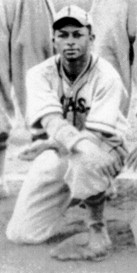
“Graduated from high school in 1931 but then they also had a wing of the school that was a junior college as well," Benton said. "So, he went to one year of junior college, then went down to Wiley College. But then the way he got into the Negro Leagues was because he was a very good baseball player. He would talk about his first ball, which was a Coca Cola top, and they would take the top, swing a bat and try to hit that top.”
In 1937, the Kansas City Monarchs, one of the most successful and well-known Negro League teams, was in search of a shortstop, especially one who could make the double play.
“Now, that was one of his specialties,” Benton said.
The team asked Johnson to try out, but Benton said Johnson was hesitant because he didn’t want to leave Arkansas.
“But when he did get down there… when he tried out, he said that he had the opportunity to make a double play, and he said he had made plays like that all of his life. It was just nothing to him," Benton said. "But he said when he made the double play, the fans out there just went crazy, and they were cheering, and he didn't know, you know, what that was all about.
Johnson played for the regular Monarch team in 1937 and 1938 before moving to play with the Satchel Paige All Star teams in 1939 and 1940.


Negro League Baseball in Denver
Throughout the early 20th century, Negro League Baseball would grow and expand to cities across the U.S.
“Denver was home to several teams, but one of the more predominant teams is known as the White Elephants,” said Dexter Nelson, II Denver Public Library Museum's services and special collections manager. “We are still unearthing how many players played here locally, so that's something we're very excited to try to, you know, collect that history. But yet, you have a lot of different players who would bounce around to different teams just like today. And so one in particular, Bubba Anderson, he played in the White Elephants, but then also the Kansas City Monarchs.”
Nelson said the players were so talented that in recent years, Major League Baseball has decided to honor the Negro League in a very meaningful way.
“You have Negro League Baseball players who are creating their own stats, breaking their own records. And even recently, we saw the Negro League stats integrated into Major League Baseball, and so that really kind of shook up some of the rankings,” Nelson said. “But Denver specifically is pretty notable because we had one of the first integrated baseball games that was put on by the Denver Post in 1934, it is known as The Little World Series.”
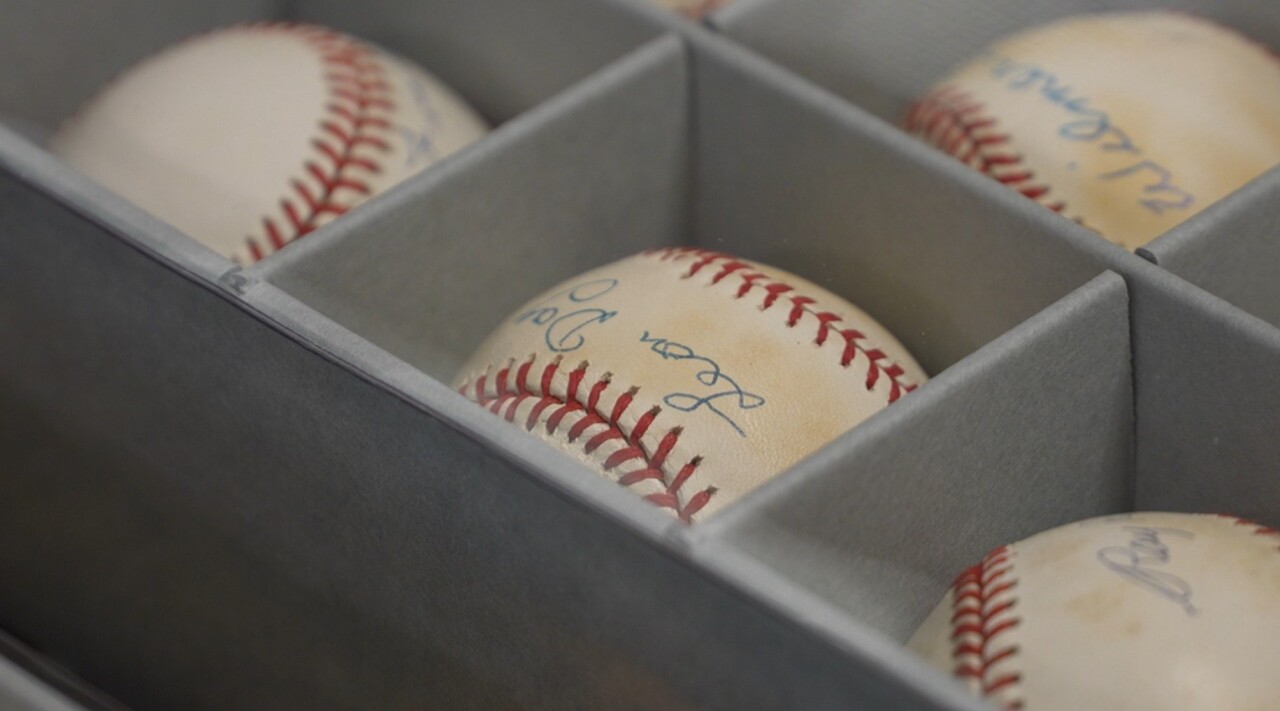
Nelson said Blair-Caldwell African American Research Library has a large collection of Negro League Baseball cards and several signed baseballs.
“You have everyone from Satchel Paige to some of the underrepresented players as well. But one of my favorite parts about this particular collection is that it shows team shots,” Nelson said.
The collection also includes images of Johnson.

Benton said her father remembered his time in the league fondly, but it wasn’t without its challenges.
“Well, I mean, of course, the main challenge was just segregation itself, which is, of course, why we had a Negro Leagues Baseball team to start with in the first place,” Benton said. “I do remember my father saying, when he traveled to Cheyenne Wyoming… They had gone into a gas station there, and so they let them get the gas. But then when they went to go into the restaurant, they said, n****** aren't allowed. And my father said he was so surprised, because he just associated that with the South. Then the man who, I think he, was their manager, I think it was Newt Joseph, then he told the guy ‘well, then we don't want your gas if we can't eat here.' So he said, ‘You get it out of there.' My father said that the man was trying to siphon the gas out, you know, because the guy told him ‘You're gonna have to get the gas out.’ And my father said there was gasoline everywhere.”
Johnson retires, moves to Denver, and is honored by a former U.S. President
In 1940, Byron Johnson retired from baseball.
“The regrettable thing, I think, is that he felt that, based on his experience growing up under segregation, he just felt like they would never let them into the Major Leagues. And so that's why he said he wanted to quit at his best,” Benton said.
Major League Baseball wouldn’t fully integrate until 1947 when Jackie Robinson began playing for the Brooklyn Dodgers.
Johnson returned to Little Rock and during the late 1950s, he helped with the carpool for his niece, Carlotta Walls LaNier and other members of the Little Rock Nine, taking them to and from school.
“My mother had a brother out here in Denver, and he worked at the post office here. My father worked at the post office in Little Rock, and we had come out to Denver to visit the year before. Just fell in love with Denver because it was so beautiful. I mean, just a beautiful city,” Benton said. “It was just nothing like the environment in Little Rock."
So, the Johnson family moved to Denver, where Johnson’s baseball reputation preceded him.
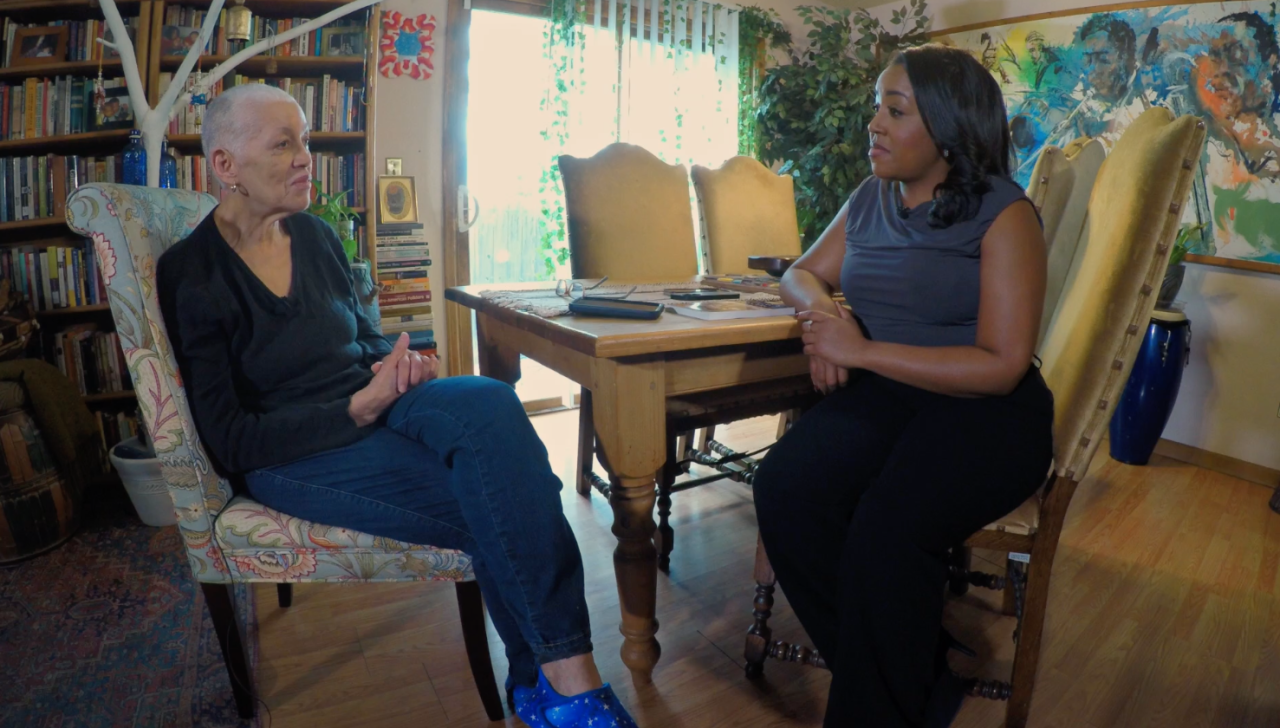
“We've got some of his trophies that he got, not just in baseball, but in golf, because he made a whole new one on his 81st birthday,” Benton said. “He was asked to come out and throw the first pitch for the Rockies a couple of times.”
Benton said a past president also honored her father.
“President Clinton, he and other presidents would do something, they tipped their cap to something,” Benton said. “President Clinton, he tipped his cap to the Negro Leagues and what they had done for the country in general. And it was wonderful because he mentioned more than one Negro League player. Of course, he mentioned Satchel Paige, but he also mentioned Byron Johnson.”
Benton became emotional as she described the memory she said meant so much.
President Clinton, with encouragement from LaNier, also wrote the foreword for Johnson’s book "Legacy of a Monarch: An American Journey."
“It touched us all so much,” Benton said.
Negro League Baseball may have been born out of necessity but long after crossing home plate for the final time, Benton said her hope is the players, her father included, will continue to have a major impact on professional baseball for generations to come.
