



DENVER — A group of Metro State University students and a professor have teamed up to develop a faster, less invasive way to test for human papillomavirus, or HPV, a virus linked to cervical cancer.
It all started as an idea.
“I specifically worked at a lab. We only got samples of cervical vaginal fluid from pap smears, which is a very invasive, long procedure with a rough turnaround time. I felt like this had to be kind of a change,” said Zoe Ward, MSU student.
Ward's experience in the lab led her to seek a new way to screen for HPV using only a drop of blood.
“I said, 'That's a great idea. Someone's probably already done that.' So, we did our due diligence and found that no, in fact, no one had developed this kind of DNA-based blood test for HPV,” said Professor Dr. Andrew J. Bonham, Ph.D.
That idea is now coming to life. Here's how it works.
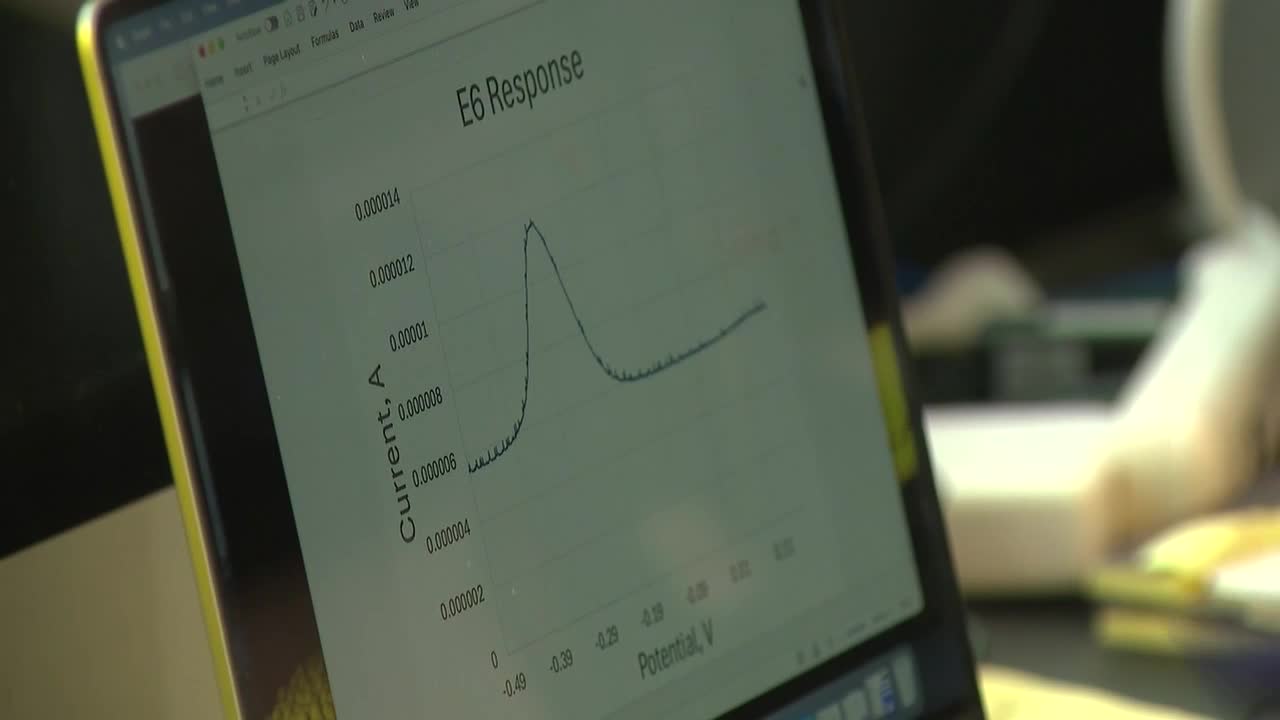
“We put this DNA into an electrode system, and then we can put, say, a drop of blood on it. If that blood contains the HPV target that we're looking for, the DNA will bind, and that will result in an electrical current that we can measure,” said Bonham.
Chemistry professor Andrew Bonham, along with students Zoe Ward and Gage Leach, said this new screening method is more efficient than the traditional Pap smear.
“With the route, like our EAB biosensor, it can be done in under two minutes. So, we are trying to get that awkwardness out of the way,” said Ward.
Although HPV rates have declined nationally, cervical cancer is still something many battle.
“We don't think of HPV as being a huge problem in America due to increasing vaccination rates, but it's still responsible for over 10,000 cases of cervical cancer in the U.S. every year,” said Bonham.
For Zoe Ward, cancer and disease research is something she's committed to.
“It means a lot to me, because I can help people who are closely related to me, and I can help people that I know who have had HPV or are testing for it in the process,” said Ward.
As far as next steps? These will include peer review, publishing in a scientific journal, and looking for clinical partners.
