

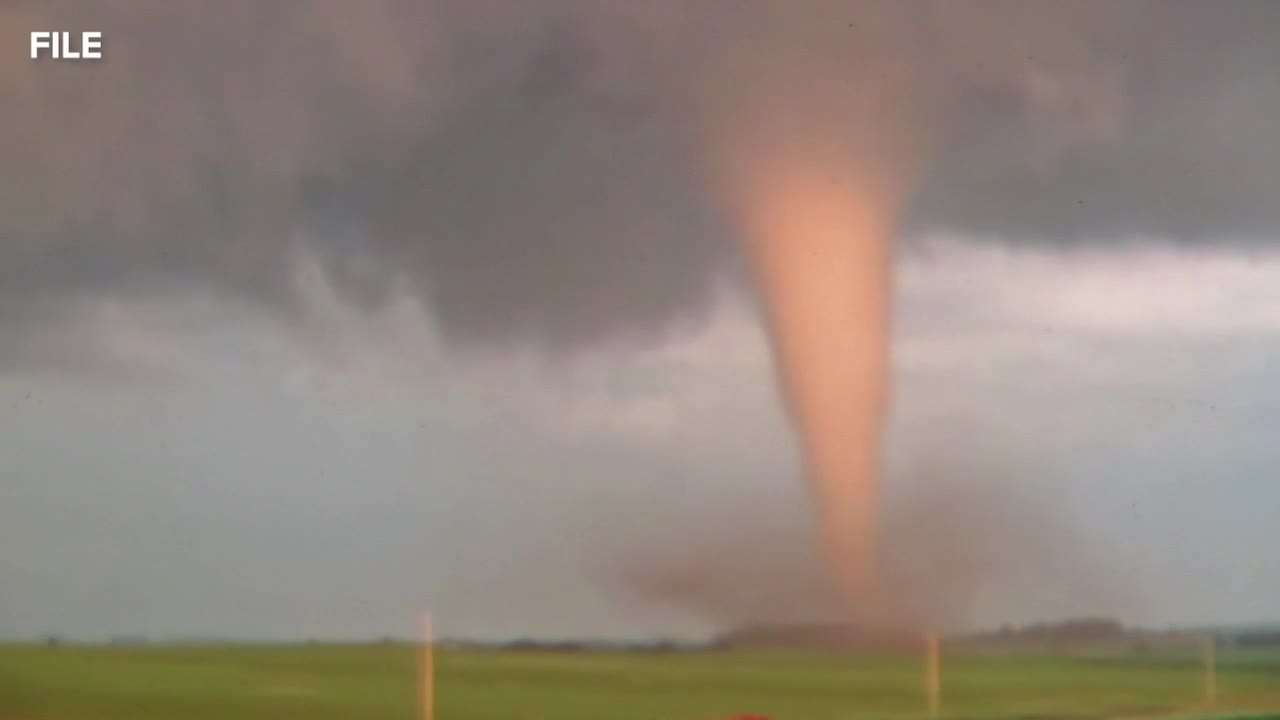


DENVER — The Denver Office of Emergency Management (OEM) held its annual Mile High Ready drill on Thursday to test for a tornado scenario.
The exercise brought together several city agencies and private partners to practice a coordinated response and recovery operation. It helps city leaders look at how emergencies, like tornadoes, can test local infrastructure.
While tornadoes in Denver are rare, according to the National Weather Service (NWS), there have been 19 tornadoes recorded in the county since 1950.
NWS Boulder Meteorologist Paul Schlatter said most of the recorded tornadoes are on the weaker side — EF-0 or EF-1 tornadoes that can knock down trees, snap power poles, and cause minor damage to homes.
“Definitely a threat to life and property, even if it's an EF-0 or EF-1 tornado, but it is rare to get the EF-2 and stronger tornadoes, which those typically can and do kill people,” Schlatter said.
In the 1980s, Denver did see a spate of stronger EF-2 tornadoes and one EF-3.
The last recorded tornado was an EF-1 in June 2015. It traveled nearly 3 miles from Denver to Aurora in the Lowry neighborhood with winds of up to 90 miles per hour.
A couple years prior, in 2013, a tornado touched down near Denver International Airport, causing travelers to take shelter.
Schlatter said you are five times more likely to see a tornado on the east side of metropolitan Denver.

Denver7 | Weather
Colorado's topography and its impact on the weather, explained
“It's called the Denver Cyclone. About 20 to 40 miles from Denver eastward, and it also has another really, geeky feature called the Denver Convergence Vorticity Zone. It's just a special low-level zone of converging winds that, under the right conditions, can easily pop up a tornado,” Schlatter said.
Tornado season in Colorado usually starts in April and peaks in the first week of June.
Seven tornadoes typically occur each year within 50 miles of Denver.
“You should have a plan and know what to do. Know where your shelters are anytime a watch is issued,” Schlatter said.

