


Up to $4,000 stolen per successful call. AI is making the scams harder to spot. Here's how to know if you're a target.
Two Coloradans shared their stories with Denver7 this year — one lost $3,000 to a romance scammer in July, another nearly paid a fake E-470 toll ticket in April. Both thought the contact seemed completely legitimate. That's exactly the problem.
The Colorado Public Interest Research Group says Coloradans receive 27 million unwanted robocalls every month, and the scammers behind them are now extracting more money than ever — up to $4,000 per successful call.
- 27M — Robocalls/Month
- $4,000 — Max Stolen
- 42% — Phone Companies
Could a Scammer Fool You?
Six real scenarios. Rate your own instincts — then see how the tactics actually work.
A new online contact quickly becomes emotionally close and mentions wanting to 'take care of you for life.' They ask to move communication off the platform. What's your instinct?
- I'd probably keep talking — it seems genuine — This is the exact pattern John Clark experienced. His romance scammer used emotional closeness and Clark's disclosure of his Parkinson's diagnosis as leverage — ultimately walking away with $3,000 of Clark's money in July 2025.
- I'd be cautious but wouldn't cut contact yet — Caution is a start, but romance scammers are patient. COPIRG warns that AI now makes it easier to spoof voices and manufacture authentic-seeming relationships — what feels real may still be a script.
- I'd stop contact and report it immediately — Good instinct. Moving communication off a platform is a classic escalation signal. John Clark's scammer used emotional investment over time to create trust before asking for money.
You get a text claiming you owe a toll fine. It includes your vehicle's make, model, and license plate number. Do you pay?
- Yes — it has my real vehicle info, so it must be legitimate — Clint Bales made exactly this call in April 2025. His scam text correctly named his 1500 Pickup and license plate number — detail that made it feel like an official E-470 notice. He nearly paid a fraudulent fine.
- I'd pay but verify afterward — Verifying afterward is too late once payment is made. Scammers now use personal data to make texts feel official. COPIRG's Danny Katz says AI makes robotexts and robocalls seem far more authentic than they used to.
- I'd go directly to the toll agency's official site to check — Exactly right. Bales said the text 'passed the sniff test' because of the vehicle details — but personal data is widely available and easy to spoof. Always navigate independently, never through a link in the message.
Your phone shows a call from a number that looks like a local government office. The caller says you owe a fine and must pay now to avoid legal action. What do you do?
- Pay — the caller ID looks official and I don't want legal trouble — Caller ID spoofing is exactly what 2021 federal regulations tried to address by requiring caller ID verification. But only 42% of phone companies have implemented the mandatory technology — leaving gaps scammers exploit.
- Ask for a callback number and hang up — Better, but a scammer can give you a fraudulent callback number too. The safest move is to independently look up the agency's official number and call that directly.
- Hang up and call the agency's official number independently — This is the right move. Federal caller ID verification rules were put in place in 2021 — but with only 42% of phone companies compliant, spoofed calls still get through regularly.
You receive a voicemail that sounds exactly like your bank's automated system, asking you to call back about suspicious account activity. The number looks right. Do you call it?
- Yes — it sounds exactly like my bank, and I want to protect my account — AI voice cloning now makes robocalls sound indistinguishable from legitimate institutions. COPIRG executive director Danny Katz says: 'AI makes it easier to spoof people's voices. It makes it easier to make robocalls seem more authentic.'
- I'd call the number in the voicemail — The number in the voicemail could be spoofed too. Scammers count on you using the contact info they provide. The number on the back of your bank card or your bank's official website is the only safe starting point.
- I'd call the number on the back of my card or on my bank's official website — Smart. AI voice technology is now a tool scammers use to manufacture credibility. COPIRG's Katz says this technology makes it significantly harder for consumers to detect fraud by ear alone.
A caller says you must pay a fine within the hour or face immediate arrest. They stay on the line while you get to an ATM. What do you do?
- Go to the ATM — I can't risk being arrested — Urgency and fear are the scammer's most powerful tools. COPIRG reports that scammers now extract up to $4,000 per successful robocall — pressure tactics that prevent you from pausing to verify are a major reason that number keeps climbing.
- Try to negotiate more time before paying — Any legitimate government agency gives you written notice and time to respond — they do not demand immediate ATM payments while keeping you on the line. This scenario is a textbook scam structure.
- Hang up — real agencies don't operate this way — Correct. Artificial urgency is engineered to stop you from thinking clearly. The $4,000 average loss per successful robocall scam, according to COPIRG, reflects how effective this manufactured panic really is.
You realize mid-conversation that something feels off. You've already given your first name. What's the best next step?
- Keep going — I've already said my name, so I might as well finish — Sunk cost is a real psychological trap scammers rely on. Every piece of additional information you share — financial details, address, account numbers — deepens your exposure. Hanging up at any point is always the right call.
- Give minimal answers and try to end the call gracefully — Trying to end gracefully still keeps you on the line longer than necessary. Scammers are trained to re-engage hesitant callers. A clean hang-up is faster and safer than a polite exit.
- Hang up immediately and report the number — Yes. COPIRG and consumer watchdog Danny Katz want more accountability from the FCC's Robocall Response Team — but until systemic fixes arrive, the fastest protection is ending contact and reporting. Colorado still fields 27 million of these calls every month.
Colorado's robocall problem never went away — it just got more expensive. Despite federal regulations passed in 2021 requiring phone carriers to verify caller IDs, the number of scam calls nationally has only dropped from 2.8 billion per month to 2.1 billion. That's still a staggering volume, and the scammers who get through are collecting bigger paydays than ever.
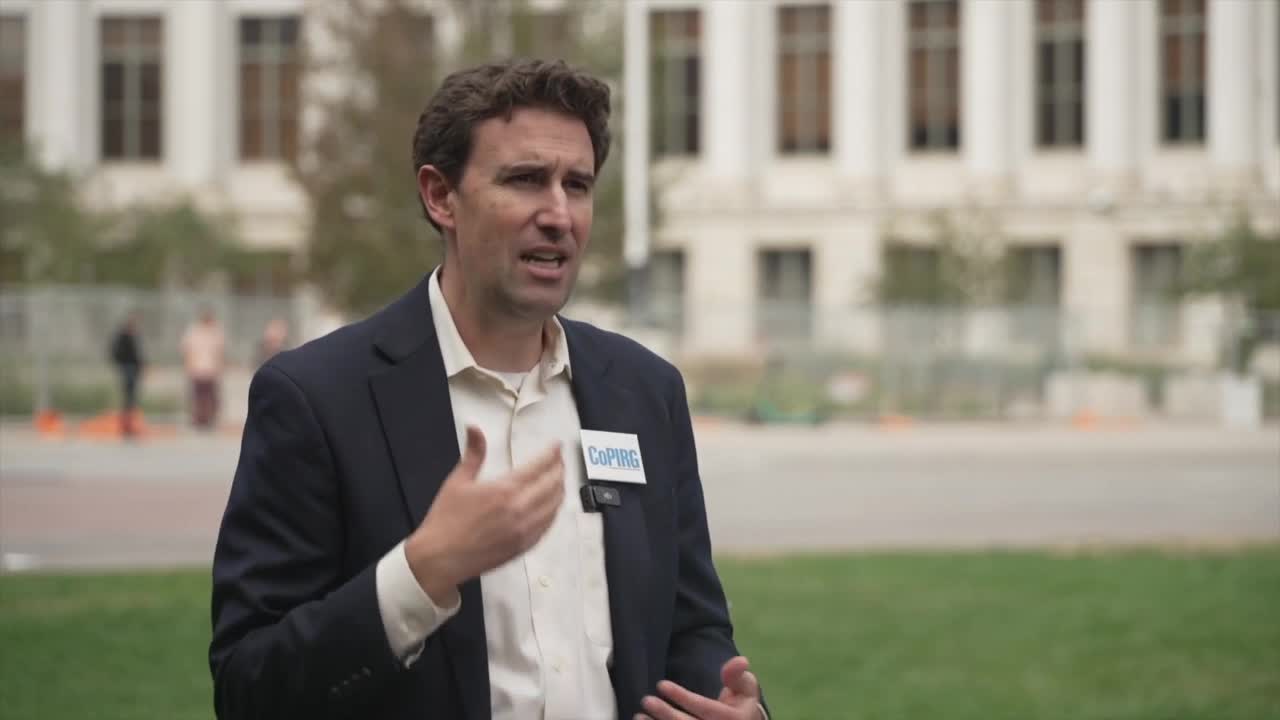
The Colorado Public Interest Research Group, known as COPIRG, tracks these numbers closely. Executive director Danny Katz says the combination of AI voice-cloning technology and personal data availability has made today's scams far harder to detect than those from even a few years ago.
- 27M — Monthly Robocalls — Targeting Colorado
- 2.1B — National Monthly Scam Calls — Down from 2.8B before 2021 rules
- $4,000 — Max Stolen Per Robocall — Successful scam average
- $2,000 — Max Stolen Per Text Scam — Per successful attempt
The bad news: We're still getting 2.1 billion unwanted spam and scam robocalls per month,Danny Katz, Consumer watchdog's executive director
John Clark's story is one Denver7 has followed closely. In July 2025, Clark — who has Parkinson's disease — was targeted by a romance scammer who built an emotional bond over time before disappearing with $3,000. Clark said the scammer told him he would be taken care of for life, and that sharing his diagnosis may have made him an even more attractive target.
Just months earlier, in April 2025, Longmont resident Clint Bales received a text that appeared to be an official E-470 toll notice. The message included his truck's exact model and license plate number. Bales said it passed every test he ran mentally — and he nearly paid the fraudulent fine.
Up came the information about my truck, that it was a 1500 Pickup. My license plate number is this. They had that. This passes the sniff test for me, Im going to go ahead and pay this fine,Clint Bales, Scam victim
Robocall vs. Text Scam: How They Compare
| Robocall Scam | Text Scam | |
|---|---|---|
| Average stolen per attempt (up to) | $4,000 | $2,000 |
| AI enhancement | Voice cloning, spoofed caller ID | Automated personalized messages |
| Common lure | Government/bank impersonation | Fake toll or delivery notices |
| Key warning sign | Urgency, fear of legal action | Includes personal data to seem real |
| Real Colorado example | John Clark romance scam, $3,000 lost | Clint Bales fake E-470 text |
COPIRG's Katz points to a structural accountability gap: the 2021 regulations exist, but enforcement is uneven. Only 42% of phone companies have put the required caller ID verification technology in place. Katz is calling on the FCC's Robocall Response Team to hold the non-compliant carriers accountable.
He praised state attorneys general for taking action and acknowledged the legislature could do more — but said the real lever sits at the federal level, where Katz believes the tools exist but aren't being deployed aggressively enough.
AI makes it easier to spoof people's voices. It makes it easier to make robo texts or robocalls seem more authentic,Danny Katz, Consumer watchdog's executive director
Common Myths About Robocall Safety
If a caller knows my personal information — like my license plate — it must be legitimate.
Verdict: false
Clint Bales was nearly fooled by a text that included his truck model and exact license plate number. Scammers aggregate personal data to make contacts seem official. Specific personal details are not a guarantee of legitimacy.
Federal regulations in 2021 fixed the robocall problem.
Verdict: mostly false
The 2021 rules requiring caller ID verification did reduce national scam call volume from 2.8 billion to 2.1 billion per month — but only 42% of phone companies have actually implemented the technology. Colorado alone still receives 27 million unwanted robocalls monthly.
Robocall scams steal small amounts — it's not worth worrying about.
Verdict: false
COPIRG reports scammers now steal up to $4,000 per successful robocall and $2,000 per successful text scam. John Clark lost $3,000 in a single romance scam in July 2025.
AI-generated voices are easy to detect as fake.
Verdict: false
Danny Katz of COPIRG says AI now makes it significantly easier to spoof voices and manufacture authentic-sounding robocalls and texts. The technology has advanced to the point where voice quality alone is no longer a reliable signal.
How to Protect Yourself — Right Now
- Never act on urgency alone — Scammers manufacture time pressure to stop you from thinking clearly. Real government agencies and banks send written notices and give you time to respond — they do not demand immediate ATM payments.
- Verify independently, not through the contact you received — Whether it's a call, text, or voicemail — always look up the official number yourself. A link or callback number in a suspicious message could be spoofed, as Clint Bales nearly discovered with a fake E-470 notice.
- Treat personal data in messages as a warning sign, not proof — Scammers use your vehicle info, address, or name to seem legitimate. If a message references specific personal details out of nowhere, that's a reason for more suspicion — not less.
- Hang up at any point — it is never too late — Even if you've already given your name or started a conversation, ending the call immediately limits your exposure. There is no point of no return in a phone scam until money actually changes hands.
- Report suspicious calls and texts — COPIRG and consumer advocates want the FCC's Robocall Response Team to hold phone companies accountable. Reporting suspicious contacts helps build the case for enforcement.
What Consumer Advocates Are Demanding
- FCC Robocall Response Team Accountability: COPIRG's Danny Katz is calling on the FCC's Robocall Response Team to enforce compliance with existing caller ID verification rules — only 42% of phone companies have implemented the required technology.
- Federal Action Needed: Katz says state attorneys general have been active, and the legislature can do more — but the real tools are at the federal level and he wants them used more aggressively.
- Colorado Public Interest Research Group (COPIRG): COPIRG tracks Colorado's robocall volume and advocates for consumer protection. They report Colorado receives 27 million unwanted robocalls every month.
John Clark's story — and Clint Bales's near-miss — represent millions of Coloradans navigating a landscape where every unknown call or unexpected text is a potential threat. The technology that makes these scams believable is improving faster than the systems meant to stop them.
Until federal enforcement catches up to the problem, COPIRG says the burden falls on individual Coloradans to stay skeptical. Twenty-seven million unwanted calls arrive in this state every single month — and the people making them are getting better at their craft.
The attorney generals have done a pretty good job of taking action. The legislature can do a little bit more work, but really, we're going to need our federal administration to do more. They have the tools, and it doesn't feel like they're using them as aggressively as they can,Danny Katz, Consumer watchdog's executive director
Sources & References
- Primary source: Denver7 — Ethan Carlson
- Colorado Public Interest Research Group (COPIRG) — Monthly robocall volume in Colorado, national scam call totals, per-call theft averages, and phone company compliance rates
- Denver7 — John Clark romance scam — Longmont man loses thousands of dollars