

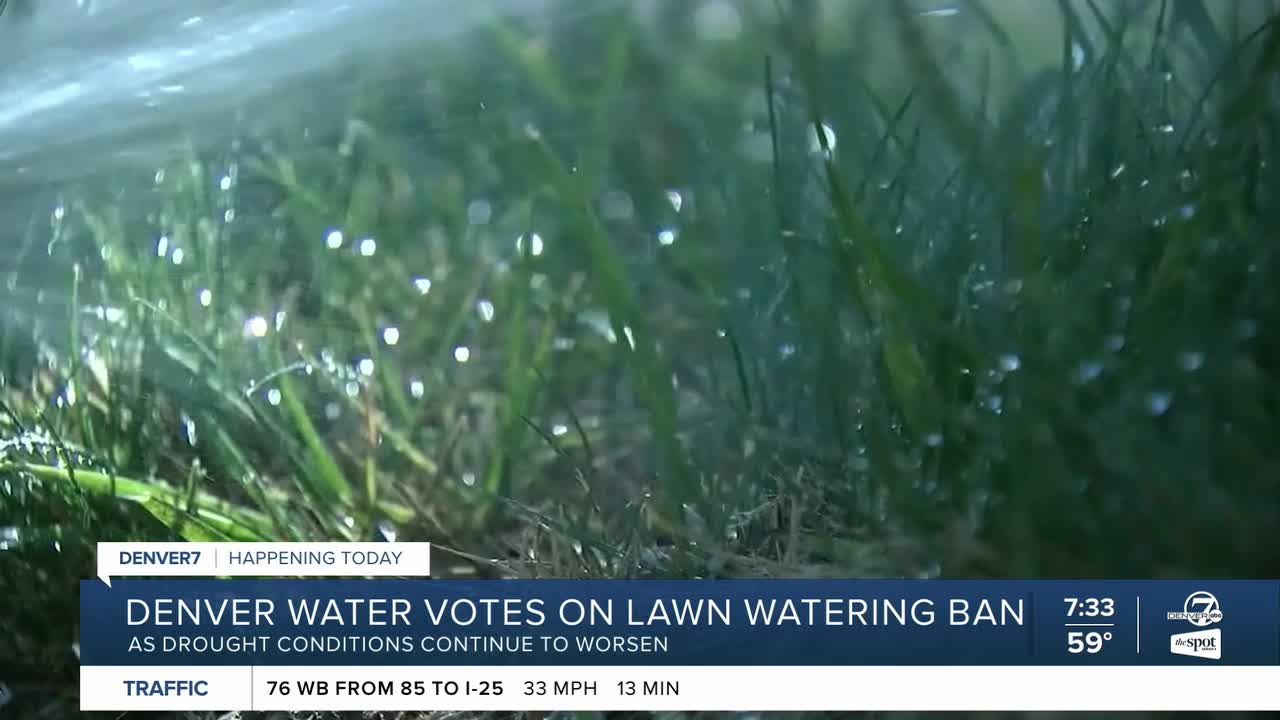


Denver Water will consider a tougher approach to its current Stage 1 drought restrictions on Wednesday.
“Denver Water staff project that storage supplies could fall to 60% prior to 2027 runoff due to the weather and worsening conditions,” the utility said.
This comes as Denver Water says drought conditions continue to worsen. Reservoir levels are currently 72% full compared with a historic average of 94%.
“Natural streamflow in Denver Water’s collection system from April through July was 95,000 acre-feet which is 22% of normal and marks the lowest level observed since recordkeeping began 110 years ago,” the utility said.
Right now, Denver Water customers can only water their lawns twice a week during certain hours. But if approved Wednesday night, they would have to stop watering their grass altogether starting October 1.
Under the proposed amendment to the Stage 1 drought restrictions, you cannot water any grass or use sprinklers. Denver Water said areas like parks or schools could continue with an approved exemption.
Some residents told Denver7 they question whether this is the best solution to save water.

“I don't think people are necessarily following the restrictions very closely. Maybe better enforcement is a better option than putting the hammer down and blocking all use of sprinklers,” Denver resident Gary Salvucci said.
You can still water trees, shrubs, and vegetables as long as it’s with a handheld hose or a low-volume system like drip irrigation.
“You need far less water to water your trees and shrubs. The big savings will come from just letting letting the grass go dormant, and that's typically what happens,” Denver Water manager of demand & planning efficiency Greg Fisher said.

Right now, customers are only saving 7%, well short of Denver Water’s goal they set back in March to reduce overall water use by 20%.
“Denver Water staff estimate that it is possible to save an additional 5,000 acre-feet of water if grass irrigation ceases after September 30. Most grass landscapes begin to enter dormancy on October 1 and the average first frost in the Denver metro area is October7,” staff said.
For those violating the current drought restrictions, Denver Water first issues a warning followed by a $250 fine for your first violation. That amount increases with each violation, and those fines are added onto your water bill.

“We're not seeing any recovery. We continue to need to up our message and ask our customers to save more and more,” Fisher said.
Denver Water said they have been seeing an increase in violations ever since moving from education to now warnings and violations. The utility told Denver7 they have received around 6,000 violation reports for the season that resulted in around 800 warnings and other monetary fines.
“We can actually pinpoint houses that are using more than they have in the past, so I think we're taking a more targeted approach to enforcement now,” Fisher said.
Denver Water said a little less water this fall could help avoid one day per week watering limits or going into Stage 2 restrictions, something the utility has never done.
“That's where we're really going to see a lot of damage to landscapes,” Fisher said.
If approved Wednesday night, the new rules would take effect on October 1 and likely remain in place through the spring once Denver water gets a closer look at the snowpack and reservoir levels.
Denver Water anticipates losing around $75 million in revenue if the new amendment is approved.


Denver7 is committed to making a difference in our community by standing up for what's right, listening, lending a helping hand and following through on promises. See that work in action, in the videos above.