



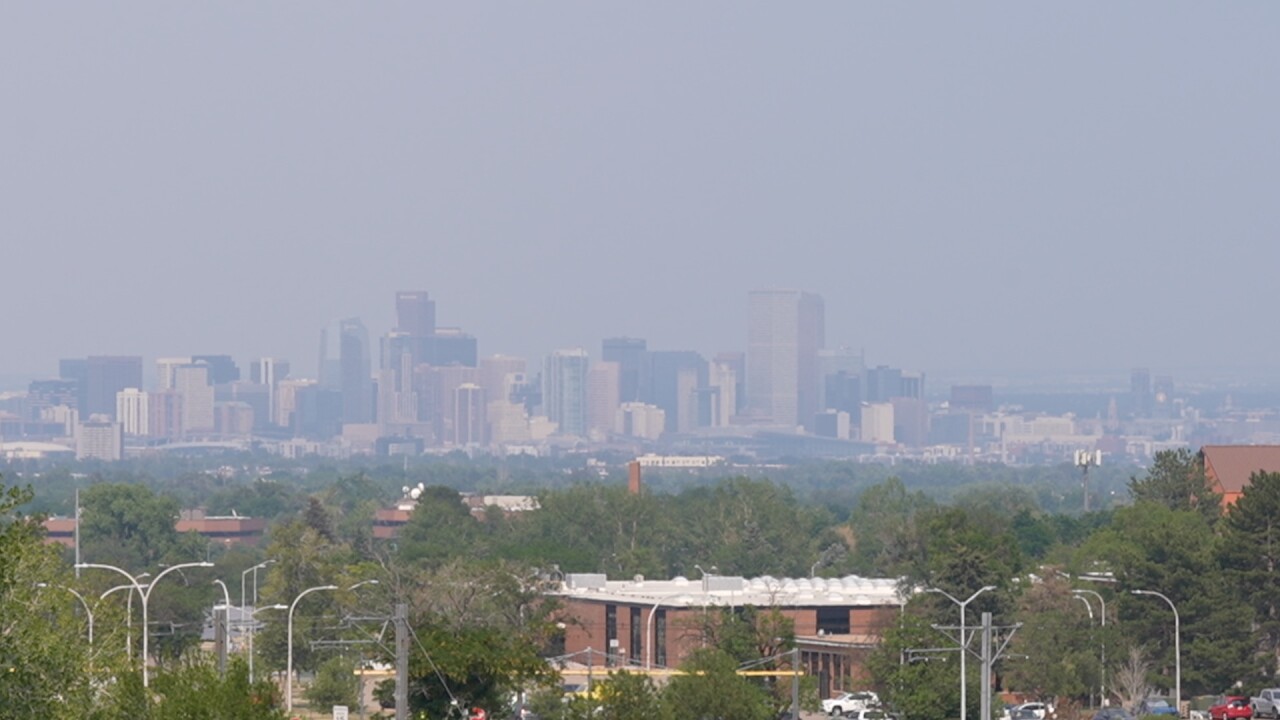
DENVER — If you have been outside, it may not be a surprise to many in the Denver metro area, but the Mile High City ranked as the most polluted global major city in the country on Monday, according to IQAir.
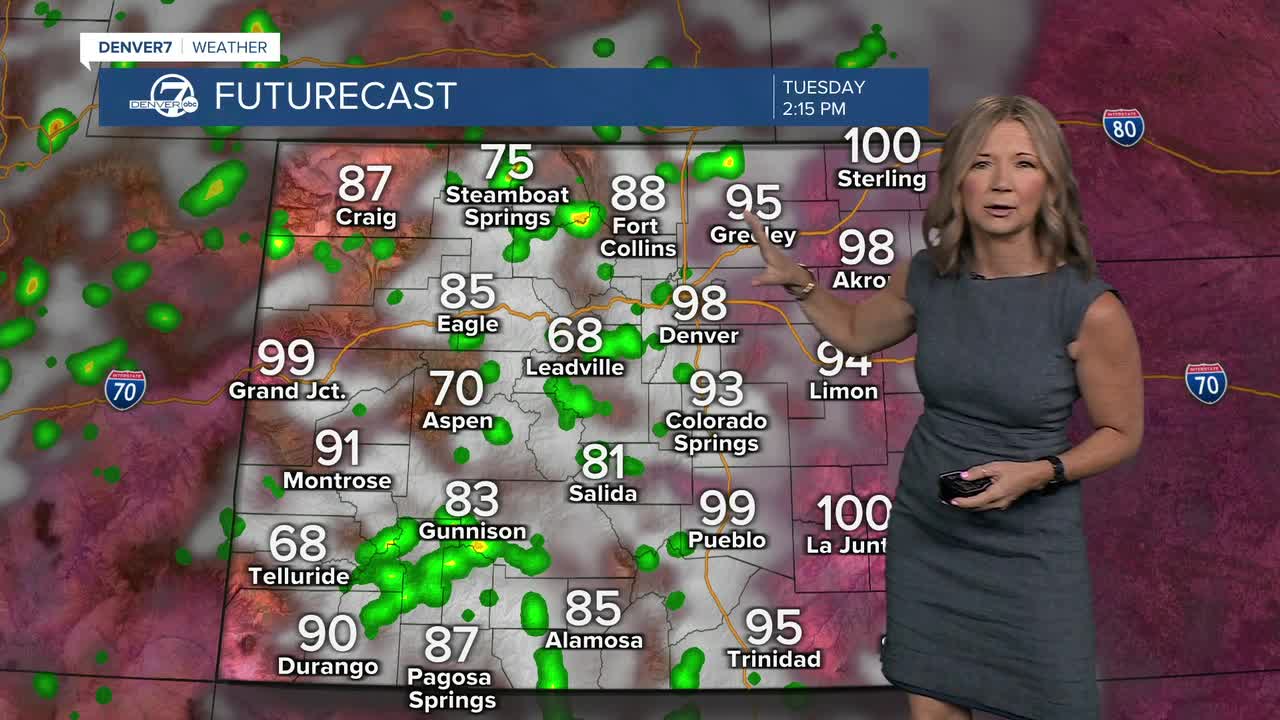
State air quality officials say hot temperatures and wildfire smoke are causing elevated levels of both ozone and fine particulate pollution. An ozone action day alert is in effect for Colorado's Front Range Urban Corridor through at least 4 p.m. Tuesday.
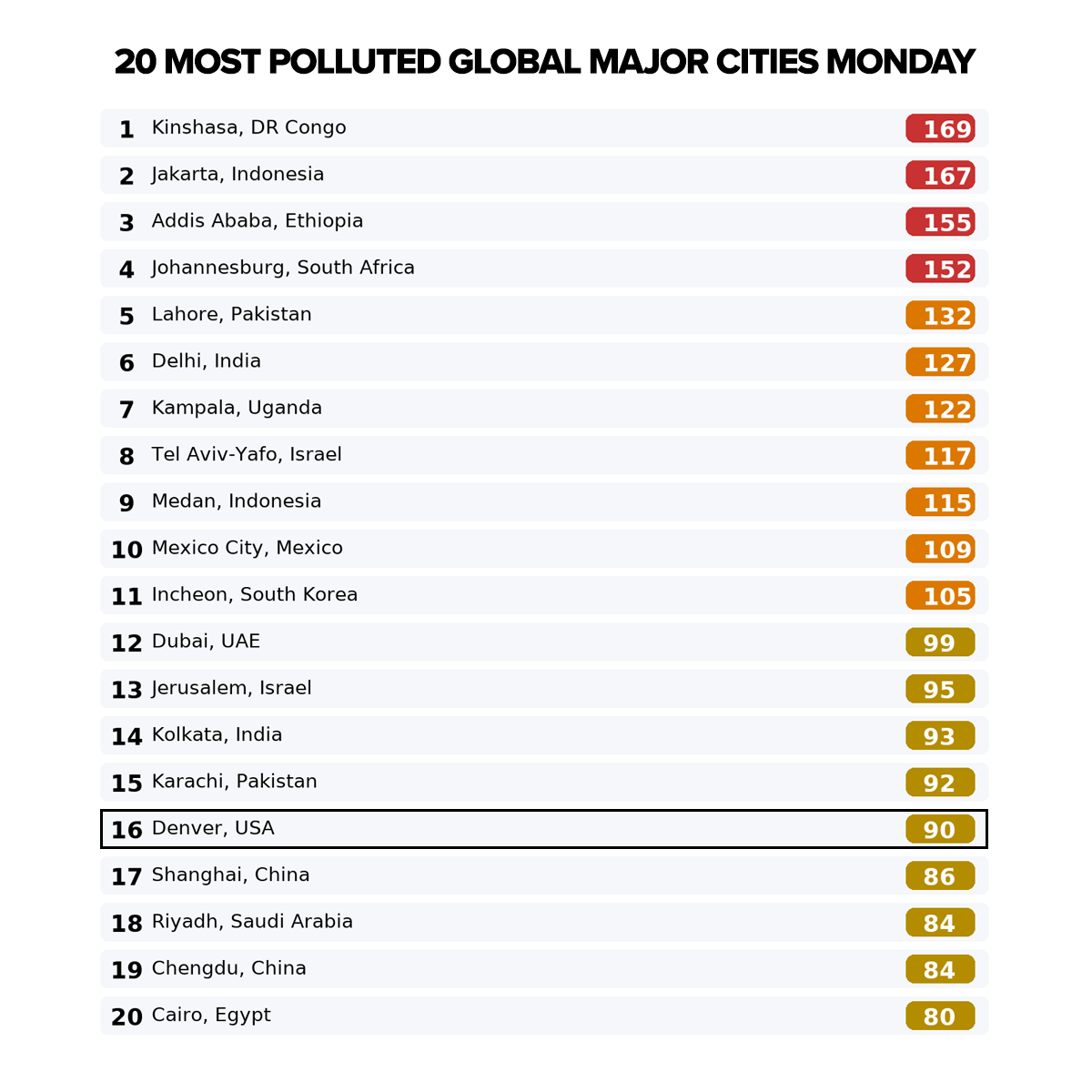
IQAir data shows Denver outranked major U.S. cities, including Los Angeles and Portland, in terms of poor air quality on Monday.
Dr. Laurie Manka, a pulmonologist with National Jewish Health, said Denver's geography makes the city especially vulnerable to pollution.
"Denver sits low compared to the mountains that are to the west, and so it acts kind of like a bowl, kind of trapping a lot of that particular matter at ground level," said Dr. Manka.
She said elderly people, children, and those with underlying lung disease should be especially mindful about going outside when air quality is poor.
Warning signs that air quality may be affecting your health include congestion, a scratchy or itchy throat, a cough, shortness of breath, or chest pain. She recommends limiting time outdoors and adjusting the intensity and duration of outdoor exercise.
"Beginning of the day and end of the day tend to be better, avoiding the extremes of heat, and then also limiting the time outside, you know, if you are typically going to go for a 30-minute run, maybe you cut that back a little bit," Manka said.
She said more patients with respiratory issues have been seeking medical attention lately and warned that the long-term impacts of poor air quality could affect everyone.
"As you know, our wildfire seasons lengthen, temperature goes up, you know, we can expect to see more lung disease in the population, and I think there's going to be a much larger healthcare burden related to that," Manka said.
Local runners are already adjusting their routines. Jay Mayberry, a member of the Runners Roost Central Park Run Club, said he knows when to cut his run short if the air is bad.
"A lot of times you can feel it after the run or the next day," Mayberry said. "I've got a pretty good handle on, okay, fires are here, let's adjust, we won't run as hard, or we won't run as long."

An ozone advisory is in effect for all areas of Rocky Mountain National Park through midnight tonight.
According to the Colorado Department of Public Health and Environment, exposure to ground-level ozone can cause acute respiratory problems and trigger asthma attacks.
Ozone levels reached the "Unhealthy for Sensitive Groups" category Monday afternoon, with some areas of the Denver metro potentially ranking worse on the Air Quality Index.
There are at least 7 major wildfires burning in Colorado, most of them on the Western Slope.