

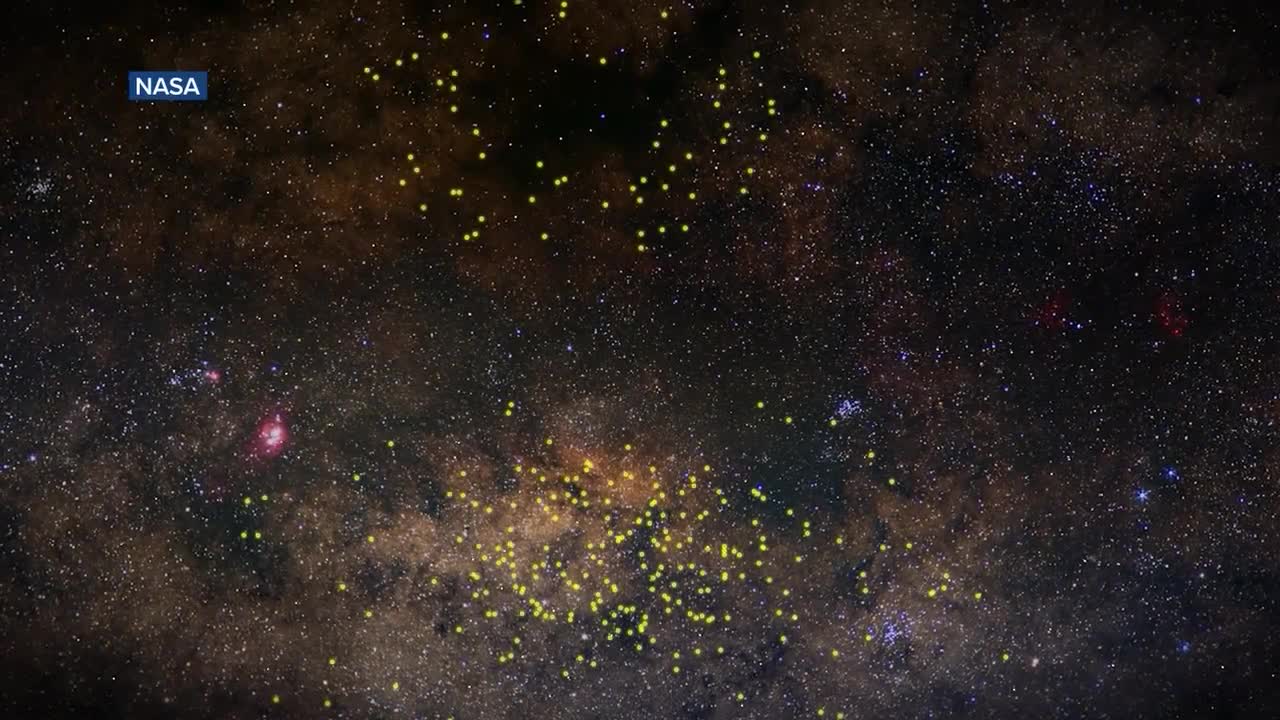


CAPE CANAVERAL, Fl — NASA is set to launch the Nancy Grace Roman Space Telescope on Aug. 30 from the Kennedy Space Center on a SpaceX Falcon Heavy rocket.
Built by Ball Aerospace in Boulder, Colorado, the observatory is designed to map the universe at unprecedented scales. Powered by 18 4K detectors, it has 100 times Hubble's field of view.
Roman will create a 3D map of the Milky Way galaxy, discover new Earth-like worlds and possibly unlock the mystery of dark energy.
See the full story in the video below
Dr. Jeremy Perkins, NASA Roman integration and test scientist, said, "The Nancy Grace Roman Space Telescope is designed to answer some really unknown questions we have about the universe. Everywhere we look around us, stars and galaxies and clusters of galaxies are moving away from us, and they're moving away from us faster and faster and faster, and we think what's driving that is something we call dark energy, but we don't really know what that is."
As the most stable space telescope NASA has ever built, the observatory can quickly scan wide swaths of the sky without losing its sharp focus. This capability will give Roman a front-row seat to witness the universe's most elusive events, from violent stellar explosions to stars being ripped apart by a black hole.
Roman will generate 1.4 terabytes of data daily — all available to the public.
Perkins said, "So scientists and students and faculty and kids in high school around the world and the country are going to be digging into this data, and it's the things that we don't know are out there is what really excites me. It's the kid that discovers some new star that we've never seen before or some new exploding object that we didn't know about happened in the universe before."
NASA expects to receive its first images from the telescope in December or January.
This story was reported on-air by a journalist and has been converted to this platform with the assistance of AI. Our editorial team verifies all reporting on all platforms for fairness and accuracy.


Denver7 is committed to making a difference in our community by standing up for what's right, listening, lending a helping hand and following through on promises. See that work in action, in the videos above.