



DENVER — Hours after the sun set in Colorado on Thursday, state lawmakers voted to advance a piece of legislation that supporters believe will make solar power more accessible and affordable throughout the state.
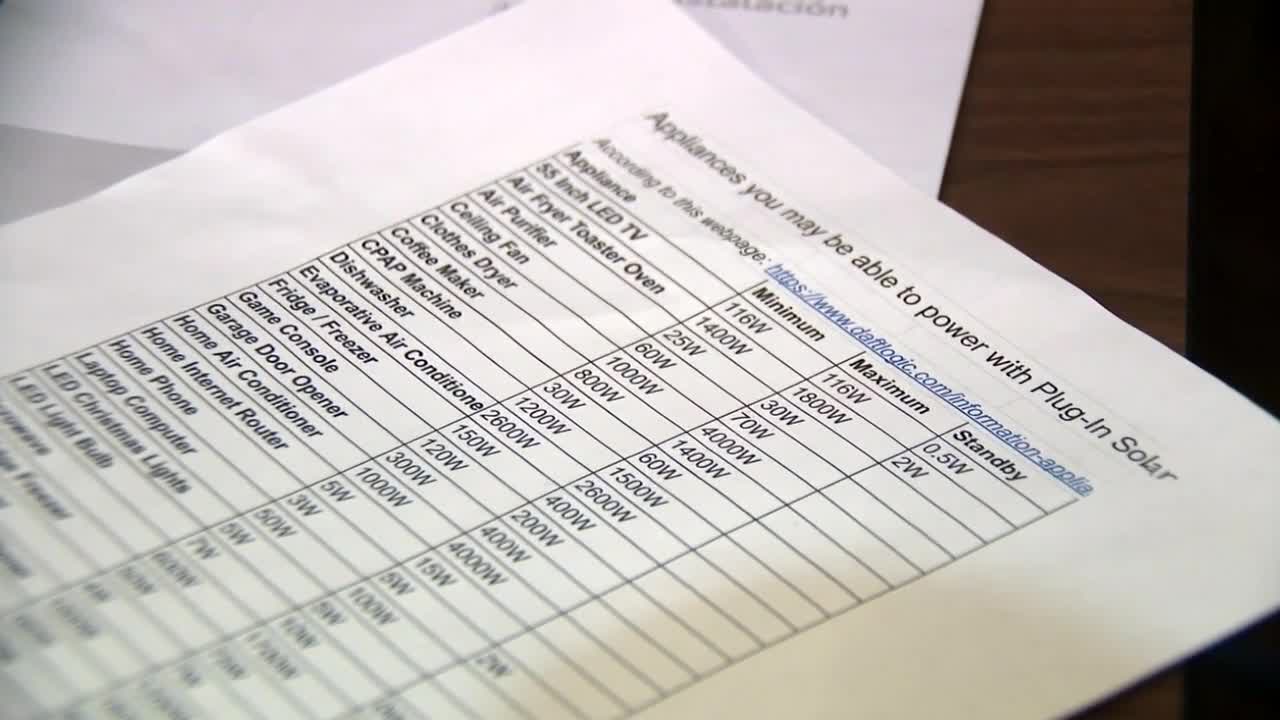
House Bill 26-1007 seeks to create a regulatory framework in Colorado for portable, plug-in solar panels — systems that do not require approval from electric providers to install, unlike rooftop solar.
“It's a small unit, typically something that you can hang on your balcony or on your patio on a stand, and you can just plug it into an outlet, and you can start producing electricity during daylight hours when it's sunny," explained State Rep. Lesley Smith, D-District 49, a prime sponsor of the legislation. “It's going to save a consumer money on their electric bill, and it will give them a choice.”
Smith told Denver7 that the changes seen on monthly bills would be dependent on a variety of factors, but estimated it could save consumers anywhere from 10-20% for a smaller home or apartment.
"Interestingly enough, the idea for this came when I was visiting Germany in the fall, and I would see these units on apartment buildings," Smith said. "I started doing some digging. And so for years, Germany had people just putting together their own units or buying them off the shelf and plugging them in, and they realized that they needed some sort of policy to regulate it.”
That's the intent behind the bill — providing regulations that ensure the units are used safely, Smith said.
“Xcel Energy or any utility provider does not want these units to provide power onto the line when there's a shutdown. So, the units have to be able to shutdown when there is a power shutdown, so that it's not going to send electrons onto the line and then potentially harm linesmen when they're having to do a repair," Smith said. "They don't have to be unplugged. They have to have a sensor on there to shut down. So, that's one of the things that's going to be required.”
The CEO of Namaste Solar, Jason Sharpe, said inverters have been designed to shut off without utilities for years, but the bill would require that same kind of testing and certification needed for rooftop solar technology.
"The risk is, if there are no rules, then consumers don't know what they can and can't buy, and they don't know which systems are safe or not safe," Sharpe said. “This (bill) is to try to put rules in place so that manufacturers and consumers can purchase safe products and use them safely in their home.”
HB26-1007 would prohibit energy providers from enacting "unreasonable conditions" on the installation, use, or operation of a portable solar device. The concept is one that dozens of states are also working on, according to Sharpe.
Another portion of the bill would allow individuals to utilize meter collar adapters, a device that connects energy technologies with the utility feed.
"I got into electrical engineering in college, and this is the most exciting piece of technology I've seen since I started my journey in the solar industry," Sharpe said about the meter collar adapter. "What this does is it allows a battery system in your home to sense the utility and back up your entire home in a power outage.”
According to Sharpe, the meter collars can make battery systems more cost-effective.
The bill passed out of the House Energy and Environment Committee on Thursday night following a 9-2 vote and hours of testimony. While the majority of people spoke in favor of the idea, Drew Hamrick with the Apartment Association of Metro Denver had a number of concerns about the legislation.
Hamrick said he would like property owners to be notified before any of the portable solar devices are put into service, and does not believe the wiring in America will be capable of handling that kind of voltage.
A number of amendments were made to the proposal on Thursday, including one that would allow landlords and property owners to place certain usable requirements on the panels, like not being placed in common spaces. In addition, only a licensed electrician could install a meter collar adapter.
HB26-1007 heads to the Committee of the Whole for consideration next.
