



DENVER — A number of Colorado Democrats gathered inside the Capitol on Tuesday to unveil a new package of bills they claim will make life more affordable for families.
"Colorado Democrats are making our choice clear today with this package of bills that will update Colorado's tax code to tip the balance in favor of middle and low income people and families," said State Rep. Lorena García, D — District 35, at the start of the press conference.
A special session was held in August to address the state's $1.2 billion budget hole, which was created by tax changes made in President Donald Trump's One Big Beautiful Act (H.R.1). As a result, Colorado will collect less revenue than expected when lawmakers approved the state budget in May.
Heading into the 2026 legislative session, lawmakers faced a $850 million budget deficit.
"As a member of the Joint Budget Committee, we are hearing just devastating options for how we balance the budget this year. We are going to make cuts to some of the people in our state who are absolutely the most vulnerable," said State Sen. Judy Amabile, D — District 18. "One thing that we can do is make sure that we are not funding tax cuts for people who don't need them on the backs of tax cuts for people who do need them."
García specifically addressed the corporate tax breaks that were expanded or created by H.R.1.
"These federal tax cuts for the wealthy cut off Colorado's Family Affordability Tax Credit, a tax credit that reduced child poverty by nearly 40% in our state," said García.
That credit was temporarily halted as a result of H.R.1.
"These bills create a new refundable income tax credit to uplift hard-working Colorado families that are doing everything they can to get by," García said. "These hard-working families should not be bearing the burden of funding tax cuts for the wealthy, for corporations."
Three of the bills introduced on Tuesday would be used toward that new credit, which a release from the Colorado House Democrats said is based on available revenue, "so that families receive all the benefits from modernizing the tax code."
House Bills 26-1221, 26-1222 and 26-1223 seek to end the ability for top executives to make salary deductions, separate the state's tax code from a handful of federal tax deductions, and remove a sales tax exemption applied to the electronic purchase of software.
The last bill will be introduced later this week, and the release from Colorado Democrats said it will "modernize and simplify the tax code by repealing ineffective or unnecessary special tax exemptions and deductions to expand and extend tax credits for wildfire and beetle kill mitigation, job creators, and investments in clean energy."
"At a time when people are struggling to pay their rent, groceries and utilities, protecting tax breaks for millionaire CEO salaries instead of tax breaks for working families is a slap in the face of hard-working Coloradans," said State Rep. Yara Zokaie, D — District 52. "It would also repeal a tax credit that creates a loophole for Colorado's minimum tax requirement. This requirement is in place to guarantee that high-income earners can't stack up large tax deductions to avoid paying taxes."
Also at the press conference was Lelia Hobley, a single mother and autism therapist.
"I work hard every single day for my children and for the families that I serve in the community, and like many working parents across Colorado, even with steady work and dedication, I still face challenges with basic necessities like transportation and rent," said Hobley. "That is why tax credits like the Family Affordability Tax Credit matter so much for families like mine. This is not about getting ahead unfairly. It is about stability. It is about having the breathing room to move from just surviving to truly supporting our children's growth and future."
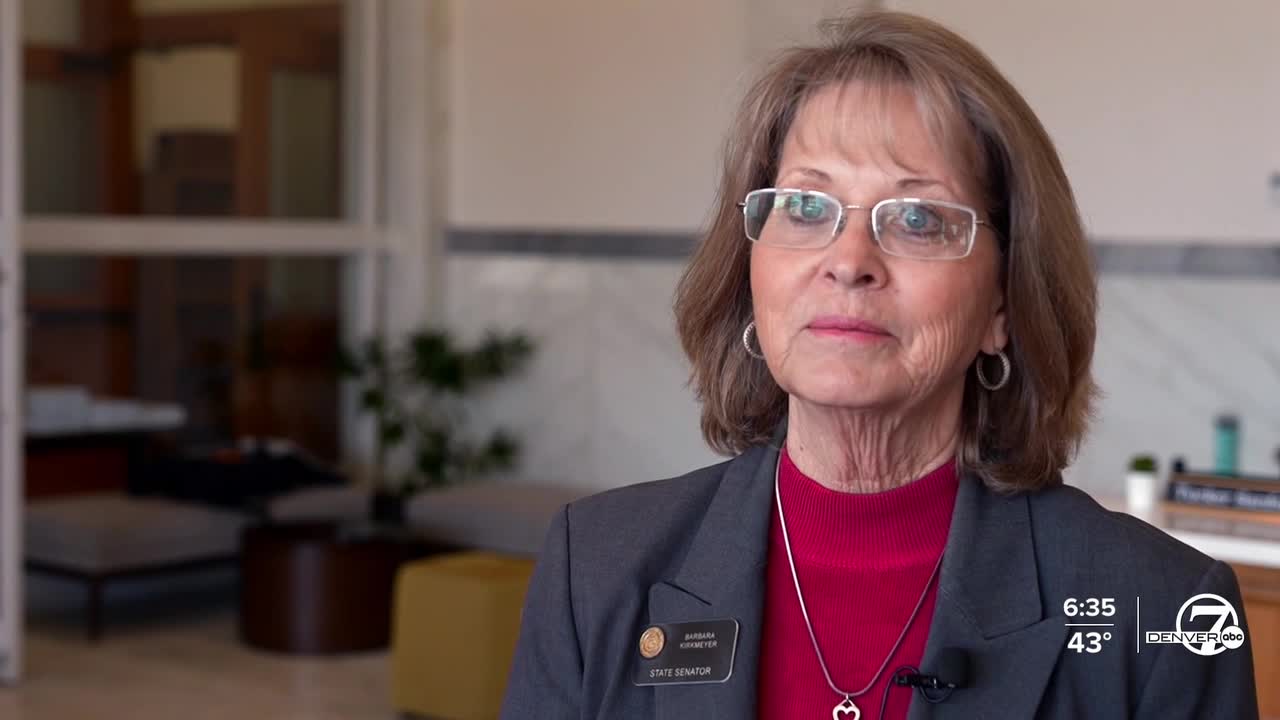
Across the aisle, State Sen. Barbara Kirkmeyer, R — District 23, said she was disappointed but not surprised by the proposals.
"They're just, quite frankly, probably digging us a deeper hole. They're not solving the problem, which is they have a crisis of priorities," Kirkmeyer said. "We do not have a revenue problem in the state. We have a spending problem."
In a presentation to the Joint Budget Committee from mid-January, nonpartisan legislative staff said there is no single answer to the current budget situation in Colorado. Staff did determine that the availability of one-time revenue given to Colorado during the COVID-19 pandemic "may have helped mask the underlying status of the General Fund."
"My interpretation was, 'I told you so.' And I know that's not nice, but I've been telling them this one-time spending for ongoing general fund programs is what's put us into this structural deficit, and we have to stop it, and we haven't stopped it yet," Kirkmeyer said.
Ultimately, Kirkmeyer said the bills will deter businesses from Colorado.
"They should just hang out a sign says 'We're closed for business in Colorado' because that's the message they're sending," said Kirkmeyer.
Denver7 will continue to follow the bills as they move through the state legislature.


