



AURORA, Colo. — The independent consent decree monitor for Aurora, Jeff Schlanger, has issued a special report calling on the city to take a closer look at three recent incidents in which officers shot and killed someone in a behavioral health crisis.
Denver7 has covered each incident and, at times, has heard from family members and advocates about their concerns.
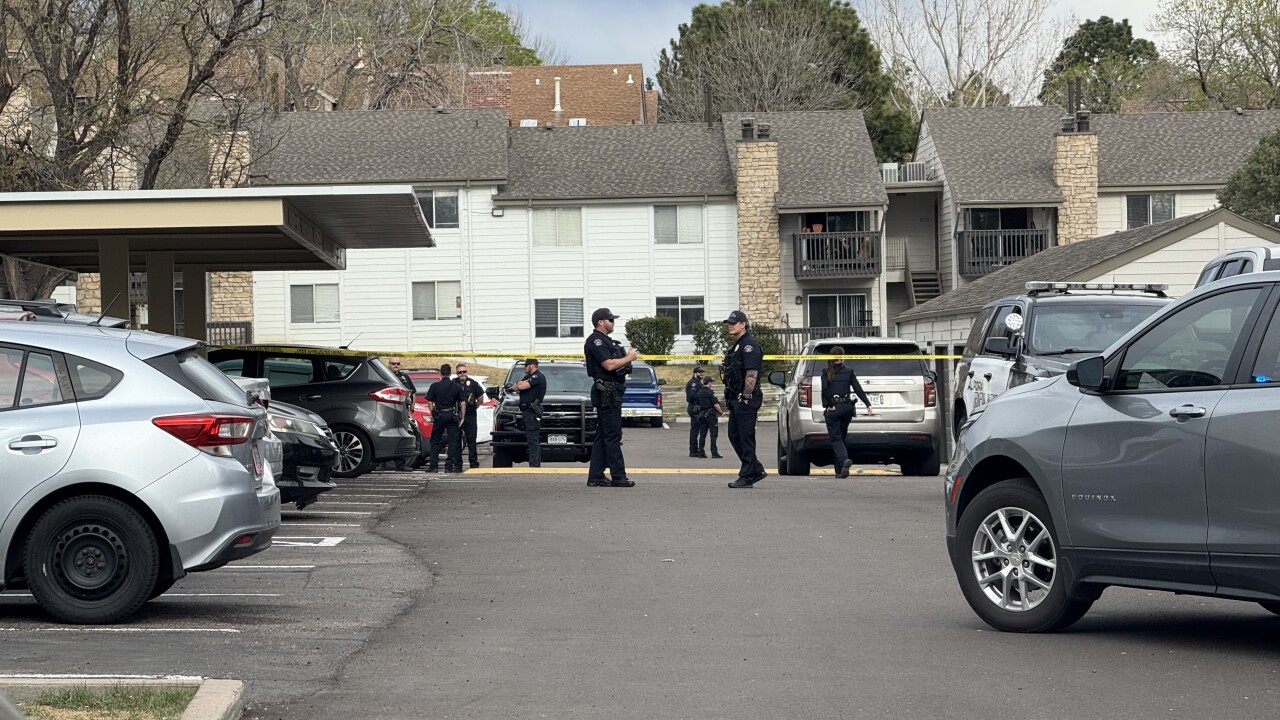
The incident that sparked the report happened on April 9, when a 23-year-old man in a mental health crisis was shot and killed by an Aurora police officer after stabbing an officer and a police K-9.
“There was a statement by the parents of the individual involved that they had in fact reached out for help, and that somehow that help had failed them, and so that incident was particularly relevant to this deep dive that we are calling for,” said Schlanger.
The report also mentions two other incidents in 2025 involving individuals who were unarmed.
On September 18, 2025, Aurora officers shot and killed a 17-year-old Blaze Balle-Mason after he reportedly called 911 and threatened to open fire in a gas station. He did not have a weapon.
On May 12, 2025, an officer fatally shot 32-year-old Rashaud Johnson after he was found behaving erratically in a parking lot near Denver International Airport. Johnson was unarmed.
The report does not examine the officers’ actions but rather asks whether the public health system could have done more to prevent the deadly encounters.
The position of the independent consent decree monitor was established in 2021 to oversee court reforms of the Aurora Police Department following the death of Elijah McClain.
Since then, Aurora has created the Aurora Mobile Response Team and the Crisis Response Team, which send mental health clinicians alongside police officers to respond to behavioral health calls.
“They're not 24/7, however, so that is somewhat problematic, and this is one of the reasons for the deep dive; there is some degree of lack of coordination amongst the services that can be provided, and certainly there are a lot of calls that those two units don't go out on that involve mental health issues,” Schlanger said.
In the report, Schlanger writes that repeated or escalating behavioral-health crises should not simply cycle through emergency response systems without coordinated review, follow-up, and, where possible, earlier intervention.
Schlanger’s report asks the city to create a task force that involves stakeholders at the city, state, and federal levels to review the three cases and find ways to improve the system. It recommends reviewing the individual’s behavioral health history, the help they sought, prior contacts with authorities, and service gaps.
“The idea ultimately is to prevent the kind of tragedies that have occurred in the past,” Schlanger said.
The City of Aurora released a statement in response to the report, stating the embrace the changes recommended by the decree report:
“City management and the city’s public safety leadership teams have wholeheartedly embraced a culture of continuous improvement even before the consent decree process began more than four years ago. As the consent decree monitor noted in his special report, the city continues to build on its successful crisis-response partnerships, which pair clinicians with paramedics and specially trained officers on certain types of behavioral health calls. Chief Chamberlain, Chief Oughton, and other city leaders recognize the need to examine the broader systemic issues involving behavioral health, agree with the consent decree monitor’s recommendations, and welcome deeper conversations about this topic with all community stakeholders.”


