

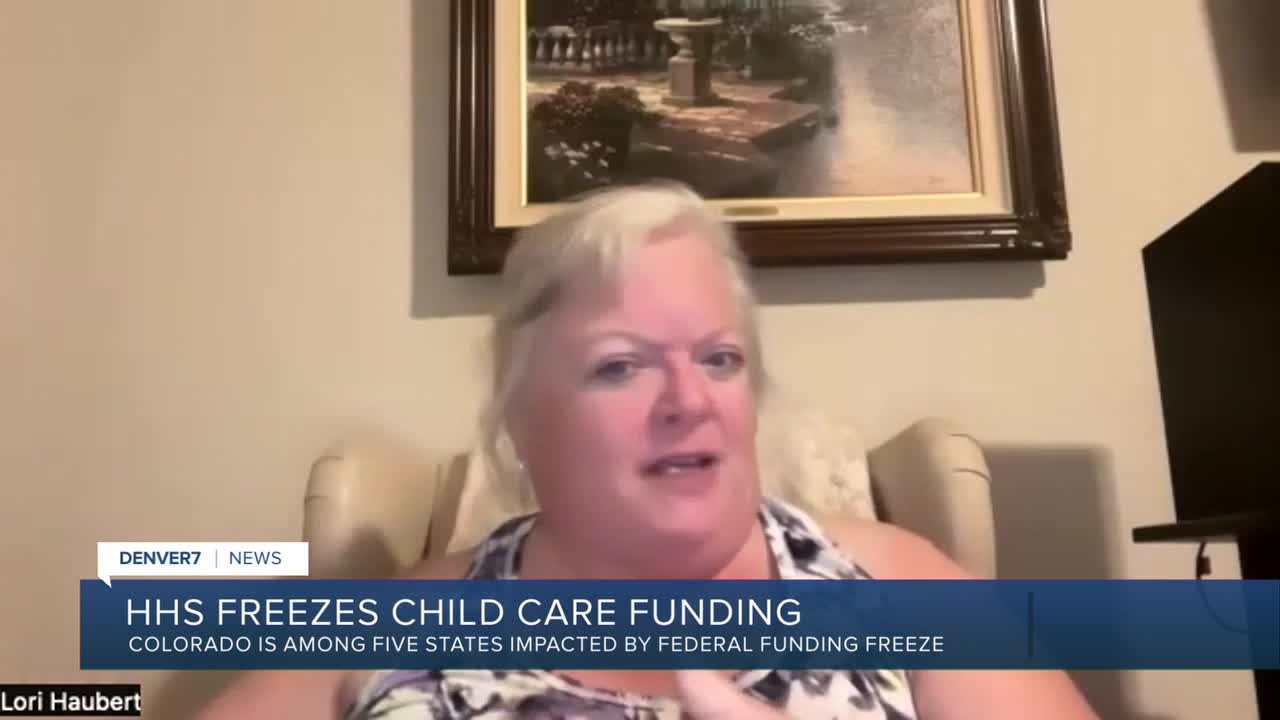


A federal judge ruled Friday that President Donald Trump’s administration must keep federal funds flowing to child care subsidies and other social service programs in five Democratic-controlled states — at least for now.
The ruling Friday from U.S. District Judge Vernon Broderick extends by two weeks a temporary one issued earlier this month that blocked the federal government from holding back the money from California, Colorado, Illinois, Minnesota and New York. The initial temporary restraining order was to expire Friday.
Broderick said Friday that he would decide later whether the money is to remain in place while a challenge to cutting it off works its way through the courts.
The U.S. Department of Health and Human Services sent the five states notices in early January informing them it would require justifications for spending the money aimed at helping low-income families. It also said it would require more documentation, including the names and Social Security numbers of the beneficiaries of some of the programs.
The programs are intended to help low-income families
The programs impacted by the restrictions at the heart of this case are the Child Care and Development Fund, which subsidizes child care for 1.3 million children from low-income families nationwide; the Temporary Assistance for Needy Families program, which provides cash assistance and job training; and the Social Services Block Grant, a smaller fund that provides money for a variety of programs.
The states say that they receive a total of more more than $10 billion a year from those programs — and that the programs are essential for low-income and vulnerable families, including paying about half the cost of shelters for homeless families in New York City.
For TANF and the Social Service Block Grant, the request required the states to submit the data, including personal information of recipients beginning in 2022, with a deadline of Jan. 20.
Government lawyers said Friday that the department was working on more guidelines about what exactly was required before the initial restraining order was put in place.
The administration says it took action because of concerns about fraud
The U.S. Department of Health and Human Services said earlier this month that it was pausing the funding because it had “reason to believe” the states were granting benefits to people in the country illegally. At the time, it didn't explain why.
But in Friday's hearing, Mallika Balachandran, a federal government lawyer, said that the concerns were raised by media reports, though she told the judge she did not know which ones. Federal officials have previously cited a video by a right-wing influencer that claimed fraud by Minneapolis day care centers operated by people with Somali backgrounds.
Broderick asked whether the government picked the five states first and then did research into whether there were fraud claims there. Balachandran said she didn't know that either.
Broderick said he didn't understand why the government made it harder for the states to access money for the programs before any wrongdoing had been found.
“It just seems like the cart before the horse,” he said.
The states, which all have Democratic governors, say the move was instead intended to damage Trump’s political adversaries.
Around the same time as the actions aimed at the five states, the administration put up hurdles to Minnesota for even more federal dollars. It also began requesting all states to explain how they're using money in the child care program.
States call the action ‘unlawful many times over’
In court papers last week, the states say what they describe as a funding freeze does not follow the law.
They say Congress created laws about how the administration can identify noncompliance or fraud by recipients of the money — and that the federal government hasn't used that process.
They also say it's improper to freeze funding broadly because of potential fraud and that producing the data the government called for is an “impossible demand on an impossible timeline.”
Jessica Ranucci, a lawyer in New York's attorney general's office arguing on behalf of the five states, told the judge that she was told only about a half-hour before the hearing that the government had been developing more information about what states needed to provide. That wasn't mentioned in the court filings, she said.
The administration says it's not a freeze
In a court filing this week, the administration objected to the states describing the action as a “funding freeze," even though the headline on the Department of Health and Human Services announcement was: “HHS Freezes Child Care and Family Assistance Grants in Five States for Fraud Concerns.”
Federal government lawyers said the states could get the money going forward if they provide the requested information and the federal government finds them to be in compliance with anti-fraud measures.
The administration also notes that it has continued to provide funding to the states.
The lawyer for the states said that most of the funding, though, was not accessible until after the restraining order was entered.
This isn't the only case where the federal government has threatened to cut off funding recently. Trump has said this month that “sanctuary cities” that resist his administration's immigration policies — and their states — could lose federal funds.
This week, his budget office told other federal departments and agencies to collect information about money several states receive — but said it wasn't to withhold money.
