


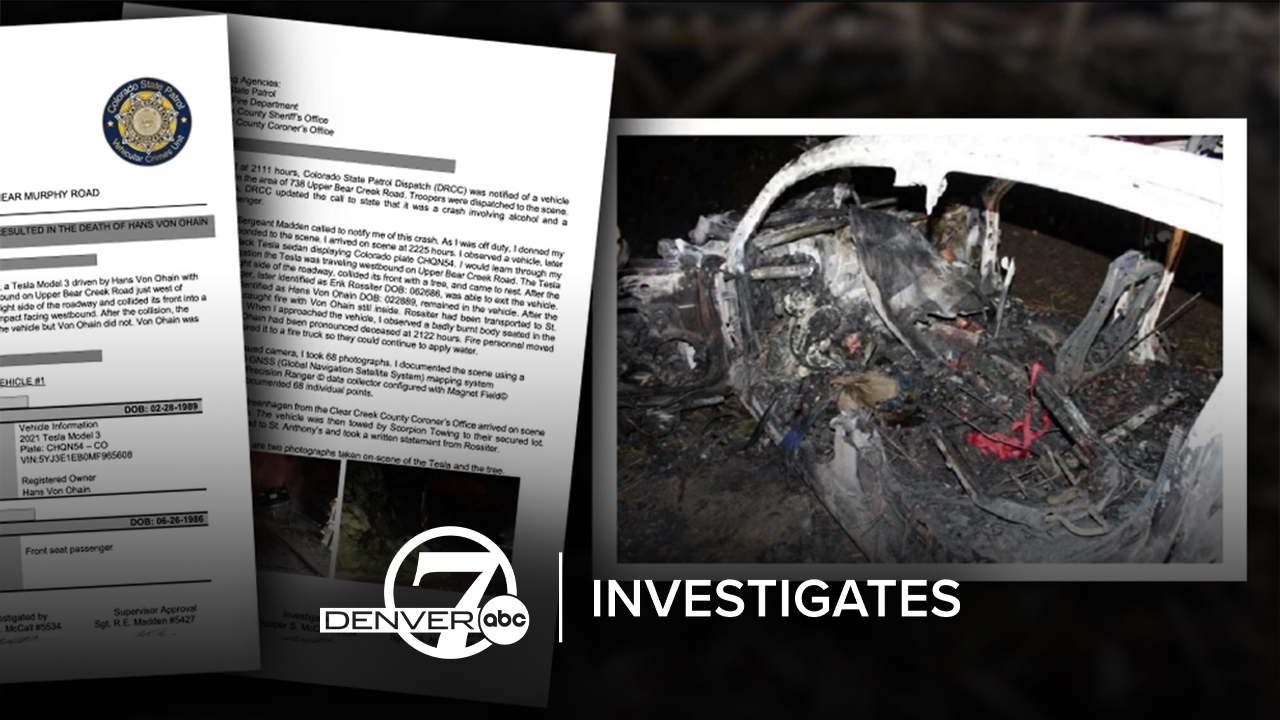


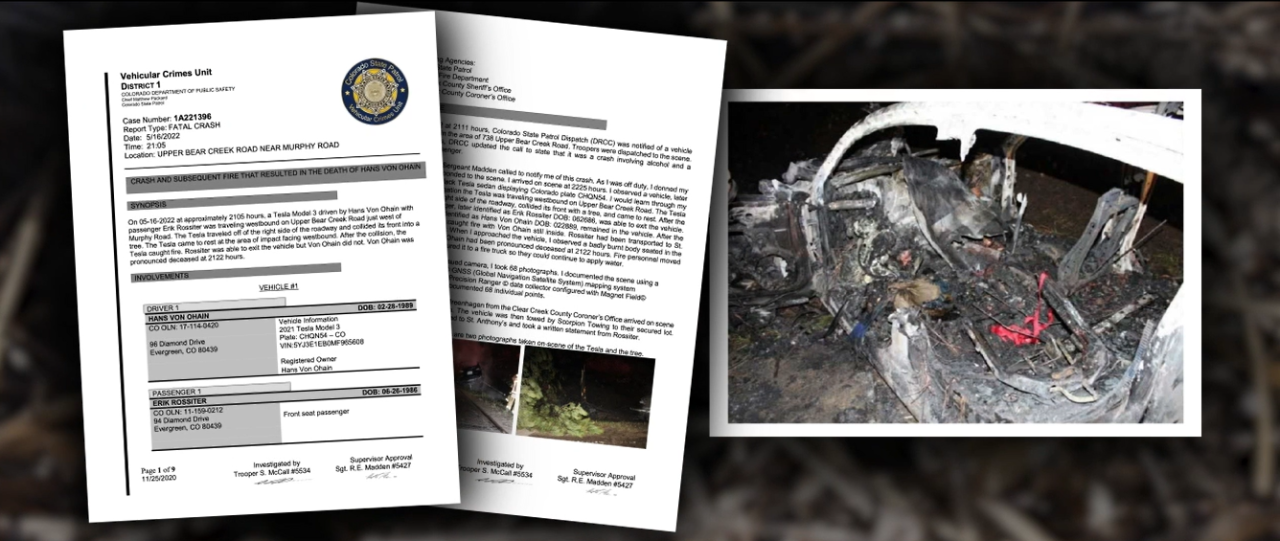
On a winding mountain road in Evergreen on a May evening in 2022, first responders were called to a single-car crash and found a Tesla Model 3 fully engulfed in flames.
The car had hit a tree and caught fire. The passenger was able to get out, but the driver, 33-year-old Hans Von Ohain – a husband, father and military veteran – died in the fire.

The Colorado State Patrol investigation into the accident showed Von Ohain was conscious after the crash, but unable to exit the car.
It was inconclusive as to why, but investigators did look into whether or not the crash disabled the car's electric door system.
Since that crash, federal lawmakers have stated that roughly 15 people have died in electric cars when they were unable to get out.
And now a proposed new federal law – the Safe Exit Act – would require an easy-access manual release on all electric cars to provide a way out for drivers in the event that the battery powering the car's electric doors stops working. It would also require a way for first responders to get into the car from the outside if the power is out.
Currently, electric cars — including Teslas — have manual releases, but experts say they can be hard to find or difficult to access in an emergency. In most cases, electric car doors are powered by a separate 12-volt battery in the car. But when that battery isn’t working or is damaged, the electric door handles become inoperable.
“It’s time to take on this critical safety issue,” Congresswoman Robin Kelly (D-Illinois) said in a recent congressional hearing. “This problem is preventable and is enabled by poor design choices.”
This potential flaw in electric cars is also now part of federal probes by the National Highway Traffic Safety Administration (NHTSA). One is a defect petition that notes mechanical door releases are hidden, unlabeled and not intuitive to locate during an emergency. The other is an investigation into electric door handles that become inoperable when a 12-volt battery dies.

One driver who escaped
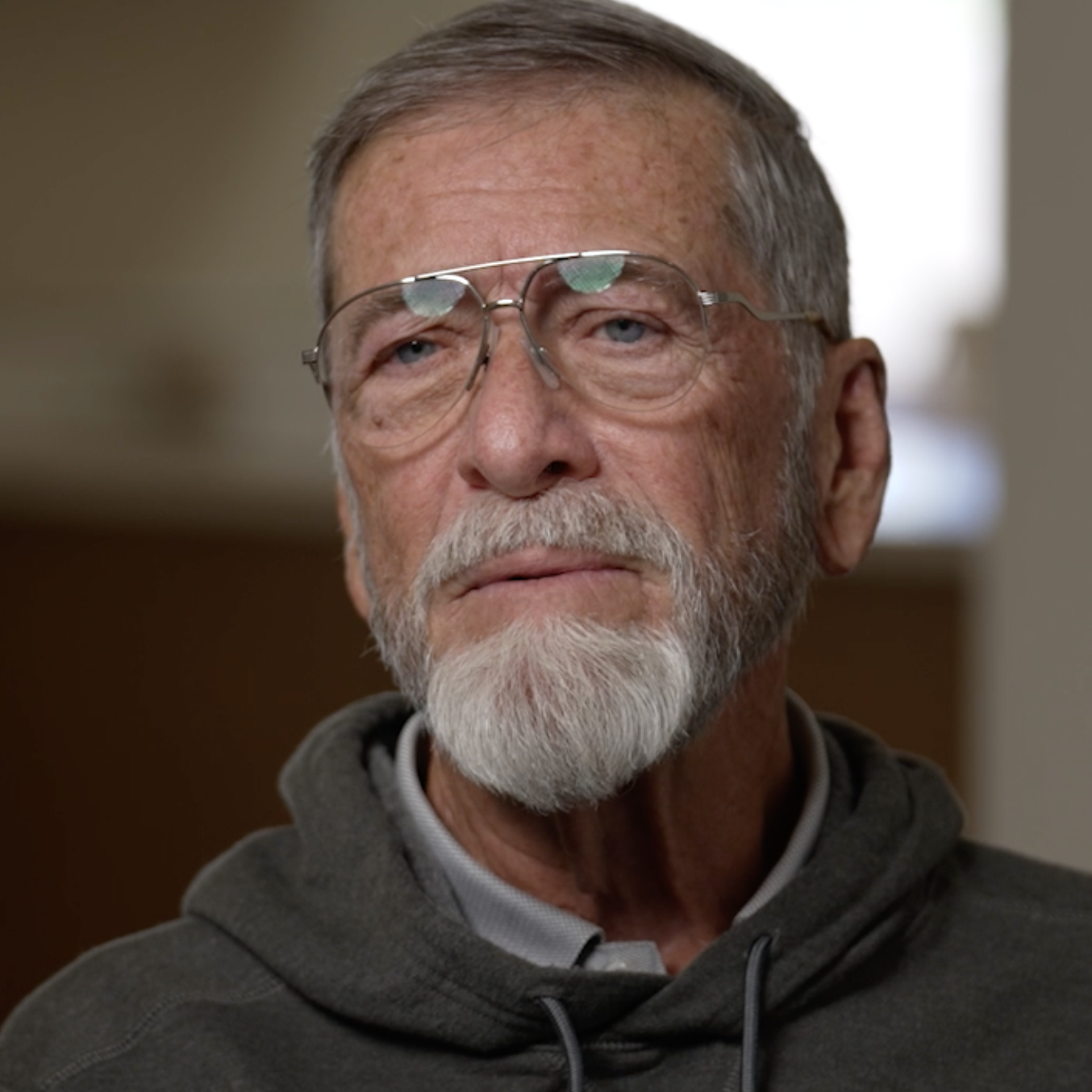
In 2023, Rick Meggison found himself trapped in his Tesla Model Y on a 100-degree day with no power and no obvious way out of his car.
“It was a little embarrassing having to admit that I got trapped in a car,” he said.
He ended up breaking a window because he didn’t know about the manual release. He said he supports the proposed law for all electric vehicles.
“It’s important because it’s a safety issue,” he said. “It's not just Tesla. All electric car owners have to start thinking about what happens when the power goes off.”
Amber Rollins, who runs Kids and Car Safety, a national nonprofit devoted to keeping kids safe around vehicles, also supports the legislation and hopes electric car manufacturers will take action sooner.

“It’s a really horrifying thing that’s happening,” Rollins said. “Fix it now. Please do not wait for more people to die. This is an easy thing that can be remedied. And you don’t have to wait for the federal legislation.”
According to an October 2025 NHTSA letter to Tesla, the organization has seen more than 16 reports of Tesla exterior handles failing because of a low 12-volt battery, including cases where children were trapped in the car.
In Florida, one mom captured a panicked situation on her cellphone when her 1-year-old daughter was trapped on Halloween after her Tesla lost battery power. Police eventually had to use a tool to reach the manual release.
“They’re creating this design flaw in vehicles that is putting lives at risk and has already taken lives,” Rollins said.
How to get out
Colorado firefighter Paul Shoemaker trains first responders on how to handle electric cars in emergencies for his company, Next Level Extraction. He has seen these door handle failures many times.
“All of these are sad and tragic stories,” he said.

Teslas, and other electric cars, have two batteries. A large one that powers the motor and moves the car, and a 12-volt battery that powers the inner workings, such as windows, the radio, air conditioning, heat and the electric doors.
“When this thing has a problem, that’s too late,” Shoemaker said.
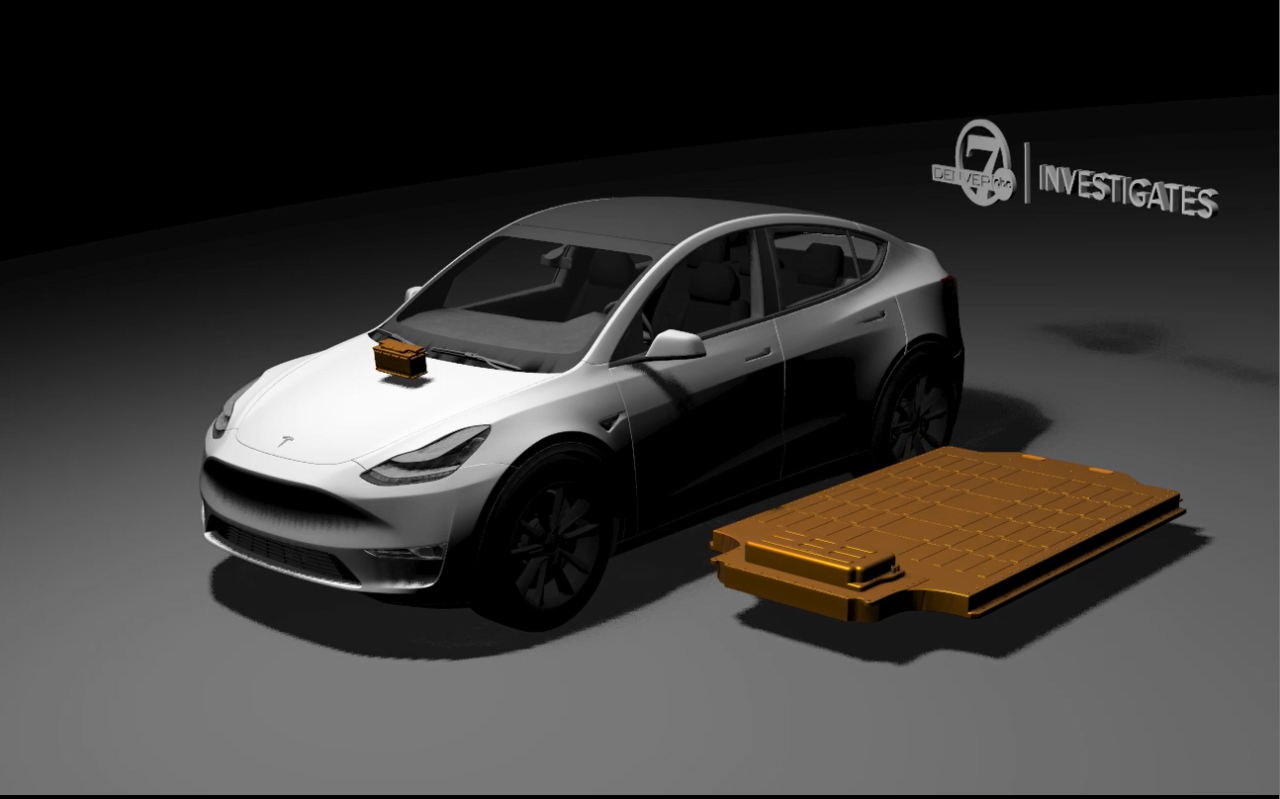
Most electric car door handles are opened by pressing a button. But if that 12-volt battery is dead, that button doesn’t work, meaning the only way out of the car is a mechanical release handle.
Shoemaker demonstrated to Denver7 Investigates where to find that manual release in a Tesla Model Y. He noted that the location can change depending on the make and model of the car.
In showing the release on this Model Y, he noted that there is nothing on the handle that informs the driver that that is what they should pull up to open the door without electricity.
And he said the backseat releases can be even harder to find.
On this particular Model Y, Shoemaker removed a rubber tray on the inside of the side door. Under the tray was a red handle that would be pulled to open the door.
Watch the video below of Shoemaker explaining where two find these two exit alternatives in this specific Tesla Model Y.
“Unless you know what Tesla you’re in, or you're educating the people that are in the back as the driver, nobody would know where these things are located because there's no standardization to them,” he said.
What is next
As for the Evergreen crash, it will probably never be known if Von Ohain didn’t know how to get out or if something else prevented an exit.
But his story is now part of a growing list of tragedies that lawmakers are using to push for change and force automakers to redesign how electric doors work when power goes out.
“It's something that needs to happen, and it needs to happen before more people die,” Rollins said.
Von Ohain’s family is suing Tesla and blaming use of the car’s autopilot system for the crash. Denver7 Investigates reported on the accident in late 2022.
Colorado State Patrol found that his blood-alcohol content was significantly above the legal limit at the time of the crash.
Von Ohain’s family, through their attorney, declined interview requests, as did the passenger in the car, citing pending litigation.
Denver7 Investigates also tried to ask Tesla about safety concerns. The company did not respond to multiple requests for comment.
Tesla’s car manual does explain how drivers can get out without power, but lawmakers and experts have said it must be easier to find, clearly marked and standard on all electric vehicles.
The Safe Exit Act has passed a House subcommittee and will go before a full House Energy and Commerce Committee.
“These kinds of things cannot be overlooked,” Meggison said. “Manufacturers have to pay attention to safety.”
Watch Jennifer Kovaleski's full investigation in the video player below.
