

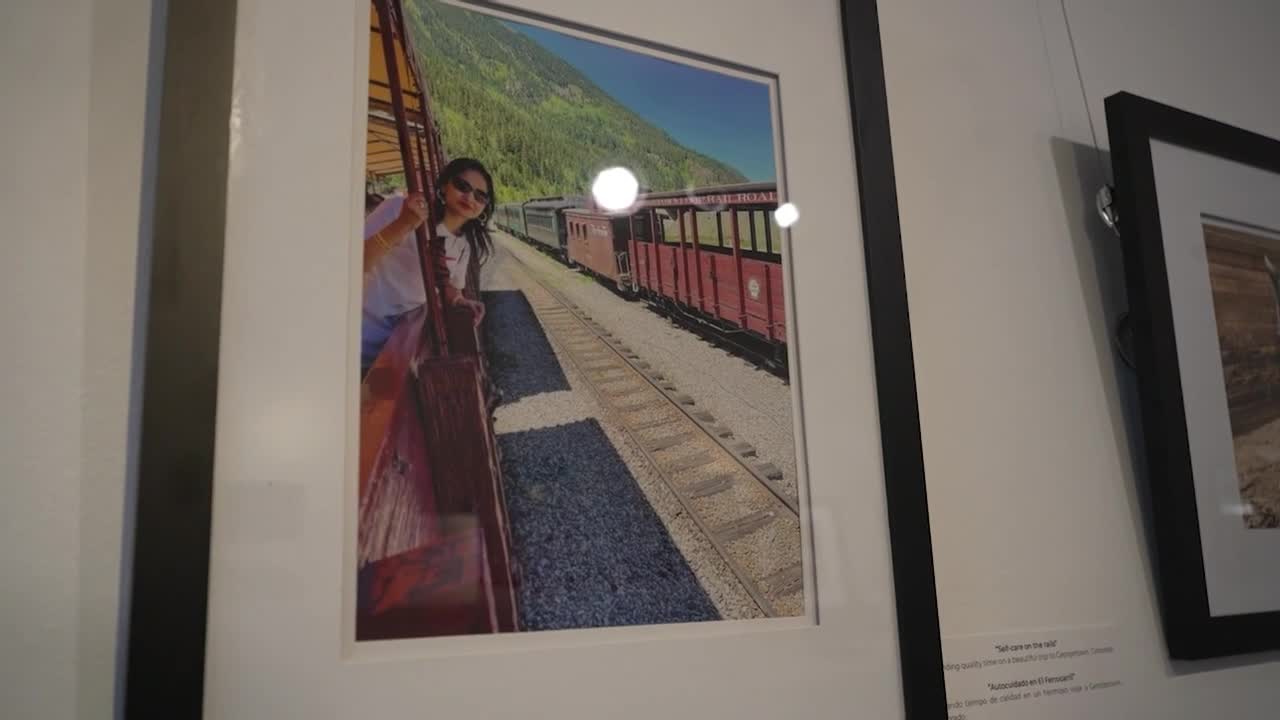


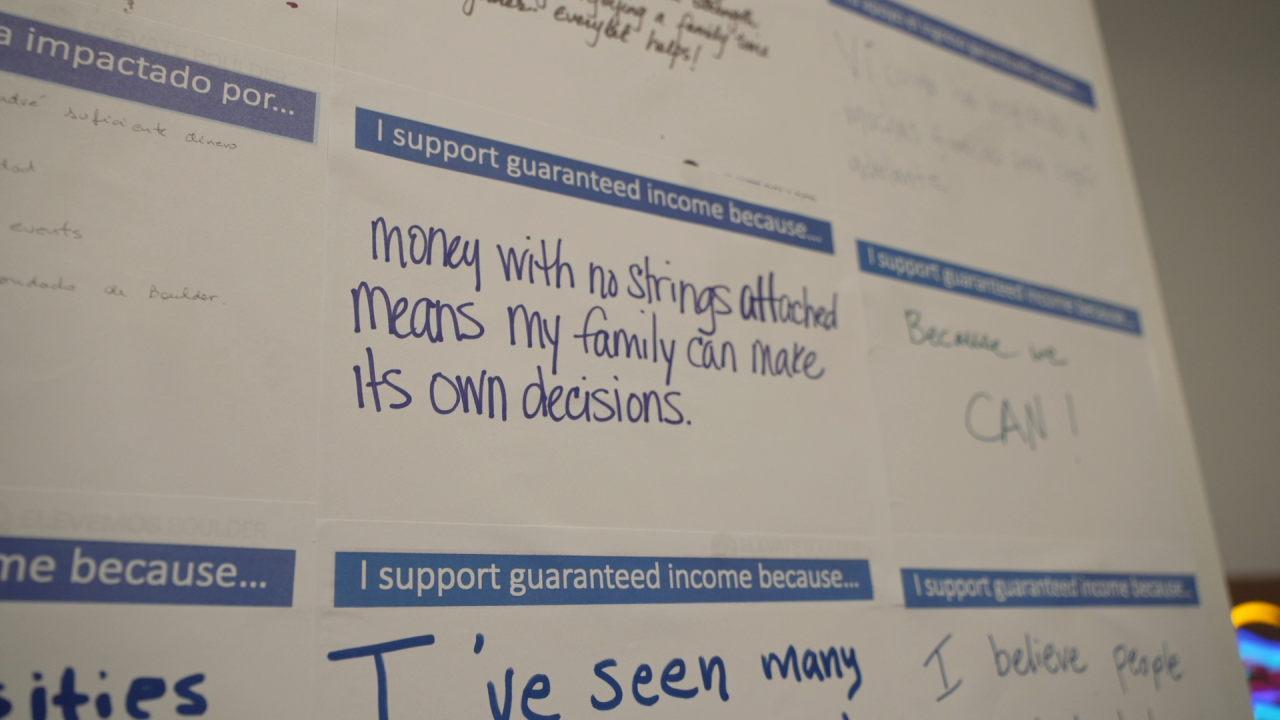
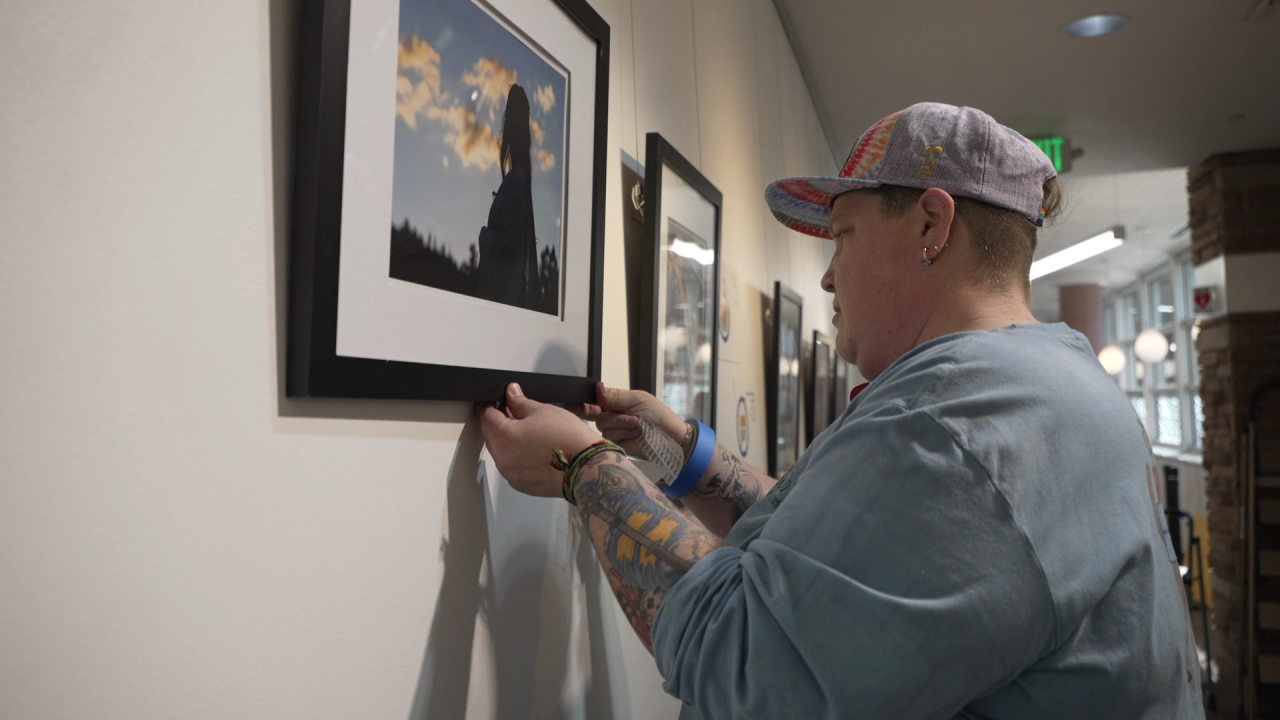
BOULDER, Colo. — Hanging photos, sculptures and written reflections now fill a gallery space at Boulder's Main Library. Each piece tells a story of resilience, stability and hope.
The new exhibit chronicles the lives of participants in the city's two-year guaranteed income pilot program, "Elevate Boulder," which concluded in late 2025.
The program provided 200 residents with $500 a month in unrestricted, unconditional payments from fall 2023 to fall 2025 — a lifeline during and after the economic uncertainty of the COVID-19 pandemic. The project was funded by the American Rescue Plan Act (ARPA) which provided money for pandemic recovery programs.
“This is really a project about humanity and just your daily life,” said local filmmaker Erin Preston, who worked with participants to depict their experiences through photography. One of her favorite images shows a mother’s daughter newly fitted with braces — a need that might have gone unmet without the program’s support.
According to the City of Boulder’s Department of Housing and Human Services, participants were able to meet pressing needs, reduce stress and improve their mental and physical health. Elizabeth Crowe, the department’s deputy director, said survey data showed a sharp drop in food insecurity, fewer struggles covering rent and utilities, and a stronger sense of stability.
“Data show over and over again that when one provides people with basic income or guaranteed income, they spend it on food, rent, child care, medical bills and car payments,” Crowe said. “Participants shared that this was breathing space — immediately, so much less stress.”
The city’s evaluation found that more than 90% of funds distributed via debit cards were spent locally, helping to cycle money back into Boulder’s economy. Some used the payments to prevent eviction or invest in job training, while others made debt-free purchases, like hosting a long-awaited birthday party for a child.
Eligibility required living within Boulder city limits, being low-income, over 18, and having experienced pandemic-related impacts.
While the monthly payments did not fully offset large costs like child care — which can exceed $20,000 annually for a single child in Boulder — city officials told Denver7 the program helped residents avoid falling into homelessness, and in some cases, enabled healthier lifestyles.
“This exhibit gives so many examples of how people were able to meet their basic needs and take those additional steps,” Crowe said.
The city hopes the art will inspire donors, foundations and businesses to fund future rounds now that federal dollars have run out.
“We want to keep people here,” Crowe said. “We have a rich tapestry of community members who make Boulder such a great place.”
Preston believes pictures help people connect with the data.
“Would you stop to look at a graph, or would you stop to look at a photograph?” she asked. “It gets people to pay more attention because it’s something they can relate to themselves — especially when these photographs have been taken by participants.”
The exhibit runs through March 30 at the Boulder Public Library and is open to the public.


