




JEFFERSON COUNTY, Colo. — After staring up at a nest of baby peregrine falcons and their mother soaring overhead, Jerry Arni packs up his telescope, walks down a short trail and then he, too, flies.
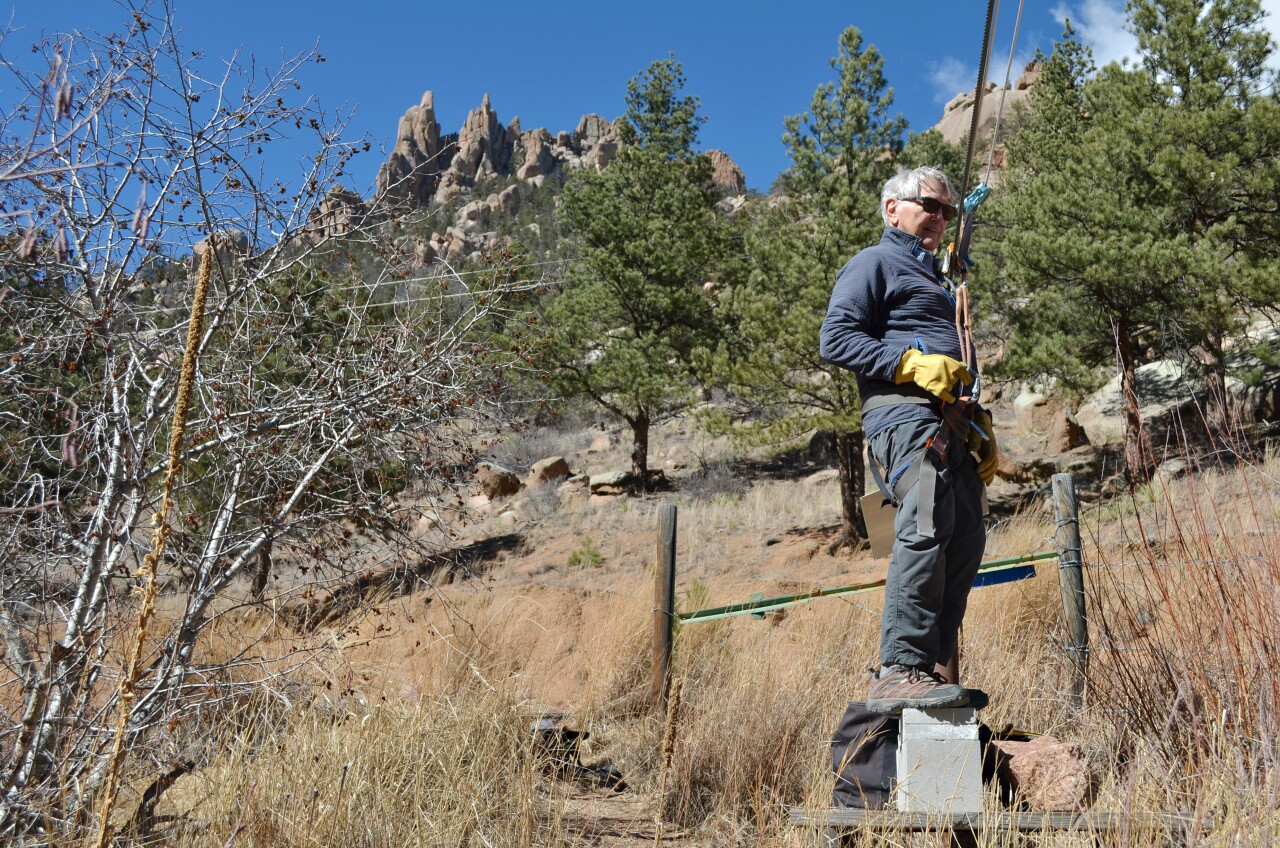
His version just includes a harness and zip line over a river to his home.

Arni, 83, is one of the many volunteers with Jefferson County's raptor monitoring program. Since 2015, he has volunteered to walk a couple minutes from home to a vantage point along the North Fork South Platte River where he can safely monitor a peregrine falcon nest and any babies — also called fledglings — from afar.
For him, though, leaving the house is itself a unique experience, as it involves soaring across a rushing or frozen river, depending on the season.
Other Jeffco Parks and Open Space volunteers like him — zip line or no zip line — are tasked with reporting their observations about the raptors, their nests and possible fledglings. Arni is a self-described “fanatic” about peregrine falcons, which started when he saw his first one around 2015 across the river from his home.
"And there it was, standing up there, just beautiful," he told Denver7. "Well, you could see the whole thing. You could see the helmet that it has on it. The whole bird is just spectacular. So, the minute after that, I immediately signed up for being a raptor monitor for the Cathedral Spires."
“It all stems down to the fact that I believe that raptors should be protected and be part of our lives forever,” he continued.
The idea of compensation for all of his hours watching the peregrines made him scoff.
“I couldn't even think of being rewarded for being here,” Arni said, smiling. “My reward is sort of in my heart.”
Jefferson County’s raptor monitoring program has supported these birds of prey in the county for more than 20 years, relying on a group of dedicated volunteers who track raptor breeding patterns across more than 25 territories of the birds.
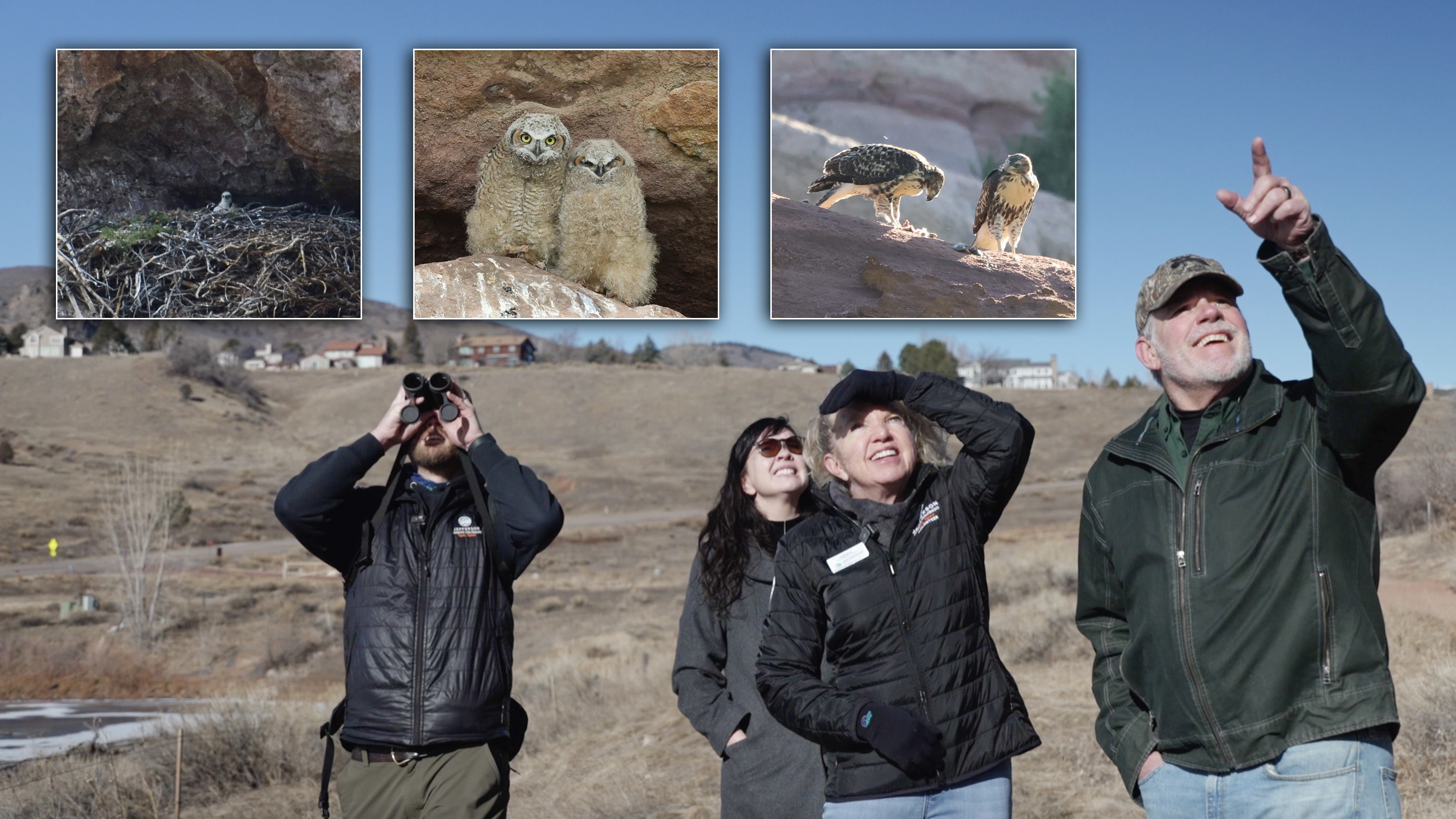
That includes species like great horned owls, golden eagles, red-tailed hawks and peregrines, and other predatory birds that keep other species' populations in check. The raptors mate in the winter or spring, and their fledglings learn to fly by late summer or fall.
Volunteers visit their designated sites — where they can view the nests — at least twice a month and submit reports on what they observe.
In 2025, about 40 volunteers spent more than 1,000 hours observing nests, surveying 93 in total, the county reported. Of those, about 30 nests were considered "active" and 52 fledglings were spotted.
The volunteers' reporting helps the county to determine when it can allow hikers and climbers back on certain trails that annually close when raptors begin nesting. This protects the animals, which will not lay eggs if they are stressed and disturbed by human presence. The trails only reopen once the fledglings are gone.
That's a world that Erickson Smith, natural resources specialist with Jeffco Parks and Open Space, gets to regularly dive into. He spoke with Denver7 during a walk around South Valley Park.
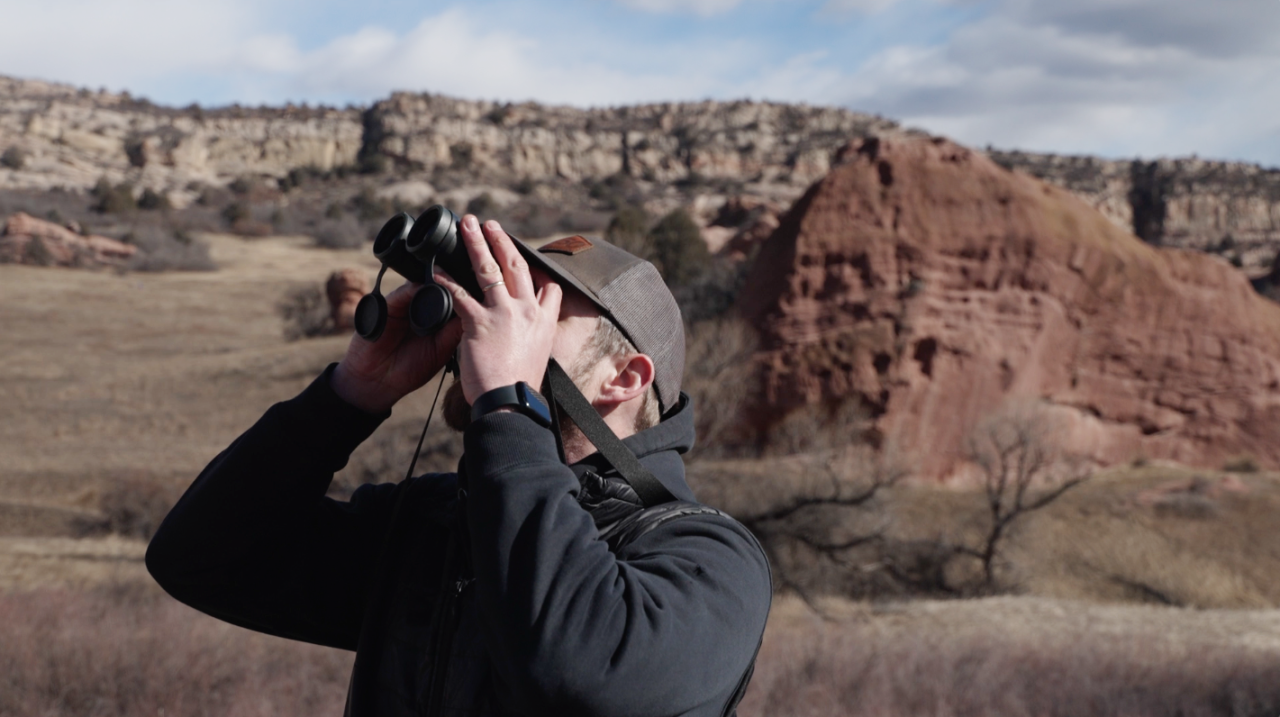
His career as a biologist kicked off by volunteering on public lands, so helping to manage the raptor monitoring program comes naturally to him. While some of the members are brand new, others have contributed their time since the program started 20 years ago.
"People's lives are really busy. And so seeing that commitment into something like conserving the natural resources in their community is really inspiring to me," Smith said. "And I feel like I need to pay it forward, because I was given the opportunity, once upon a time, and that got me here."
He explained that by tracking predators, biologists can learn what is happening across the broader landscape.
So, when Arni spotted newly hatched peregrines last year, it was a good sign.
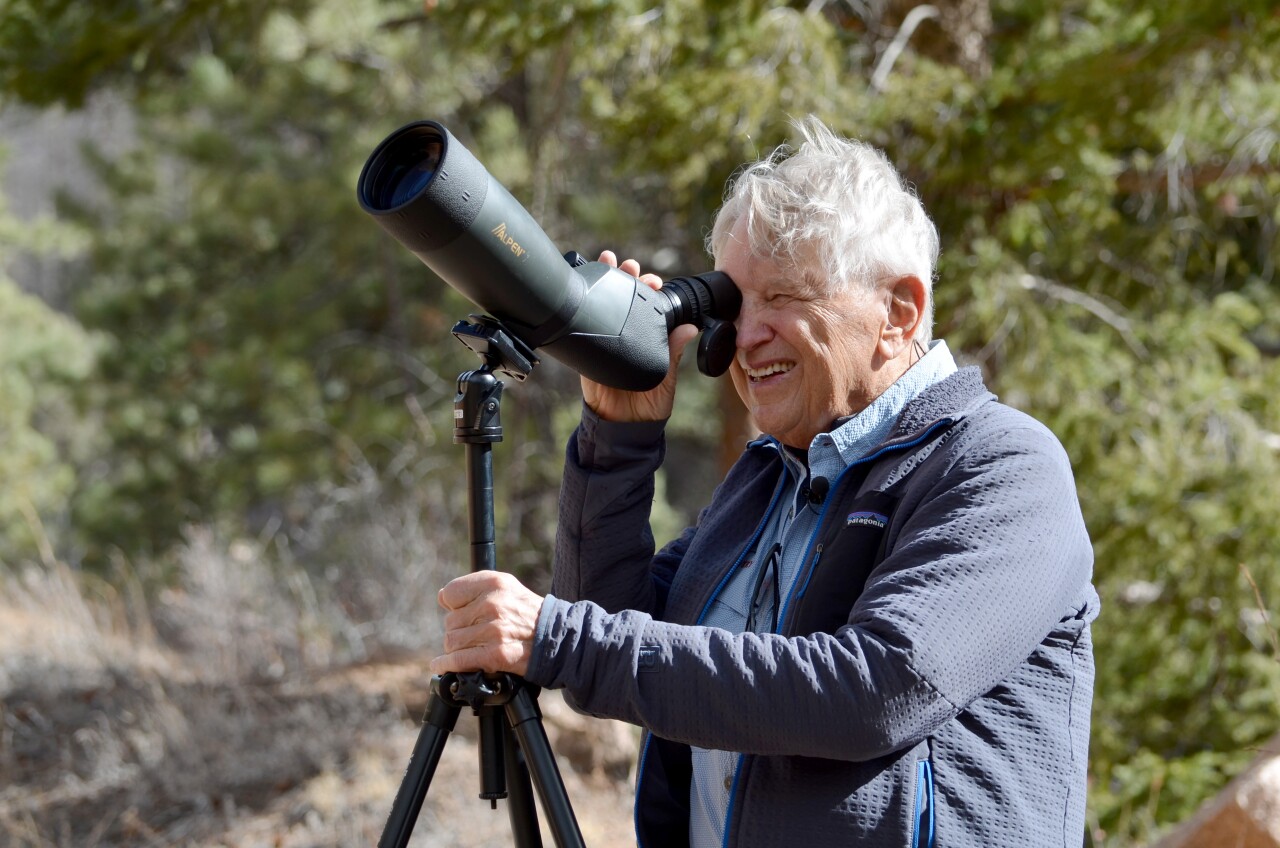
Over the span of a few months, he zipped across the river and walked up to a safe viewing spot to watch the nest. Through all kinds of weather, he observed the fledglings' confidence increase and they began flapping their wings. To his knowledge, they all flew off, he said, noting that the 14- to 18-inch adults can fly 240 miles per hour, topping the list as the fastest animal on Earth.
"So last year, we absolutely were responsible for two more peregrine falcons being in the wild," he said. "And the parents hopefully will come back this year."
He told Denver7 on Tuesday afternoon that they had indeed returned.
When the adult peregrines are present, Arni said other raptors, like bald eagles and golden eagles, tend to leave the area.
"It's absolutely dominant," he said of the animal.
Golden eagles are another beloved raptor on Jefferson County's monitoring list.
Prior to our interview with Arni near his riverside home, Denver7 met with three other volunteers with the raptor monitoring program, including Tom Clark.
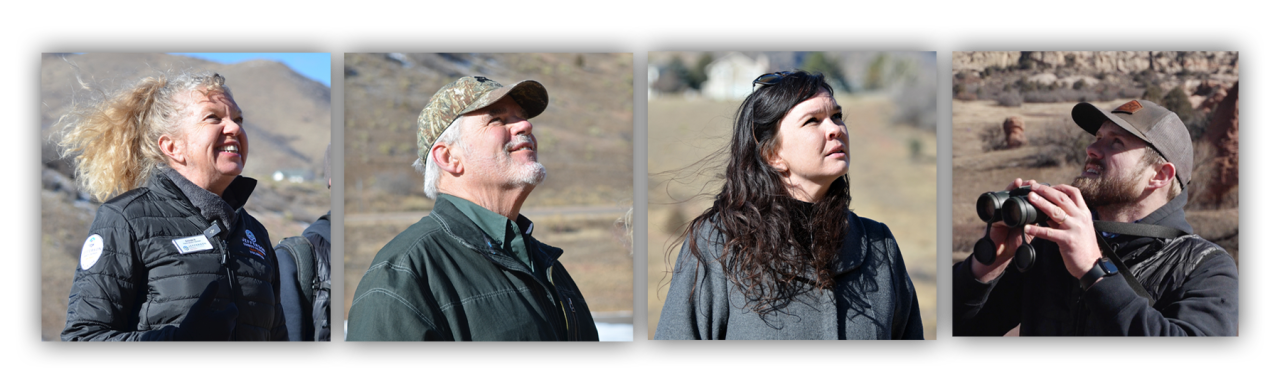
Clark had the rare chance to watch two golden eagles fledge at the same time. He has also witnessed a golden eagle snatch a crow from mid-air and bring it back to the nest to feed its young.
"That was pretty amazing," he said. "I'm very fortunate. It's not a job. It's an adventure."

Clark has volunteered with the program for eight years. Over that time, he has grown quite familiar with the species. He calls them dedicated and resilient parents that can endure anything from hailstorms and wildfires, to nearby traffic crashes and medevac helicopters flying overhead — all while caring for their babies. Seeing them persevere through that difficulty to successfully raise their fledglings is part of what has kept him returning to volunteer.
"I intend to do it until I can't walk anymore," he said, grinning.
Third-year volunteer Danielle Duran also has her eyes to the sky — something she has done her whole life before fully embracing her love for birds, especially raptors. However, the animals she watches are a little trickier to find during the day.
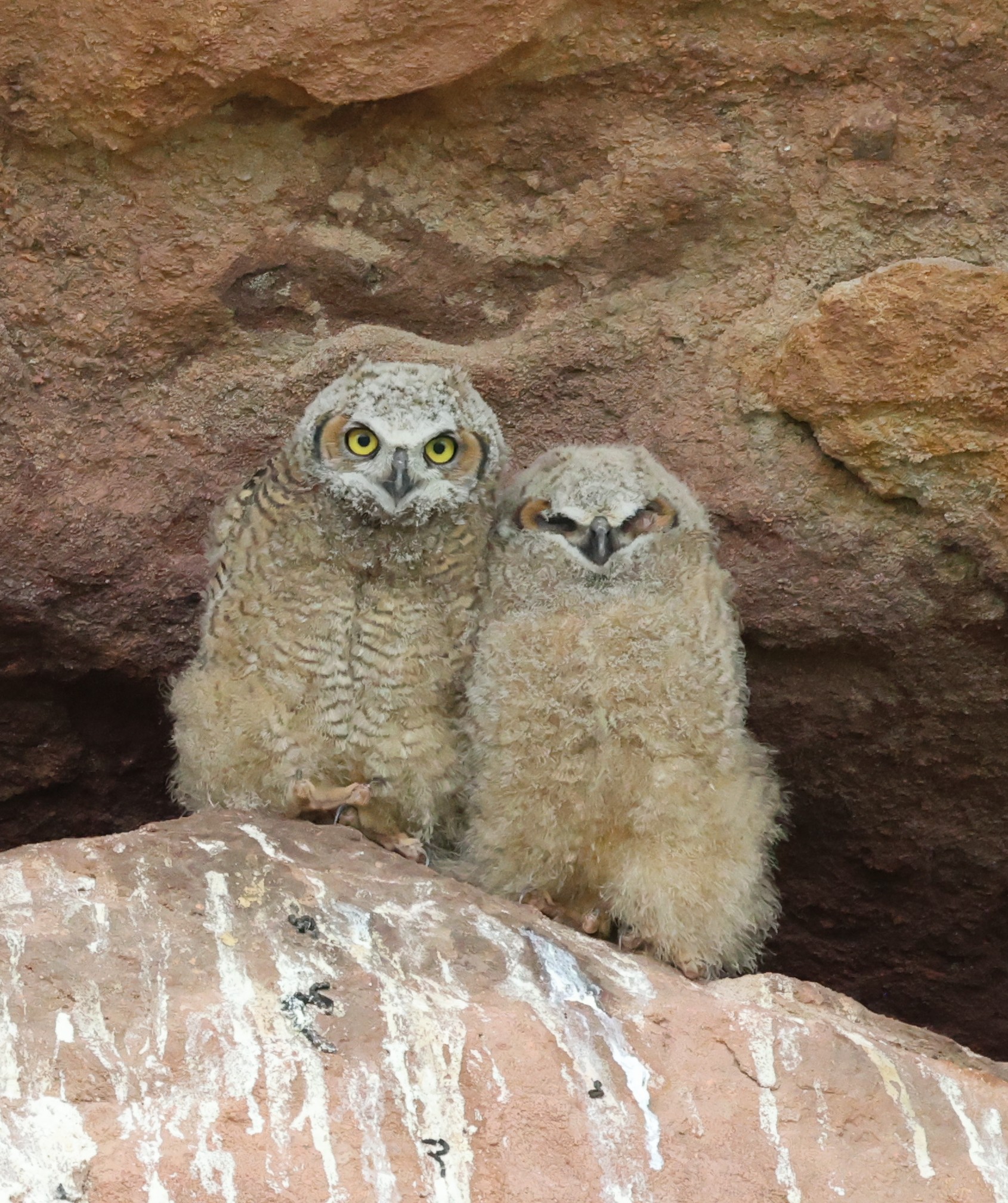
She monitors a great horned owl nest. Jeffco said the species had a "banner year" in 2025 with five of six monitored nests ending in success.
"I honestly do it because I find it fun and if I can spend my time doing something that I enjoy, that is also helping a bigger purpose, that's just a win," Duran said.
"The program is mostly made up of people who just love birds," she continued. "And if they got a chance to help out monitoring, ecology and habitats at the same time, it's kind of a win-win. But I think most of the volunteers, their first love is birds. And if it overlaps with volunteering, it's perfect."
Denver7 asked what has drawn her to these birds of prey.
"I don't do anything related to wildlife for my daily job. I work in marketing," Duran explained. "I think part of it is that they are so different from us. I feel like they're one of the animals that are the most opposite of say, a mammal — like a primate. Their mannerisms, the way they interact with each other — just feels so foreign."
Raptors feel mysterious and rare to her, she added.
"It feels like, when I get to watch them, getting a glimpse into a world that I don't normally get to see," she said.
Along a trail in South Valley Park, volunteer Erlinda Stafford explained how retirement has allowed her to spend more time outside. While she has committed to the program, she likes that she can choose when and how long she shows up. She monitors nests within that park and pointed a few of them out to Denver7.
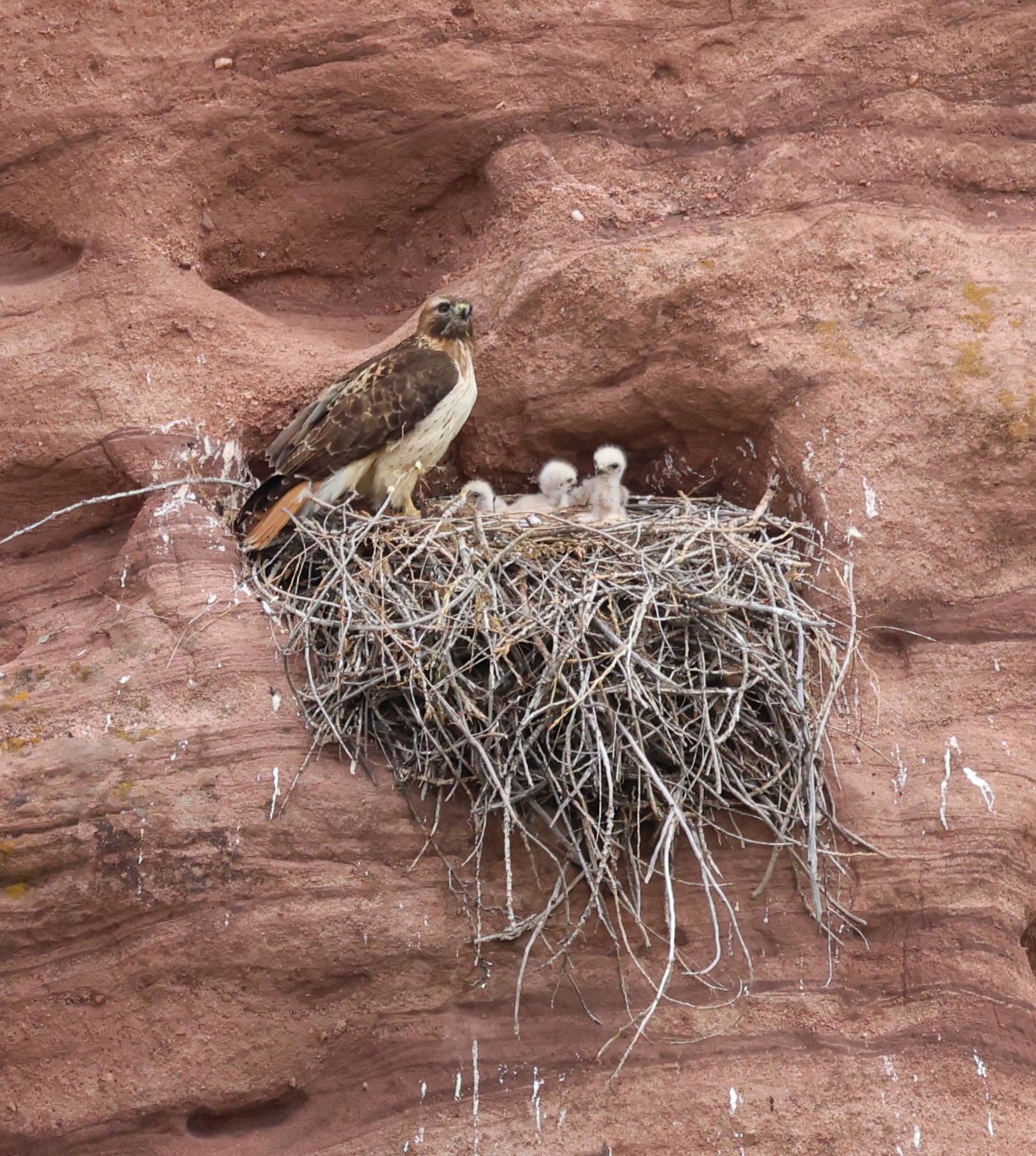
"Oh, to watch the great horned owl fledglings," she said. "They are the cutest, fluffiest things you ever see. And then I also saw the fledglings down at the red-tailed hawks' nest. And they were gangly. They got these long legs. And you know, they're learning — trying to learn — to fly."
Stafford was trying something new too. She bought a new camera and has been learning photography while out watching the birds.
"When I first retired, I tried different volunteer things," she said. "And when I found this, I was like, 'Oh, this is my niche here.' Here we are. I get to be outside looking at birds, looking at nature, looking at all sorts of things — and helping."
"I'm hooked. Hooked," she added. "I will keep doing this. Just as long as I can."
Denver7's Maggy Wolanske contributed to this report.
