

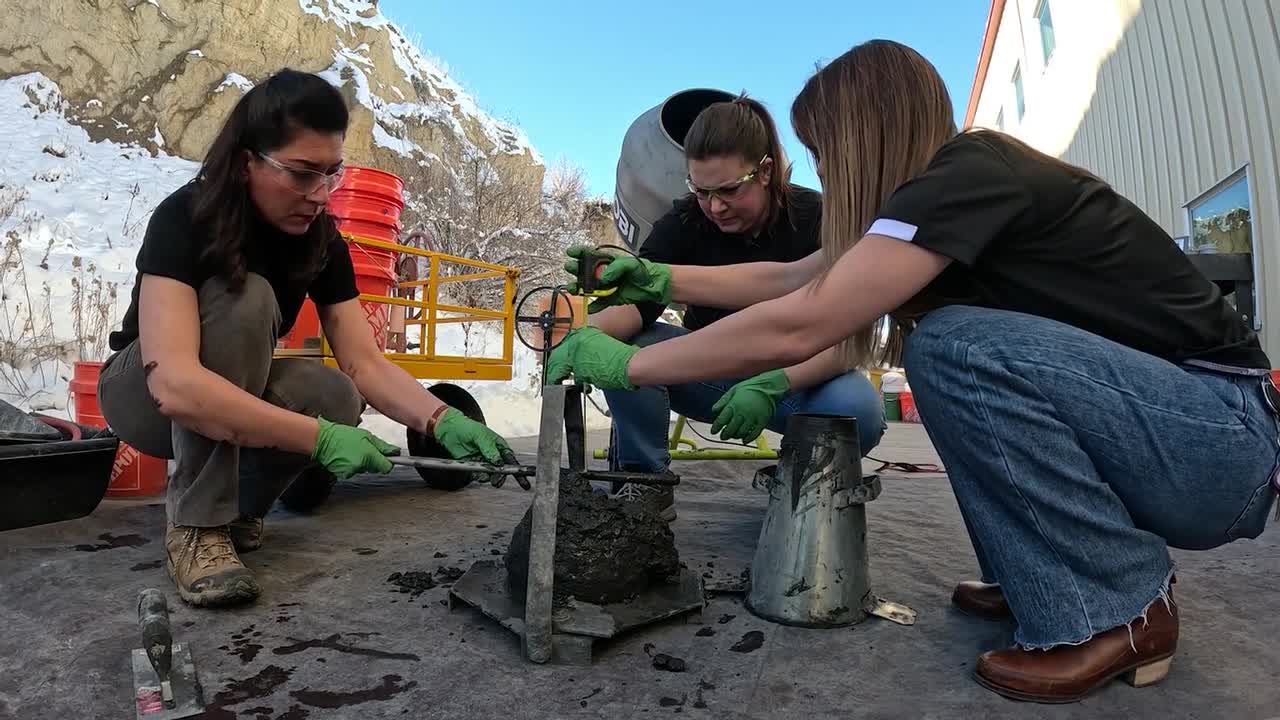


GOLDEN, Colo. — An innovative green concrete is taking shape at Colorado School of Mines, where researchers are replacing cement with biochar, testing if there is a way to reduce landfill waste while also making concrete better.
Lori Tunstall, assistant professor at Colorado School of Mines, explained her fascination with concrete as it is a material that people interact with every day, but it's also responsible for 8% of the world's CO2 emissions. She wanted to take on the challenge of making concrete more sustainable while still being an efficient material.
"My approach was to keep the cement the same," said Tunstall. "The cement is the basic building block of concrete. I didn't want to look for alternative cements; that's a big area that a lot of people are looking at because cement is really the biggest CO2 emitter in concrete. Instead of replacing that cement with something else, I wanted to see if we can still use the cement and offset the carbon footprint somehow."
Since 2020, she has been researching how biochar — made from waste like food scraps, cardboard, and paper — can partially replace cement in concrete. Now, the team is exploring whether landfill waste can also work in concrete production.
"So by us taking landfill and replacing landfill waste and converting it to biochar and then replacing part of the cement with this carbon negative material, we're basically addressing the carbon emissions from two big emitting sectors, so it's a way to have maximal impact," Tunstall said.
Last year, Tunstall received a faculty startup fellowship, which gave her teaching relief and allowed her to focus on commercializing her research. She credits the Colorado School of Mines for encouraging her to take the next step and turn this research into a business.
"It's one of those things where it can be really daunting, you don't know what you don't know, and I've never been trained in how to start a company and engage in entrepreneurship. They've given a lot of resources to help make that less overwhelming and more achievable," Tunstall said.
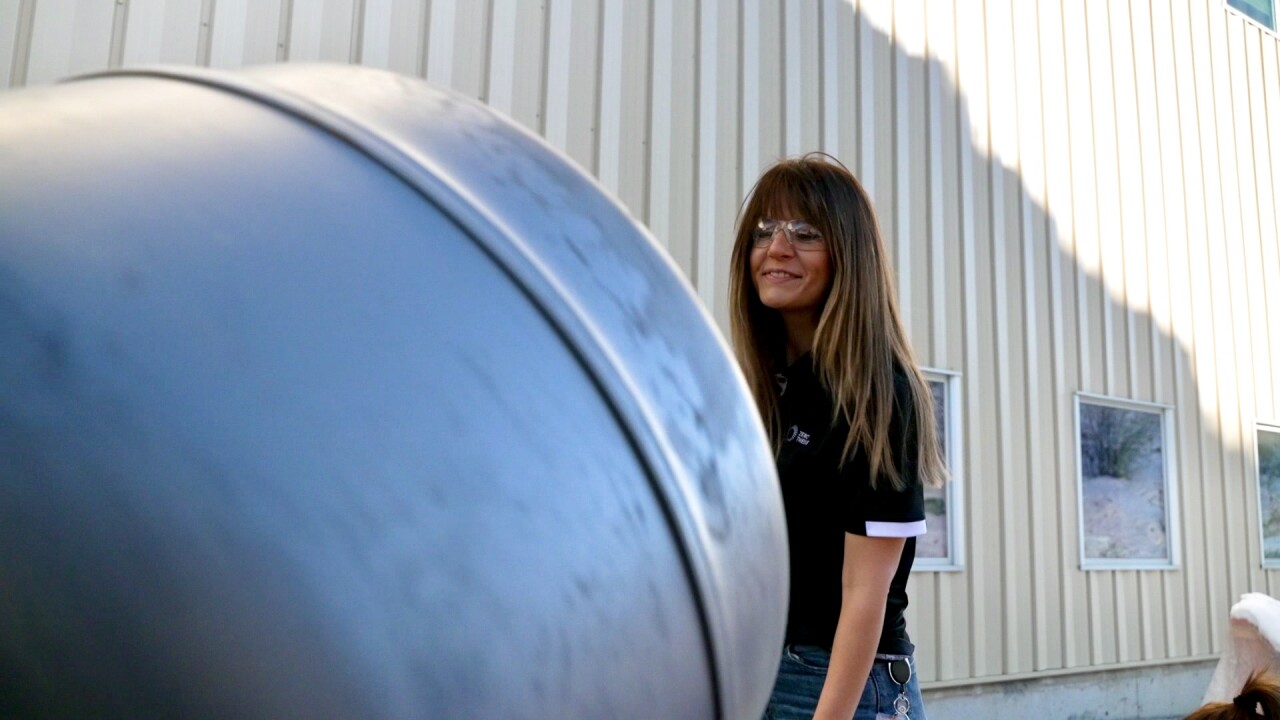
She co-founded ZeroTwelve, where the "Zero" stands for net-zero concrete and "Twelve" for the atomic weight of carbon.
"It's been a lot of fun, lots of learning, taken out of my comfort zone every day, but it's been a lot of fun to see the research that you're doing that had the potential to go to market and actually impact people outside of the lab," Tunstall said.
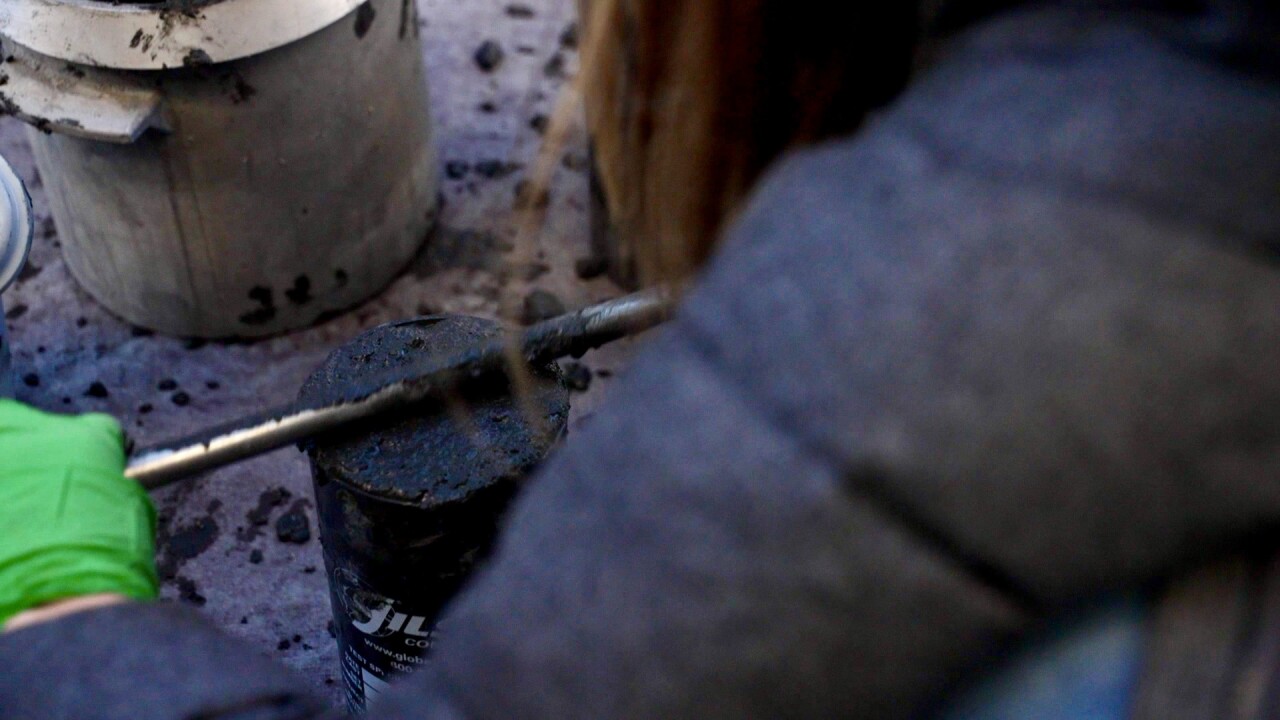
Julia Hylton is the lead researcher for ZeroTwelve and graduated from Colorado School of Mines. She explained that many people are surprised to see the black concrete, which gets its dark color from the carbon being locked in place.
"Concrete is the most used material in the world after water, so even, like a small replacement, a small change can make a huge difference," said Hytlon. "We use billions and billions of tons of concrete every year."
Testing concrete and finding ways to lower its carbon footprint is not the career Hylton envisioned, but now she can't picture herself doing anything different.
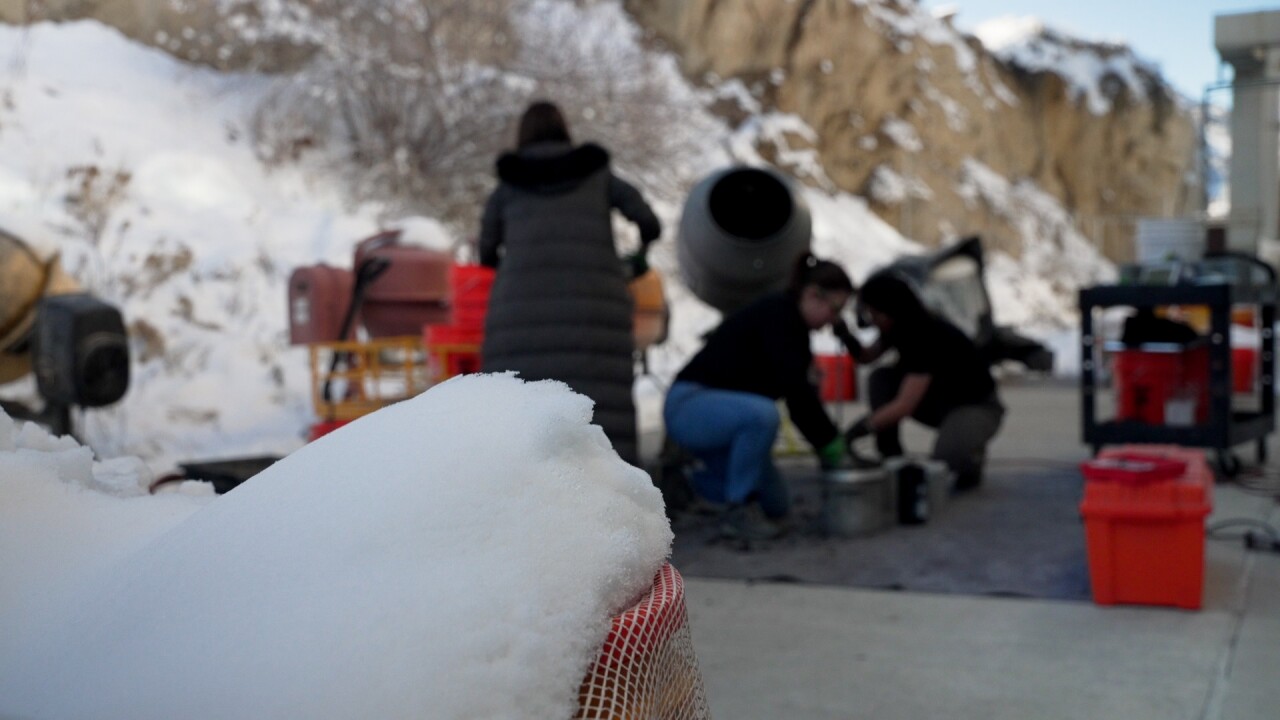
"It's so fun to feel like the work that you're doing and the research that you're doing can actually make a difference, and it’s a quick solution to something that we've been struggling with for years and years and years," Hylton said.
Looking to the future, Tunstall was awarded a million-dollar research grant from the Moore Foundation and hopes to change the narrative about concrete being a big CO2 emitter to instead be a sustainable foundation.
"I got into research because I loved research. I love solving problems. I never thought really about the broader impact, and I think that has definitely changed," said Tunstall. "When I saw the potential impact of the research that we were doing, and now my focus has definitely shifted to what's the maximum impact, what's the maximum good we can do with our research."

