



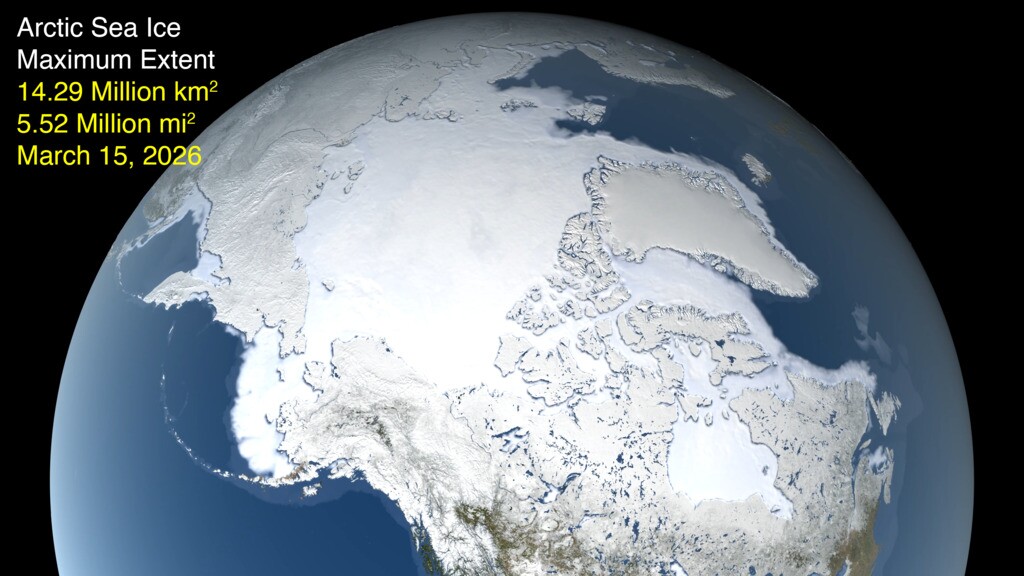
BOULDER, Colo. — After Arctic sea ice grew through this past fall and winter, it reached its maximum extent on March 15 — and it tied for the lowest maximum extent on record, according to the National Snow and Ice Data Center at the University of Colorado in Boulder.
Sea ice extent is defined, according to NSIDC and NASA, as the total area in which the ice concentration is at least 15% ice concentration. While some of it melts each year during the warmer months, most of it remains yearround. But in recent years, less new ice has been forming, NASA reported.
In total, the 2026 Arctic sea ice reached about 5.52 million square miles, edging just below 2025's record of 5.53 million square miles, NSIDC reported. This means the sea ice's maximum reach in 2026 tied for the lowest amount in the 48-year record since satellites were used to track this.

NSIDC said in a press release Thursday that values within 15,000 square miles are considered a tie.
“This record low maximum gives a head start to the spring and summer melt season,” explained NSIDC senior research scientist Walt Meier. "One or two record low years don’t necessarily mean much by themselves, but in the context of the significant downward trend that we've observed since 1979, it reinforces the dramatic change to Arctic sea ice throughout all seasons.”
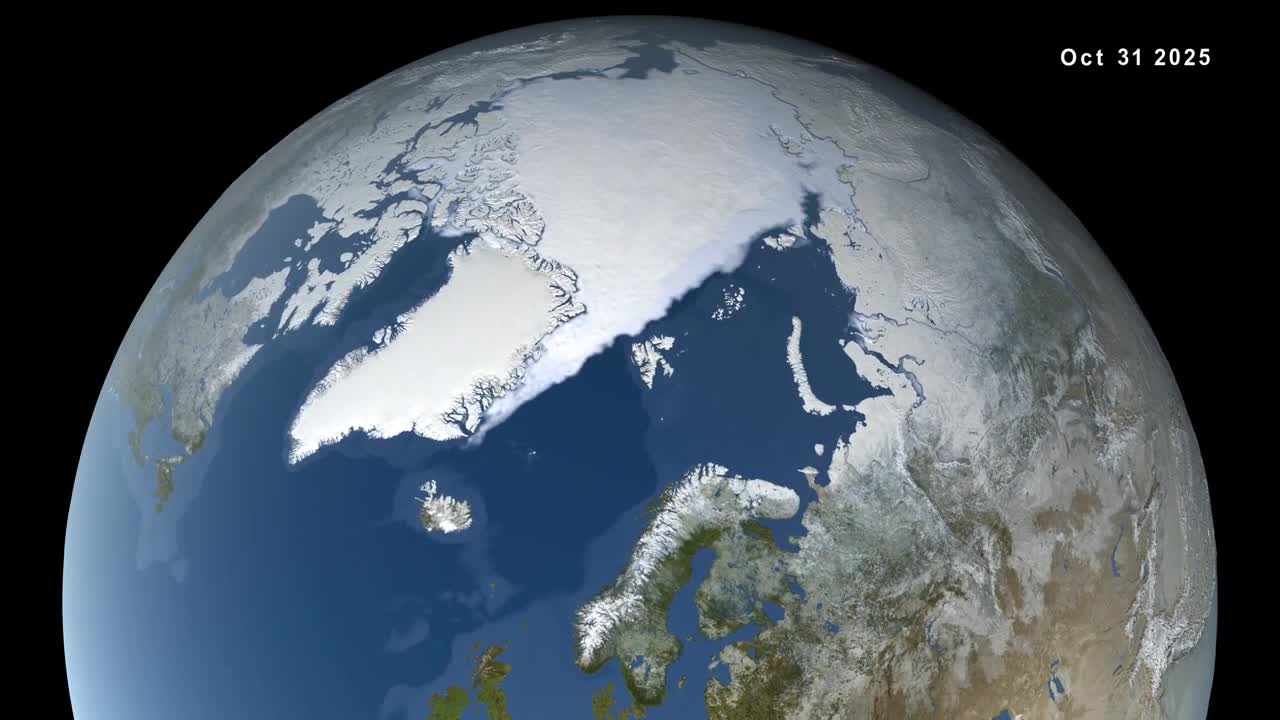
The below video, created by NASA, shows the sea ice maximum extent in 2026. The video starts at the 2025 minimum.
These 2026 numbers are about half a million square miles below the average that was recorded from 1981 to 2010. That is about twice the size of Texas, NSIDC said.
This continues the downward trend that scientists have tracked over the last several decades, NASA said.
Nathan Kurtz, chief of the Cryospheric Sciences Laboratory at NASA’s Goddard Space Flight Center, said researchers also observed a change in ice thickness.
“Based on what we’re seeing with NASA’s ICESat-2 satellite, much of the ice in the Arctic is thinner this year, especially in the Barents Sea northeast of Greenland,” he said. “The Sea of Okhotsk that borders northern Japan and Russia also had relatively low ice this year — a region that naturally experiences significant year-to-year variability.”
NSIDC scientists said this data is considered preliminary as of Thursday, as upcoming weather could change the annual maximum ice extent.

