



BOULDER COUNTY, Colo. — The jury trial for a man accused in a cold case murder in Boulder County from 2006 began on Monday morning, with the prosecution saying the "totality of the circumstances" will lead jurors to a conviction and the defense arguing that prosecutors are taking a "big, huge leap."
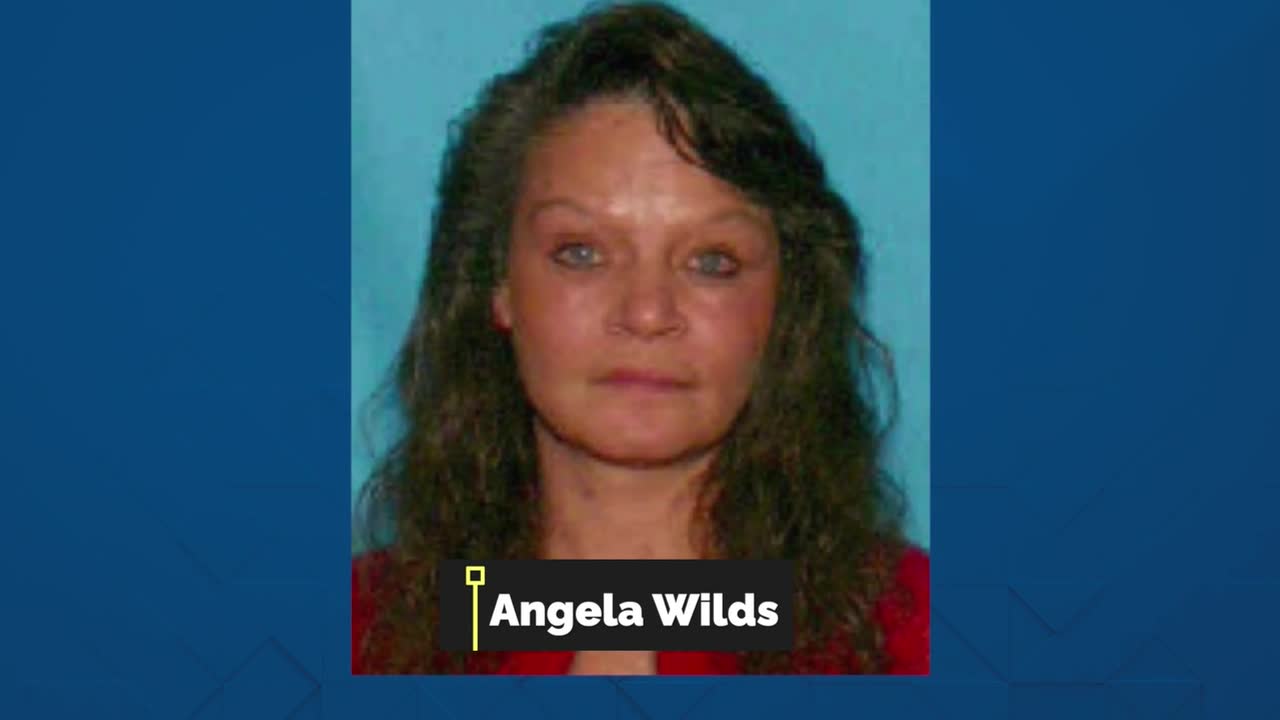
John Michael Angerer, now 56, is on trial for second-degree murder in connection with the death of 38-year-old Angela "Angie" Wilds of Longmont.
This case began on June 4, 2006, when a pair of hikers found Wilds' nude body in Boulder County's South Saint Vrain Canyon along Highway 7, about 3.3 miles outside of Lyons. Her body was badly decomposing and had quicklime around it. She did not have any identification on her.

Angerer was initially arrested in 2010 and charged with second-degree murder. His preliminary hearing was held on July 12, 2010, however a judge determined that probable cause did not support the charge and the case was dismissed.
He was arrested again in connection with the case on March 9, 2023 and was charged with the same. He pleaded not guilty on May 16, 2024, according to court documents.
Opening statements in the case began Monday morning.
The prosecution was the first to address the jury.
Boulder County Deputy District Attorney Nevene Hullender began by describing the beginning of the investigation in 2006. On June 4, 2006, a father and his son went to South Saint Vrain Canyon outside Lyons for a hike. It is a popular area for people recreating. The boy, who was 14 or 15 at the time, ran ahead, entered a clearing and then "smelled it," Hullender said. It was the "putrid foul odor of decay," she added.
The father and son went back to the road to flag down a nearby deputy. Others with the Boulder County Sheriff's Office, as well as a nonprofit called NecroSearch, were called in, Hullender said.
Hullender said the body was covered in quicklime, which was often mistakenly thought to expedite decomposition. Nearby, authorities found a blue sleeping bag, pillow, pillowcase and yellow ski pants. They processed the scene for about six days and collected more than 280 pieces of evidence, Hullender said.
The body did not have any identification — just a ring — and it was so decomposed, authorities were able to glean little about the situation from the scene.
The initial autopsy was completed a few days later, on June 7, 2006. The coroner at the time, who will testify in the trial, noted no stab wounds or gunshot wounds, but could not rule out strangulation, Hullender said. She was examined for sexual assault and the coroner found DNA of an unknown male. He ruled her cause and manner of death as undetermined.
A forensic entomologist was able to determine — using insects at the scene — that the body had been buried in that location sometime between April 12, 2006 and May 8, 2006, Hullender told the jurors.
At that time, authorities did not know who she was and issued a few press releases including photos of her ring to try to identify her.
In October 2006, a woman came forward to authorities and said her friend Angela Wilds had been missing and wore a similar ring to the one from the press releases photos. Through genetic testing with four of Wilds' sisters, investigators were able to determine the deceased woman was her, Hullender said.
Wilds was 38 at the time of her death. She had a difficult upbringing. After moving to Greeley in the mid-1990s and then later to Longmont, she was in several relationships with abusive men, Hullender said. She was transient, drank heavily and was not an outdoorsy person, the prosecutor said. She frequently visited an outreach center in Longmont for meals.
Hullender said several witnesses will speak during the trial about seeing Wilds with the same man around town in the first few months of 2006.
She said the sleeping bag found at the scene had unknown male DNA inside and around the opening. The ski pants and pillow had Wilds' blood on it. The pillowcase had the same unknown male DNA and Wilds'. The unknown male DNA in these items matched the DNA found during a vaginal swab during Wilds' autopsy, Hullender said.
During the investigation, authorities took DNA swabs from about 23 people who they believed had interacted with Wilds.
In 2009, detectives hit a lead: That unknown male DNA was linked to a man living in Anchorage, Alaska. He was identified as John Angerer, Hullender said.
Hullender shared a little bit about Angerer's life with the courtroom: He was born in Cañon City. His mother died when he was young. He had two sisters. He's an avid camper and hiker and was known to frequent the South Saint Vrain Canyon area. He was largely transient and unemployed. He had ties to Longmont. He went to homeless ministries in Cañon City and made bank withdrawals in Cañon City a few times around the days when Wilds likely died.
Cañon City is a few hours away from where Wilds' body was found.
During the subsequent investigation, multiple people reported seeing Angerer and Wilds eating together before her death, Hullender said.
That year, investigators contacted Angerer about Wilds' death. He denied recognizing her photo or knowing her name, Hullender said, and also denied spending time in the South Saint Vrain Canyon. When confronted with the details about his DNA at the scene, he denied it was his, the prosecutor said.
Two additional forensic pathologists were consulted in 2010 and 2015. Both determined the manner of death was homicide. The pathologist in 2010 said Wilds likely died of asphyxia and the pathologist in 2015 said the cause was homicidal violence, Hullender said.
She concluded by saying this case is going to require a "totality of the circumstances analysis."
Defense attorney Julia Stancil then stood up in the courtroom to deliver the defense's opening statements.
This case comes down to “their best guess is the best you’re going to get," she said, adding that it's a lot of speculation and jumping to conclusions.
By the end of the trial, Stancil told the jury they still won't know how Wilds died, where she died, when she died and if a homicide happened at all.
She said Wilds was indeed part of a transient community, where people were often moving around, and she was severely addicted to drugs and alcohol. Nobody saw her on a daily basis, Stancil said.
She explained that the sleeping bag found at the scene included four male DNA samples, including Angerer's. However, she stressed that the sleeping bag was a shared item from the homeless center and DNA from previous users can stick around for a long time. Wilds could have collected those items from the shelter after Angerer used it. She also noted that the blood found was akin to the amount from a nosebleed.
The body was covered with a little dirt and sticks, and not well hidden, Stancil said. It doesn't look like somebody tried to cover up a homicide there, she said.
The defense also focused on the two pathologists called in to help with the case in 2010 and 2015. Their position is that naked people don't bury themselves, so somebody must have killed her, Stancil said. Neither of them saw Wilds' body or examined it; they looked at paperwork, the defense said.
She explained that transient people often don't report crimes or incidents to police, and Wilds could have died naturally and the death could have gone unreported.
Wilds had a very serious heart condition that resulted in her left anterior descending artery being 90% accluded. A little extra pressure — standing up, having sex, assaulting somebody, being assaulted — that brought stress on her heart could have caused her to die, Stancil said. She said that the woman was not in good health, but deserved to have her death investigated nonetheless.
“But was it a homicide? Big, huge leap," she said.
John Angerer's name did not come up until almost four years after Wilds' body was found — at the end of 2009, she said. Nobody mentioned any man with face tattoos, which Angerer has, she said.
That changed after DNA hit for a man in Anchorage.
However, Stancil said the prosecution has no proof that Angerer was in Boulder County around the time Wilds died. The defense also said the forensic entomologist — who determined a range of weeks for when Wilds was likely buried — used an entomology study from China with dissimilar geography than the South Saint Vrain Canyon.
"This case has many holes," Stancil said, and asked the jurors to put the prosecution's evidence to the test.
There will be doubts, she concluded.
The trial is slated to run through Dec. 23.

